
By James Simons-
A £158,454 award will help safeguard traditional recipes, textiles, crafts and celebrations for future generations, as questions continue over what constitutes a good cause for Lottery funding.
Stories, recipes and traditional crafts passed down through generations risk disappearing as communities change, families become dispersed and opportunities to share cultural knowledge diminish.
A new project in Newham aims to prevent that loss, with Rosetta Arts receiving £158,454 from The National Lottery Heritage Fund to document and celebrate the cultural traditions of the borough’s Middle Eastern communities.
The two-year initiative, Seasons of Migration: Preserving Middle Eastern New Year Traditions in Newham, will explore the heritage associated with four New Year celebrations: the Gregorian New Year, Norooz, Rosh Hashanah and the Islamic New Year.
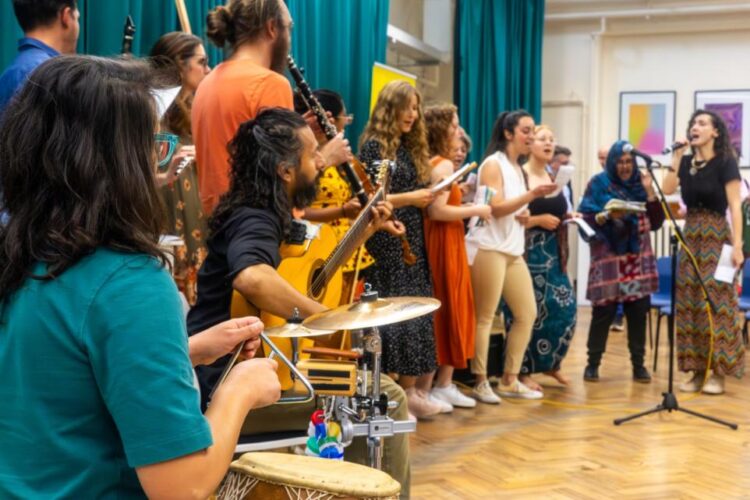
The project will bring together different generations to share knowledge of traditional food, textiles, crafts and celebrations, helping ensure that practices often preserved within families and community groups are recorded for the future.
Jan De Schynkel, chief executive of Rosetta Arts, said the traditions were at a critical tipping point, warning that displacement and the loss of stable community spaces could put these cultural legacies at risk.
The project will be delivered in partnership with Newham Council’s Heritage Service, the University of the Arts London’s London College of Fashion, V&A East and the Everyday Muslim Heritage and Archive Initiative.
Plans include workshops, listening sessions and public events during Refugee Weeks in 2027 and 2028. The work will culminate in a documentary, a fashion show and a public display co-curated for V&A East Storehouse and the new Newham Heritage Centre, expected to open in summer 2027.
Stuart McLeod, director of England, London & South at The National Lottery Heritage Fund, said the award would help celebrate and preserve the borough’s diverse heritage and strengthen connections between residents and their shared history.
Does this count as a National Lottery good cause?
The grant raises an important question about the meaning of a good cause. While Lottery funding is often associated with major sporting facilities, community projects, arts organisations and environmental improvements, preserving cultural traditions can be less immediately tangible than building a new facility or providing a direct service.
The National Lottery has supported a wide range of public-benefit projects across the UK, including heritage conservation, community arts, grassroots sport and improvements to local facilities. Its heritage funding can help preserve historic places and collections, but it also recognises the importance of living heritage: the customs, skills, stories and practices that give communities their identity.
In that context, Rosetta Arts’ project has a credible claim to being a good cause. Its proposed activities are designed to preserve knowledge that might otherwise be lost, encourage interaction between generations and make cultural traditions accessible to a wider public. The planned documentary and exhibitions could also leave a lasting educational resource for residents, researchers and future generations.
There is a wider community benefit, too. Newham is home to people with varied cultural backgrounds, and documenting their traditions can help create a fuller account of the borough’s history. Heritage is not confined to historic buildings, famous landmarks or objects displayed in museums. It also lives in the food people prepare, the clothes they make, the festivals they celebrate and the stories they tell their children.
Nevertheless, the value of the award should ultimately be judged by what the project delivers. A successful programme would need to involve the communities whose traditions are being documented, represent their experiences accurately, and ensure that the resulting material remains accessible beyond the two-year funding period. It would also be important to establish how participants benefit and whether the project reaches people who might otherwise have limited opportunities to engage with cultural activities.
The £158,454 award is therefore more than a contribution towards arts programming. It is an investment in the preservation of community knowledge and cultural history. Its longer-term value will depend on whether the work creates a genuinely lasting resource rather than a series of temporary events.
National Lottery players make such awards possible, and that public contribution brings a responsibility to demonstrate meaningful outcomes. In this case, protecting traditions that might otherwise disappear is a defensible use of heritage funding, provided the promised work is delivered and its benefits extend beyond the organisations involved.
For Newham, the project offers an opportunity to ensure that the borough’s cultural history is not told solely through buildings and official records, but also through the everyday experiences of the people who call it home.