
By Aaron MIller-
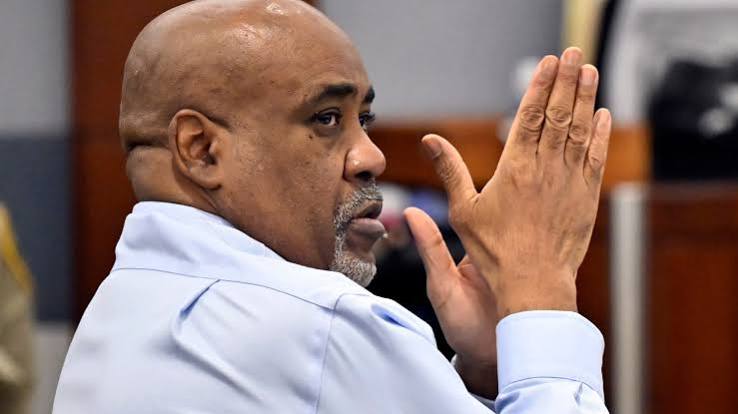
On the fourth day of the murder trial of former gang leader Duane “Keffe D” Davis , who is accused of ordering and orchestrating the killing, jurors began hearing recordings of a recorded interview in which the defendant said that the rapper’s death was the result of a revenge attack following a violent confrontation involving Davis’s nephew, Orlando baby Anderson.
U.S attorneys have repeatedly insisted on using Davi’s own words against him about the killing, referencing documentaries, an autobiography, and the 2008 interview with a federal task force investigating the killing of Shakur’s rival, the Notorious B.I.G. The Grammy-nominated hip-hop artist was shot March 9, 1997 outside the Petersen Automotive Museum at Wilshire Boulevard and Fairfax Avenue on LA’s Miracle Mile.

AD: Capeesh Restaurant
Prosecutors have accused Davis of being the orchestrator of the former rapper’s death. The allegation is at the heart of a long-awaited murder trial that began this week, finally placing a defendant before a jury in one of hip-hop’s most enduring unsolved cases. Davis, 63, has pleaded not guilty, and is not accused of firing the shots himself. Prosecutors instead argue that he was the organiser who helped arrange the attack, obtained the weapon and directed the men who carried it out.
Shakur and members of his entourage were involved in the fight, which took place only hours before the rapper was attacked. Anderson, another leader in the South Side Compton Crips – who happened to be Davis’s nephew. had snatched a Death Row Records chain from a football player at a Footlocker store in the Lakewood Mall weeks earlier.

AD: Oysterian Sea Food Restaurant And Bar
Anger over the robbery was still fresh. After an explosive Mike Tyson fight that ended in a one round knock out of Brice Seldon, Shakur spotted Anderson, and went for his prey. Knight obligingly joined in, as the two dished out a beating to Anderson, who was a star leader in his gang circle. Jurors were shown the casino’s surveillance video of the confrontation two days ago (Tuesday , August 18 )The camera, which panned back and forth in the MGM Grand, showed a group of people beating and kicking a man on the ground.
The video showed Shakur and his entourage moving swiftly through the crowded building in the minutes after, with some men jogging to keep up. The surveillance footage then showed security and police arriving at the scene and talking to Anderson, who was wearing a number 13 Dan Marino Miami Dolphins jersey.
Davis, who was associated with the South Side Compton Crips, allegedly became enraged after learning what had happened and subsequently helped organise a response. The prosecution’s account does not depend on an allegation that Davis personally pulled the trigger. Instead, prosecutors are seeking to establish that his role in planning and facilitating the attack makes him responsible for the murder under Nevada law.
They say Davis was travelling in a white Cadillac with three other men when the group followed the BMW carrying Shakur and Death Row Records boss Marion “Suge” Knight. As the vehicles travelled near the Las Vegas Strip, another car pulled alongside Knight’s BMW and gunfire erupted. Shakur was struck four times, while Knight suffered a minor injury. Shakur died in hospital six days later, aged just 25.
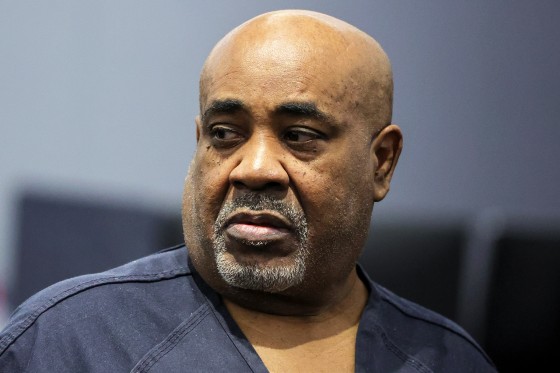
On trial: Duane Keffie D Davis is accused of orchestrating the murder of Tupac Shakur
One of the prosecution’s most important pieces of evidence is Davis’s own history of speaking publicly about the killing. Authorities revived the investigation after Davis made statements about the shooting, including accounts in interviews and his 2019 memoir.
Prosecutors argue that these statements amounted to admissions of his involvement, and provide a window into what happened on the night Shakur was killed. Davis has previously described being in the vehicle involved in the shooting and acknowledged providing a weapon, accounts prosecutors now intend to use to demonstrate that he was much more than a bystander.
However, the defence has launched an unusually direct attack on those statements, arguing that Davis cannot be trusted to tell the truth about his past. His lawyer has urged jurors not to accept his public accounts as genuine confessions, arguing that Davis exaggerated his involvement to generate publicity, sell books and enhance his reputation.
The defence’s strategy is therefore centred heavily on the credibility of Davis himself. Prosecutors, meanwhile, contend that the consistency and detail of his accounts demonstrate knowledge of the crime that could not simply be dismissed as storytelling.
The case has taken almost three decades to reach trial, reflecting the extraordinary difficulty investigators faced in solving Shakur’s murder. The killing has for years remained surrounded by competing theories, rumours and conspiracy claims, while people believed to have knowledge of the shooting largely remained silent.
Davis became the only person charged in the case after his arrest in 2023, more than 27 years after Shakur’s death. Several other men believed to have been connected to the shooting are now dead, leaving prosecutors with a case that relies substantially on historical evidence and Davis’s own previous statements.
Defining
Shakur’s murder was one of the defining tragedies of 1990s popular culture. The rapper had become one of the biggest figures in hip-hop, celebrated for songs and rap lyrics addressing poverty, violence, inequality and life on the streets. His lyrical prowess was notably brilliant and entertaining. What made him even more intriguing after his death were the many songs he made about death itself, including Mackavelli, which was released after his death.

Tupac Shakur was gunned down in 1996 after a Mike Tyson fight
His death also came during the highly publicised East Coast-West Coast rivalry that had placed Shakur and The Notorious B.I.G. at the centre of a bitter feud between competing factions of the rap industry. Shakur’s killing intensified fears that the rivalry had moved beyond music into real-world violence, although the precise circumstances of his murder remained disputed for years.
The prosecution’s case nevertheless focuses on a more immediate chain of events. The casino confrontation, the alleged desire for retaliation and the subsequent ambush. Prosecutors say Davis was effectively the “shot caller” who helped turn that anger into a planned attack. The allegation is therefore not simply that Davis was present when Shakur was killed, but that he played a decisive role in making the shooting happen.
Recent testimony has begun bringing the events of that night back into the courtroom. A forensic pathologist has described the severity of Shakur’s wounds, while retired law-enforcement witnesses have provided evidence about the rapper’s final hours and the investigation that followed.
The court has also heard material concerning Shakur’s refusal to identify his attackers after the shooting, adding another layer to a case in which witnesses have historically been reluctant to speak. On Tuesday, the court heard testimony from two former investigators – one from the FBI and another from the Los Angeles Police Department (LAPD). The two former officers shared details of “proffer” interviews conducted with the defendant, Duane “Keffe D” Davis, during separate investigations about 10 years apart.
During the private interviews, Davis provided information that had been agreed won’t be used against him, in exchange for deals on sentences he was facing over drugs offences. During this second investigation that Davis said, according to former LAPD detective Daryn Dupree, that he did not have anything to do with “that one”, in other words, Biggie’s murder. Asked to elaborate, Davis responded: “We did the other one.” Dupree told the court that by the “other one” meant the murder of Tupac.
However, prosecutors successfully convinced the judge that his confession was no longer inadmissible after Davis chose to write about his apparent involvement in the murder in his 2019 memoir, Compton Street Legend, and speak publicly in interviews. The detailed and explicit confession, had now changed the entire picture.
Sanft in Davis’s defence told jurors the book was fictionalised, taking the unusual move to tell them his client is prone to “bullsh*t”. The trial can be said to a potentially historic attempt to establish accountability for a murder that has remained unresolved for almost a generation. But the allegations against Davis remain allegations until the jury reaches a verdict.
His defence insists that the prosecution is attempting to construct a murder case from unreliable statements made years ago. The trial is expected to last several weeks, with prosecutors attempting to persuade jurors that Davis’s own words reveal the truth behind one of the most notorious killings in music history.

AD: Heritage And Restaurant Lounge Bar
-
Share On
- Categories
- Date