
By Gabriel Princewill-
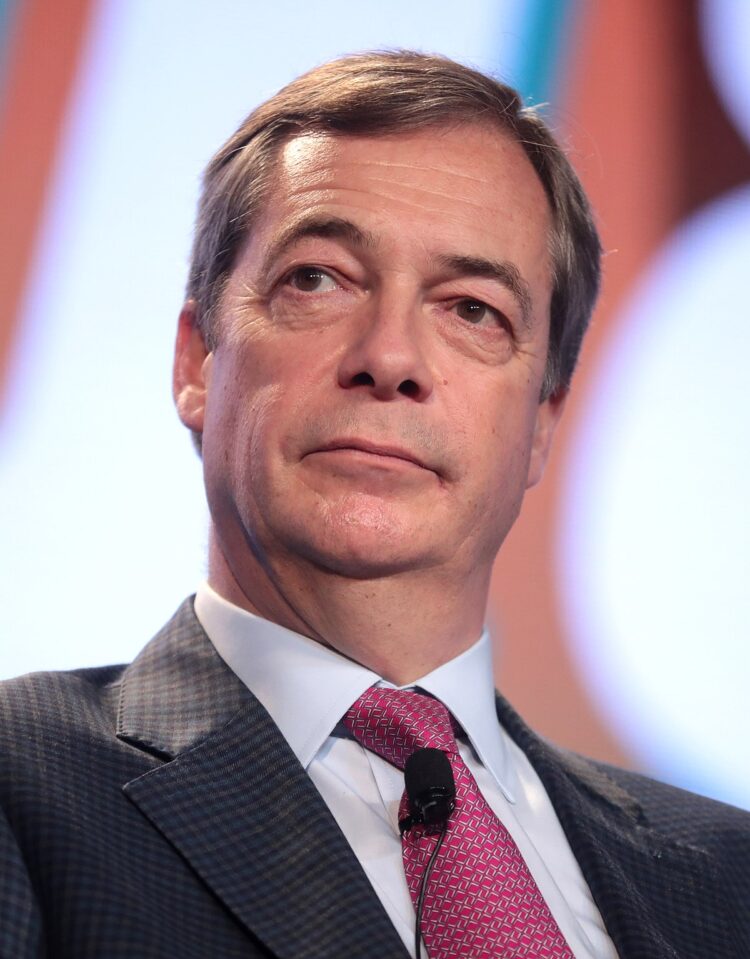
Ofcom’s decision to investigate a complaint brought by Nigel Farage(pictured) against Sky News has reignited a fundamental debate about the limits of doorstep journalism, but the broadcaster’s account suggests that the incident may have involved a legitimate attempt to question a prominent political figure rather than an unwarranted intrusion into family privacy.
The media regulator has opened an investigation following a complaint made on behalf of Reform UK leader Nigel Farage, who accused Sky News of harassing members of his family after reporters attended a property where his adult daughter lives. Ofcom is examining complaints concerning fairness and alleged unwarranted infringement of Farage’s privacy, although the regulator has stressed that it does not publicly confirm the identities of people involved in individual complaints. Farage has strongly criticised Sky’s conduct and said he was “appalled” by the way members of his family had been treated. The Reform UK leader has argued that his daughter had been subjected to unwanted attention and has previously demanded an apology from the broadcaster, together with an undertaking that journalists would not attempt to contact his family at their homes. Sky News, however, has given a markedly different account of what happened.

AD: Capeesh Restaurant
In July, the politician accused the broadcaster of “harassing” his daughter and he released CCTV footage which appeared to show two approaches were made at her home on July 6.
The broadcaster said its journalists were seeking to contact Farage himself, rather than his daughter, over questions concerning a £5 million gift he received from cryptocurrency investor Christopher Harborne. Sky said the approach to the property took place on a single occasion, without a camera operator, and that the reporter identified themselves as being from Sky News before the adult occupant chose not to engage. Sky has also denied hounding or pursuing Farage’s daughter, saying there was no interaction with her and that the purpose of attending the address was to locate Farage and put questions to him about a matter of public interest. That explanation is central to assessing the strength of the privacy allegation.
A journalist attempting to obtain comment from a prominent politician about a significant financial matter is a conventional part of political reporting. The fact that the attempt takes place at a property associated with that politician does not, by itself, establish an infringement of privacy, particularly where the journalist says the intended subject of the approach was the politician himself. The circumstances would be materially different if journalists repeatedly attended a private residence, pursued relatives who had no connection with the story, refused to leave after being asked to do so or otherwise engaged in sustained and intrusive conduct. Such behaviour could raise much more substantial concerns about harassment and privacy.

AD: Oysterian Sea Food Restaurant And Bar
According to Sky’s account, there is no suggestion that such a pattern occurred. Instead, the broadcaster describes a single off-camera approach in which journalists identified themselves and attempted to obtain a response from Farage. If that account is supported by the evidence examined by Ofcom, the incident would appear considerably closer to established doorstep journalism than to sustained harassment. That distinction is particularly relevant because Farage is not a private individual removed from public life. He is the leader of a national political party, an elected MP and one of the most prominent figures in British politics. His political activities and financial affairs are therefore subject to legitimate public scrutiny, particularly where questions concern parliamentary standards and political funding.
The £5 million gift that Sky was seeking to discuss is itself a matter of considerable public interest. A parliamentary standards investigation concerning the circumstances surrounding the gift has resumed, and Farage has maintained that he has done nothing wrong. Most journalists and well informed professionals will agree that the public has a legitimate interest in understanding the financial arrangements surrounding elected politicians, and news organisations have a legitimate responsibility to ask questions about those arrangements. Political figures cannot reasonably be expected to answer every question put to them, but the refusal of a politician to engage with journalists does not remove the journalist’s right to seek comment through lawful and proportionate means. That principle must nevertheless be balanced against the privacy rights of family members. Being related to a public figure does not automatically make an individual a legitimate target for journalistic scrutiny. A politician’s adult children, partners and other relatives should not be drawn into a story merely because of their relationship to someone in public life, particularly where they have no relevance to the underlying issue.
The available accounts make the distinction important in this case because Sky says it did not attempt to interview Farage’s daughter and did not interact with her. The broadcaster says the intended subject of its approach was Farage himself. If that version is established, the complaint against Sky becomes substantially narrower and potentially groundless. The logical issue would not be whether journalists had sought access to Farage’s daughter or attempted to investigate her private life, but whether approaching a property where Farage could potentially be located amounted to an unwarranted intrusion into his privacy. That is a question Ofcom is now entitled to determine. it goes without saying that the fact that the regulator has opened an investigation should not be interpreted as a finding that Sky News has breached the rules. Ofcom’s role is to assess the complaint and the available evidence before reaching a conclusion. There is also an important distinction between being entitled to complain and having a complaint ultimately upheld.
Farage is entitled to object to conduct he considers intrusive, and his concerns about protecting his family deserve to be taken seriously. Equally, Sky News is entitled to defend the actions of its journalists where it believes they were acting within accepted professional practice, and pursuing a story of genuine public interest. On the information currently available, Sky’s defence has a straightforward foundation; that its journalists say they were looking for Farage, not his daughter, in order to ask questions about a significant financial matter; they say the approach occurred on a single occasion; and they say the adult occupant was not pursued or engaged after choosing not to respond. If those facts are confirmed, it would be difficult to characterise the conduct as a sustained campaign of harassment.
That does not mean that public figures surrender their right to privacy when they enter politics. Nor does it mean that journalists have an unrestricted right to attend private addresses whenever they wish. Responsible journalism requires proportionality, restraint and a clear public-interest justification. But those same principles also recognise that public figures cannot use privacy arguments to prevent legitimate scrutiny of matters directly relevant to their political responsibilities. The timing of the dispute is significant because the Sky News approach concerned questions surrounding a financial matter that has attracted parliamentary scrutiny. For Sky News, the case represents a test of whether a conventional attempt to obtain comment from a prominent politician can be regarded as an unjustified privacy intrusion simply because the journalist approaches an address connected to that politician. The answer will ultimately rest with Ofcom and the evidence before it.
Until then, the most defensible assessment is a measured one. Farage has raised a legitimate concern for regulatory examination, but if Sky News’ account is accurate, and if there was no repeated attendance at the property or pursuit of his daughter, the publicly described conduct does not on its face amount to a compelling case of harassment or an unwarranted invasion of privacy.
The wider public interest lies in preserving both sides of that boundary: protecting the private lives of people who have not chosen public office while ensuring that politicians remain subject to proper, proportionate and persistent scrutiny when matters affecting public confidence and parliamentary accountability arise. Ofcom now has the task of deciding where this particular incident falls on that line. Until its findings are published, neither Farage’s accusation nor Sky’s defence should be treated as the final word. The dispute highlights an important issue for modern journalism: public-interest reporting must respect privacy, but privacy cannot become a shield against legitimate scrutiny of those who hold public office.
The Ofcom dispute comes at a particularly significant moment for Farage and Reform UK, following the party’s dramatic advance in the May 2026 local elections. Reform won 1,454 council seats across England and secured control of 25 councils, establishing itself as a major force in local government and underlining the scale of its transformation since the 2024 general election. The party’s subsequent setbacks, including Labour’s victory over Reform in the Greater Manchester mayoral by-election in July, demonstrate that its momentum is not irreversible, but Farage remains at the centre of one of the most consequential political movements in contemporary British politics.
An Ofcom spokesperson unwisely said: “We treat fairness and privacy complaints in strict confidence and do not publicly confirm the identities of individuals involved.” Such response t a media inquiry for a quote smacks of both immaturity and unprofessionalism< especially when the matter in question is already in the public domain< and was put there by the complaining party whose confidentiality is supposedly being protected. Nigel Farage was also contacted for comment.

AD: Heritage And Restaurant Lounge Bar