
By Lucy Caulkett-
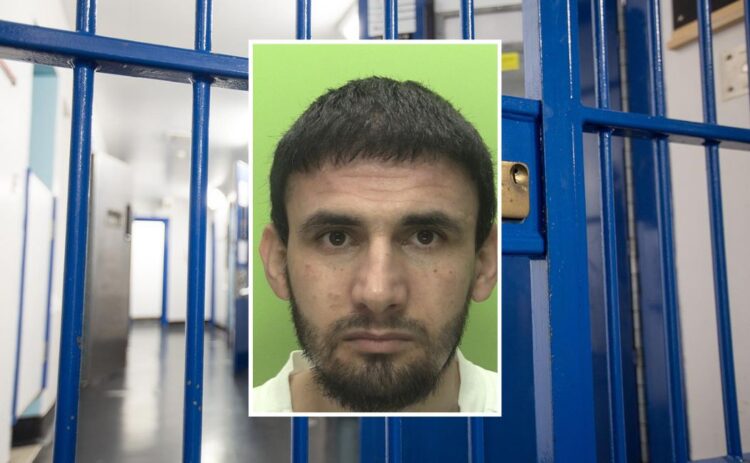
A man who posed as a teenage boy on Snapchat before grooming and raping a 13-year-old girl in woodland in Nottingham has been jailed for nine-and-a-half years.
Abdul Khan, believed to be 28, used the social media platform to present himself as a 14-year-old boy and arranged to meet the girl after only about a week of online contact. He subsequently took her to woodland in the Clifton area, where a jury found that he raped her twice.

AD: Capeesh Restaurant
The teenager, whose identity is protected by law, had told Khan that she was 14, although she was actually 13. Khan maintained the pretence that he was also 14 as their conversations developed online.
On 14 May last year, Khan contacted the girl and arranged to meet her. They met in the Clifton area before going to Scout Wood Nature Reserve. The court heard that the girl became concerned when Khan did not look like the person shown in the photographs on his social-media profile.

AD: Oysterian Sea Food Restaurant And Bar
The prosecution said Khan subsequently took her into the woods, where the sexual attack took place.
The girl later returned home and told her father what had happened. Police began an investigation, with forensic evidence subsequently providing a crucial link between Khan and the attack.
Khan had been arrested by Derbyshire Police on the same day as the Nottinghamshire offence in connection with separate sexual offences. His mobile phone was seized during that investigation, and Nottinghamshire detectives discovered evidence on the device linking him to the 13-year-old.
Messages exchanged between Khan and the girl were recovered from the phone, providing investigators with evidence of their contact on Snapchat. DNA evidence provided another crucial link. Prosecutors told the court that forensic examination of the girl’s clothing produced a DNA match to Khan. But despite the evidence, Khan repeatedly denied being the man who had met the girl.
When interviewed by police on 10 July last year, he claimed to be a 15-year-old boy using another name. He denied meeting the victim and denied ever having visited the location of the attack.
He also claimed he had never used Snapchat.
Khan went further, suggesting that the mobile phone recovered by police might belong to someone else, despite it containing multiple photographs of him.
When detectives interviewed him again on 18 February this year, he offered another version of his identity and claimed to be an entirely different person. He again denied any connection with the victim and with witnesses who had identified him during an identification procedure.
Investigators eventually established his identity after finding an image of an Afghan national identity card stored on the phone.
The evidence presented to the jury included the digital material recovered from the device, DNA evidence and witness identification.
Following a four-day trial at Nottingham Crown Court, Khan was convicted of two counts of rape, engaging in sexual activity with a child, sexual communication with a child, meeting a girl under 16 following grooming and perverting the course of justice.
He was sentenced at Nottingham Crown Court on Monday to nine-and-a-half years in prison.
Khan will also face automatic deportation to Afghanistan after serving the relevant portion of his sentence and has been ordered to remain on the sex offenders’ register indefinitely.
Sentencing, Judge Mark Watson condemned Khan’s deliberate deception of the girl, who believed she was communicating with another child. The judge described Khan’s claims about his identity and age as “nonsensical” and said he had deliberately concealed his true identity from the victim.
The court heard that Khan had continued to dispute the identity and age under which he had been prosecuted, despite the evidence against him.
The impact on the victim was also set out in court.
In a victim personal statement, the girl described feeling numb when she thought about what had happened and said she had been left with flashbacks and a profound loss of trust.
She said the incident had changed how she felt about going out and affected her relationship with the world around her. The court was told that memories of Khan and the attack continued to return to her.
Judge Watson said she had been profoundly affected by what happened. This case has once again highlighted the serious dangers of online grooming, particularly where offenders deliberately conceal their age and identity in order to gain the trust of children.
Khan did not merely make contact with the girl online. According to the prosecution case, he constructed a false teenage identity, developed a relationship with her and then arranged an in-person meeting.
The investigation also demonstrated the importance of digital evidence in exposing offenders who attempt to hide behind false online identities.
Khan’s mobile phone, seized during his arrest for separate offences, provided investigators with messages linking him to the victim. Photographs stored on the device contradicted his suggestion that the phone belonged to somebody else, while the discovery of the Afghan identity document helped detectives establish who he really was.
The DNA evidence further undermined his denials. His attempts to mislead investigators ultimately resulted in the additional conviction for perverting the course of justice.
Khan was already serving a prison sentence when the latest case came before the court. In January this year, he was jailed at Derby Crown Court after pleading guilty to engaging in sexual communication with a child and perverting the course of justice.
That earlier conviction arose from the separate investigation that led to his arrest on the day of the Nottinghamshire attack.
Detective Constable Madeleine Johnson, of Nottinghamshire Police, described Khan as an “opportunistic and predatory offender” who poses a clear risk to teenage girls and other young women.
She said his previous grooming conviction demonstrated that he was “absolutely determined” to establish sexual relationships with young girls.
“The victim in this case was particularly vulnerable at the time of this offence and has unsurprisingly suffered a great deal as a result of what Khan did to her,” she said.
Detective Constable Johnson praised the victim’s courage and said it was her bravery, together with the compelling evidence she provided, that helped secure Khan’s conviction.
The prosecution of Khan also illustrates how quickly online grooming can develop into real-world offending. The contact began on Snapchat, with Khan presenting himself as a boy of the same age as his intended victim. Within approximately a week, he had arranged to meet her.
The apparent anonymity of social media did not protect him indefinitely. Once police obtained access to his phone, investigators were able to reconstruct his communications and connect the digital identity to the individual behind it. The forensic evidence then provided another independent route to the truth.
Khan’s repeated attempts to change his identity also failed. Rather than one consistent alternative account, investigators were presented with different claims about who he was, each of which could be tested against the evidence. The jury ultimately rejected his denials and convicted him of the full range of offences.
Khan will now spend nine-and-a-half years in prison as a result of his convictions. He will remain on the sex offenders’ register indefinitely and faces

AD: Heritage And Restaurant Lounge Bar
-
Share On
- Categories
- Date