
By Ben Kerrigan-
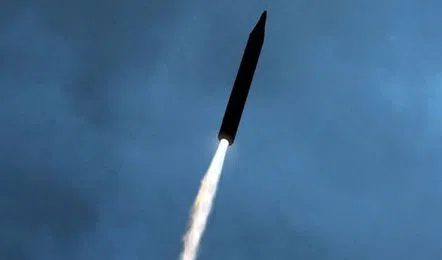
China has conducted a test launch of a ballistic missile that reportedly travelled into or over parts of the South Pacific nuclear-free zone, prompting concern among regional governments and renewed scrutiny of military activity in one of the world’s most geopolitically sensitive ocean regions.
China has conducted multiple long-range missile tests as part of its expanding strategic forces, though it typically does not publicly disclose full details of flight paths or payloads, according to reports, These developments come amid growing strategic competition in the Indo-Pacific, where military activity by China and the United States has increased across key maritime regions.

AD: Capeesh Restaurant
Analysis notes that Beijing’s missile modernisation programme includes intercontinental systems designed to extend China’s strike capabilities, while limited transparency around testing has raised concerns among regional security experts. The area falls within the framework of the Treaty of Rarotonga (South Pacific Nuclear Free Zone Treaty), established in 1985 and entering into force in 1986 to prohibit the development, possession, stationing, and testing of nuclear explosive devices in the South Pacific region, according to the Arms Control Association.
The United Nations Office for Disarmament Affairs confirms that the treaty forms part of a broader system of nuclear-weapon-free zones designed to promote regional and global disarmament and reduce the risk of nuclear conflict.
Regional defence authorities are seeking clarification from China regarding the missile’s trajectory and whether advance notification was provided. The launch follows a series of increasingly complex Chinese military exercises, reflecting ongoing modernisation of its strategic missile forces and expanding reach across the Pacific.

AD: Oysterian Sea Food Restaurant And Bar
Military analysts say that ballistic missile tests over remote ocean areas are not unusual for major powers, but the South Pacific carries added symbolic weight due to its nuclear-free designation and history of Cold War-era testing by external powers. The U.S. Department of Defense has previously stressed that transparency in missile testing is essential to reducing the risk of miscalculation and maintaining regional stability.
Pacific Island nations have long emphasised their commitment to the nuclear-free principles enshrined in the Rarotonga Treaty, which was designed to ensure the region remains free from nuclear weapons development, possession, and testing.
China is not a signatory to the treaty, its actions in adjacent maritime zones are closely watched by regional governments concerned about broader militarisation trends in the Indo-Pacific.
The missile test is also being assessed in the context of broader strategic competition between China and Western-aligned powers in the region. Analysts say the Pacific Ocean has become an increasingly important theatre for demonstrating long-range military capabilities, particularly as both China and the United States expand their presence across key maritime corridors.
Pacific Governments Seek Clarification as Security Dialogue Intensifies
In the aftermath of the test, diplomatic channels across the Pacific have reportedly been engaged as governments seek clarity on the nature, purpose, and trajectory of the missile launch.
Under international best practice guidance outlined by the United Nations Office for Disarmament Affairs, states conducting missile tests are encouraged to provide advance notification where feasible to reduce the risk of misunderstanding or escalation.
Security observers note that uncertainty over the missile’s exact flight path has contributed to heightened attention among Pacific Island governments, many of which are particularly sensitive to any military activity in their maritime domain. Even when tests are non-nuclear, the potential for misinterpretation can increase tensions in regions already shaped by great-power rivalry.
China has conducted a long-range ballistic missile test in the South Pacific, with Australian officials reportedly briefed ahead of the launch as regional governments reacted to the development, according to reports.
The report states that the missile, launched from a Chinese nuclear-powered submarine, landed in designated waters of the Pacific Ocean and was described by Beijing as a routine military exercise carried out in accordance with international law. Similarly, reports that the missile carried a dummy nuclear warhead and was fired shortly after the signing of a new Australia–Fiji defence agreement, with Australian officials expressing concern about the timing and regional implications. Both reports highlight that while China described the launch as a standard test, the absence of detailed publicly released trajectory data and the sensitive location of the exercise have contributed to heightened scrutiny across the Indo-Pacific.
China, for its part, has consistently maintained that its military development is defensive in nature and aimed at safeguarding sovereignty and national security interests. However, analysts say that the scale and reach of its missile testing programme have increasingly drawn international attention, particularly when tests extend into or near sensitive regions such as the South Pacific.
Experts suggest that the latest launch could prompt renewed discussions among Pacific nations about strengthening regional security dialogue and improving communication mechanisms between major powers operating in the Indo-Pacific. The goal, they say, would be to reduce the risk of misinterpretation in a region where geography, politics, and strategic competition increasingly intersect.
Governments await further clarification, and the incident underscores the delicate balance between ongoing military modernisation efforts and the need to maintain regional stability across the Indo-Pacific. Officials in the region seek additional details on the missile’s flight path, payload, and purpose, diplomatic channels remain active, reflecting growing concern over how such activities are communicated and interpreted in real time.
Even when states describe missile launches as routine training exercises, the absence of full transparency can heighten uncertainty among neighbouring countries and prompt rapid political responses. With the South Pacific continuing to serve as both a strategically significant maritime corridor and a nuclear-free zone under established international treaty frameworks such as the Treaty of Rarotonga, the region occupies a unique position in global security architecture.
It is both geographically vast and politically sensitive, shaped by a history of nuclear testing and long-standing commitments by Pacific Island nations to preserve it as a zone of peace. Against this backdrop, even conventional ballistic missile tests can generate heightened scrutiny, particularly when they traverse or approach internationally sensitive waters.
Analysts note that the modernisation of military capabilities by major powers, including the development of longer-range missile systems and expanded testing ranges, has increased the likelihood that such activities will intersect with politically symbolic regions.
This overlap between strategic capability demonstration and sensitive geography can amplify diplomatic reactions, even in cases where no treaty violations occur. With a result, communication and advance notification practices are increasingly viewed as essential tools for reducing the risk of misinterpretation.
The situation also highlights broader challenges facing global arms control and confidence-building measures. While existing international frameworks encourage transparency and restraint, they are often non-binding and unevenly applied, leaving gaps in how missile tests are reported and perceived.
In this context, governments are likely to continue pressing for clearer information-sharing mechanisms to ensure that military developments do not unintentionally escalate tensions.
The incident reflects a wider reality of contemporary geopolitics: as military technologies advance and strategic competition intensifies, maintaining regional stability depends not only on capability but also on communication, restraint, and trust between states operating in increasingly crowded and contested spaces.

AD: Heritage And Restaurant Lounge Bar