
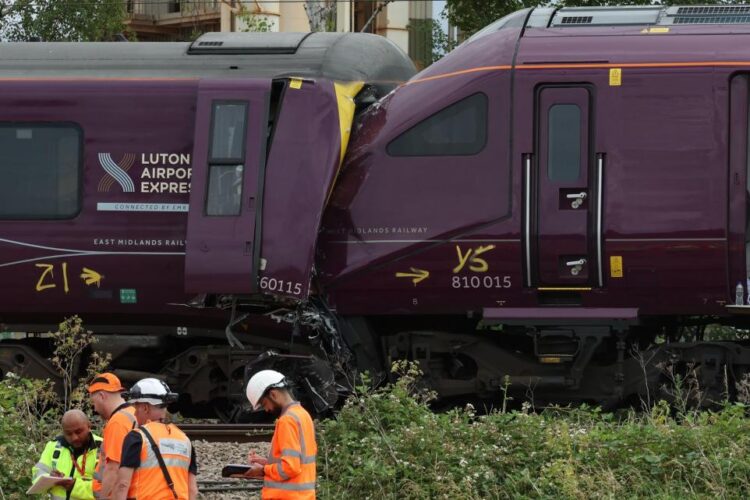
A train driver killed in a 49mph crash in Bedfordshire passed a red signal moments before the collision, investigators sai
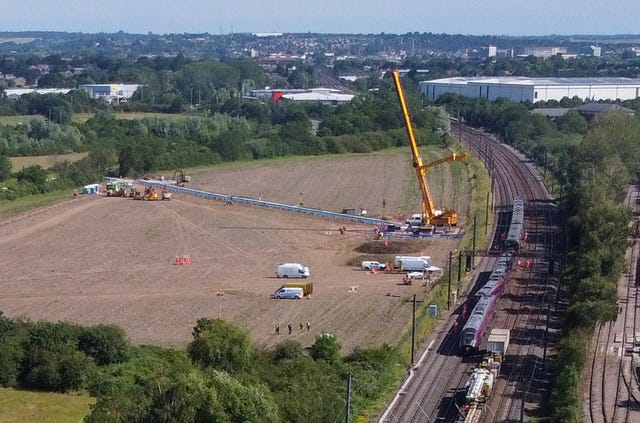
The Rail Accident Investigation Branch (RAIB) said in an interim report that Mr Burton’s train proceeded past a red signal near the scene of the crash in Elstow, near Bedford, at 5.15pm on Friday.

AD: Capeesh Restaurant
It added that “it is not yet possible to say what indication the driver received” from automatic warning system (AWS) equipment fitted to the train.
Some 162 people were injured, 102 of whom needed hospital treatment.

AD: Oysterian Sea Food Restaurant And Bar
Fifty-three remain in hospital, including eight in a critical condition.
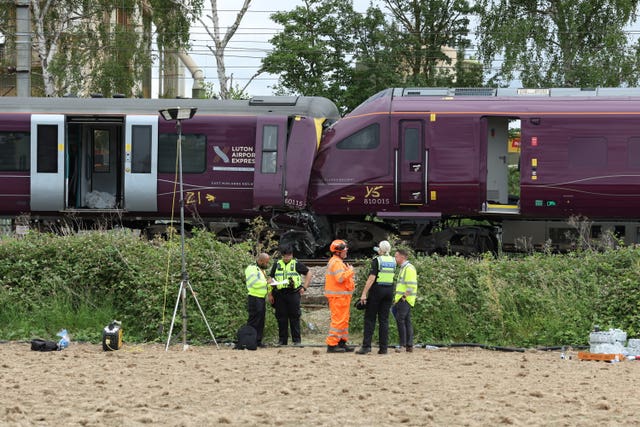
This resulted in the signal behind it automatically changing to red, investigators said.
Approaching trains should stop at red signals.
The RAIB said its investigation will consider “the actions of those involved and any factors that may have influenced them”.
It will also look at the “positioning, visibility and conspicuity” of the signal passed by Mr Burton.
Transport Secretary Heidi Alexander said her “deepest sympathies” are with everyone affected by the “tragic collision”, particularly Mr Burton’s family and those who remain in hospital.
She went on: “The report makes clear there is still much to establish, and the full investigation will provide the answers and recommendations everyone affected deserves.
“Our railway is one of the safest in the world, and while incidents like this are incredibly rare, when they do occur we will leave no stone unturned to understand what happened.”
EMR managing director Will Rogers said it would be “inappropriate” to comment on “specific findings” or speculate on the circumstances surrounding the crash “before all of the evidence has been examined”.
He added: “Given the complexity of the issues being examined, it is important that the independent investigation is allowed to reach its conclusions.”
Dave Calfe, general secretary of train drivers’ union Aslef, said the investigation “has a long way to go” but it appears that Mr Burton’s train passed a red signal “and it is now important to understand how and why this happened”.
He claimed “what will concern passengers” is the decision not to install train protection and warning system (TPWS) technology where the crash happened.
TPWS, which started being used in Britain at the turn of the millennium, automatically applies a train’s brakes when it detects it will be unable to stop before a red signal.
Mr Calfe said: “TPWS has been installed throughout much of Britain’s railway network.
“Unfortunately, TPWS had not been installed here.
“If it had been installed, this accident would not have happened, the driver would not have died, and no passengers would have been injured.”
He added: “Britain’s railway is one of the safest in the world.
“We have to invest, now, in the safety systems and technology to ensure it stays that way.”

AD: Heritage And Restaurant Lounge Bar
Last week’s publication of the RAIB’s final report into a fatal train crash in mid-Wales came more than a year-and-a-half after the incident.