
By Theodore Brown–
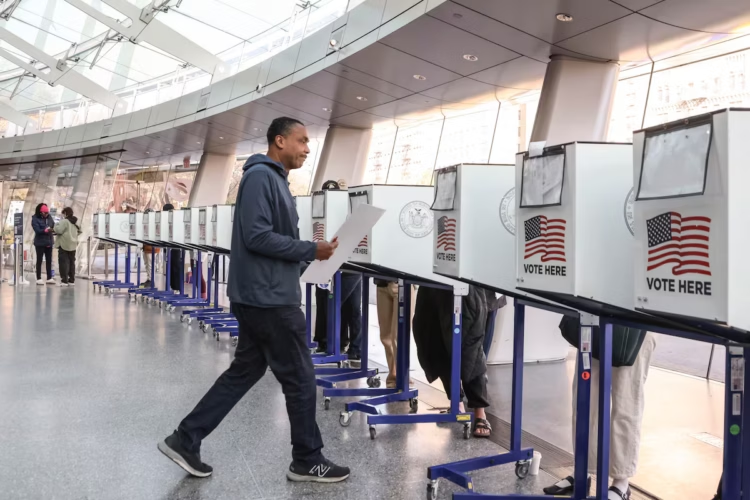
Voters across New York, Maryland, South Carolina and Utah headed to the polls Tuesday in a series of closely watched primary elections that offered an early glimpse into the political forces likely to shape the 2026 midterm campaign.
While the races varied dramatically from state to state, they shared a common theme: each served as a test of voter enthusiasm, party direction and the influence of prominent political figures as candidates sought nominations for congressional, gubernatorial and local contests.

AD: Capeesh Restaurant
The elections unfolded against a backdrop of intense national political debate, with both Democrats and Republicans seeking signs of momentum ahead of November. Analysts have long viewed primary elections as a measure of grassroots energy, and Tuesday’s contests attracted attention not only because of the candidates involved but also because of what the results could reveal about the mood of voters in an increasingly polarised political environment.
In New York, the spotlight fell on a series of Democratic congressional primaries that highlighted ideological tensions within the party, with several contests framed as a broader struggle between the party’s progressive wing and more established Democratic leadership.
Multiple races featured progressive challengers backed by left-leaning activists and organisations seeking to expand influence within the party, while incumbent and establishment-aligned candidates emphasised a more pragmatic approach to governance and electoral competitiveness.

AD: Oysterian Sea Food Restaurant And Bar
The reporting noted that these primaries have increasingly become a testing ground for competing visions of the Democratic Party, with progressives attempting to convert grassroots enthusiasm into electoral victories against long-standing incumbents in traditionally safe Democratic districts.
According to reports, races in New York City became a proving ground for the ongoing struggle between progressive activists and traditional Democratic leadership, with several challengers attempting to unseat incumbent lawmakers in districts that have long been considered Democratic strongholds. The contests were widely viewed as an important test of whether progressive candidates could translate grassroots enthusiasm into electoral success and reshape the party’s future direction.
Among the most closely watched developments was the involvement of New York City Mayor Zohran Mamdani, whose support for a slate of progressive candidates drew national attention. Political observers noted that the outcomes could influence the broader direction of the Democratic Party, particularly as lawmakers prepare for another election cycle shaped by debates over economic policy, immigration and the role of government.
It’s reported that several races pitted candidates aligned with democratic socialist ideals against more centrist Democrats, creating a series of contests that extended beyond local concerns and into the national political conversation. Maryland voters faced a different political landscape. Democratic Governor Wes Moore sought renomination while voters also considered candidates for several congressional seats.
One of the most closely scrutinised races involved the contest to replace retiring Representative Steny Hoyer, whose departure opened the door to a crowded field of hopeful successors. More than 20 candidates entered the race, creating one of the most competitive and unpredictable contests of the primary season.
The Maryland elections underscored the growing importance of suburban districts in national politics. Candidates focused heavily on issues such as public safety, economic development, health care and the future of democratic institutions. Former police officer and congressional candidate Harry Dunn emerged as one of the most recognisable figures on the ballot, emphasising the protection of democratic norms and institutions in his campaign messaging.
Meanwhile, in South Carolina, Republican voters participated in a closely watched gubernatorial runoff that carried implications far beyond the state’s borders. The race between Lieutenant Governor Pamela Evette and Attorney General Alan Wilson became one of the most prominent Republican contests of the year, fuelled in part by competing claims of support from President Donald Trump. Both candidates sought to appeal to conservative voters while emphasising their credentials on issues ranging from economic growth to public safety.
The runoff reflected broader questions facing the Republican Party as it continues to navigate the influence of Trump within the party. South Carolina has long been regarded as a critical political battleground in presidential politics, and strategists from both parties watched closely for signs of voter engagement and shifting priorities.
Analysts suggested that the outcome could offer clues about the continuing strength of Trump’s endorsements and the extent to which Republican voters remain aligned with his political agenda.
Local Contests Reflect National Political Themes
While national attention often focuses on high-profile races, many of Tuesday’s contests highlighted how local elections increasingly mirror broader political trends. In Utah, voters weighed in on congressional races shaped by redistricting changes and demographic shifts that have altered the state’s political map.
The court-ordered redrawing of congressional boundaries has transformed several races, particularly in the Salt Lake County area, where Democrats see a greater opportunity to compete in districts that were previously considered safely Republican.
The publication reported that the new political landscape has intensified competition and attracted increased attention from both parties, making Utah’s congressional primaries a notable test of how demographic change and redistricting can reshape electoral prospects in a traditionally Republican state.
The Utah races also illustrated how changing populations and evolving political coalitions are reshaping electoral strategies across the country. Candidates sought to appeal to suburban voters, younger residents and independent-minded constituencies that have become increasingly influential in determining election outcomes.
Questions surrounding election administration and voting methods also entered the conversation after renewed debate over the state’s mail-in voting system. It reported that discussions over vote-by-mail procedures became part of the broader political narrative surrounding the state’s primary elections.
Across all four states, turnout became one of the most closely watched indicators of political engagement. Election officials reported steady participation throughout the day, although turnout patterns varied significantly by region and contest.
Some observers noted concerns about relatively light participation in certain districts despite the prominence of several congressional races. Elsewhere, competitive contests appeared to energise voters eager to shape the direction of their parties heading into the general election.
Political scientists often describe primary elections as a window into the priorities of highly engaged voters, and Tuesday’s results offered evidence of that dynamic. Issues such as economic uncertainty, immigration policy, health care, public safety and the future of democratic governance featured prominently across multiple campaigns.
Candidates tailored their messages to local concerns while simultaneously addressing national debates that continue to dominate the American political landscape.
The elections also highlighted the growing role of political personalities in shaping voter behavior. Endorsements from prominent elected officials, social media campaigns and national fundraising networks played increasingly important roles in contests that once might have attracted only local attention.
In several races, candidates found themselves at the center of broader ideological struggles within their parties, transforming local primaries into contests with national significance.
With Democrats, the contests offered another opportunity to assess the balance between progressive activism and establishment leadership. The races tested the continuing influence of Trump and the direction of the party as it prepares for another major election cycle. In both cases, voters were not merely selecting nominees; they were helping define the messages and priorities that will shape campaigns across the country during the months ahead.
While ballots were counted and campaigns awaited final results, one reality emerged clearly from the day’s voting: primary elections remain a powerful measure of political engagement. Whether in the crowded congressional races of New York and Maryland, the gubernatorial battle in South Carolina or the evolving political landscape of Utah, voters demonstrated that the road to the midterms will be shaped not only by national headlines but also by the choices made in local polling places.

AD: Heritage And Restaurant Lounge Bar