
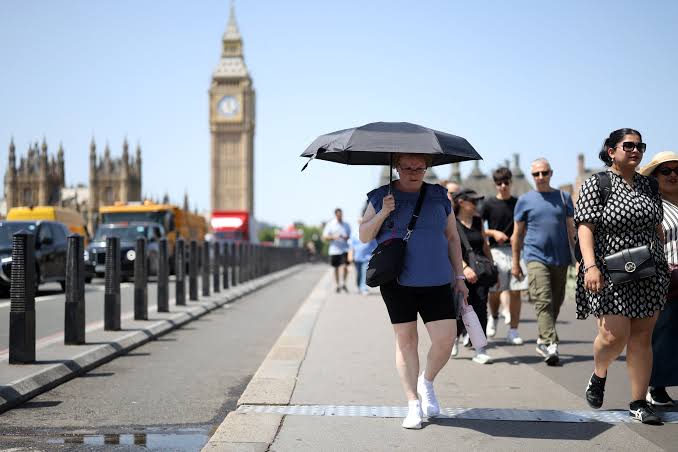
By Charlotte Webster-
London was placed under a high air pollution alert this week as a combination of stagnant summer heat, traffic emissions and regional weather conditions pushed pollutant levels into unhealthy ranges across the capital.
The warning came as authorities urged residents, particularly those with respiratory conditions, to limit outdoor activity during peak hours, with forecasters cautioning that ozone and particulate pollution could remain elevated if calm conditions persist. The alert, issued through official air quality monitoring systems, reflects a growing pattern in which warm, dry summer spells trap pollutants closer to ground level.

AD: Capeesh Restaurant
According to the reports, elevated air pollution levels are associated with increased risks of respiratory and cardiovascular problems, particularly for vulnerable groups such as children, older adults and those with pre-existing conditions.
Transport for London data shows that road traffic remains one of the largest contributors to nitrogen dioxide levels in the city, particularly in central boroughs where congestion and freight movement are most intense, with road transport identified as the single biggest source of air pollution in London according to TfL’s official air quality . Summer heat intensified this week, meteorological conditions reduced dispersion of emissions, allowing pollutants to accumulate over densely populated areas.
The Met Office explains that high-pressure systems, low wind speeds and warm conditions can trap pollutants close to the surface and limit their dispersion, leading to higher concentrations in urban environments. While the UK Health Security Agency also notes that stagnant atmospheric conditions can increase exposure by preventing pollutants such as nitrogen dioxide from dispersing effectively in populated areas.

AD: Oysterian Sea Food Restaurant And Bar
Public health experts have warned that these episodes are becoming more noticeable during hotter summers, as climate variability increases the frequency of stagnant atmospheric conditions. Environmental scientists say that while long-term improvements in emissions have been made over the past decade, short-term spikes remain a persistent challenge in urban centres with high traffic density and dense built environments.
High-pressure systems can trap air close to the surface, reducing wind movement and preventing pollutants from dispersing. When combined with sunlight and heat, these conditions can also increase ground-level ozone formation, further worsening air quality across urban areas.
With pollution levels climbed, parts of southern England saw the introduction of the first hosepipe ban of the summer, reflecting growing strain on water resources following an extended dry spell. Water companies confirmed restrictions on non-essential water use, including garden watering, car washing and filling paddling pools, as reservoir levels and river flows fell below seasonal averages.
Thames Water, which supplies millions of customers across London and the south-east, has previously warned that prolonged dry conditions combined with rising demand during heatwaves can place significant pressure on water infrastructure, particularly when reservoir levels fall and river flows weaken during extended dry spells.
The company has repeatedly highlighted that hot, dry weather patterns increase strain on supply systems, especially in summer months when domestic and outdoor water use rises sharply.
According to its official drought planning guidance, Thames Water emphasises that periods of low rainfall can threaten supply resilience and therefore require temporary measures such as usage restrictions and public conservation campaigns to maintain stable water availability across its network.
The hosepipe ban has revived debate about the resilience of the UK’s water system, particularly in southern regions where population density and demand continue to rise. Environmental analysts point out that household consumption, garden irrigation and industrial demand all peak during warm weather, compounding pressure on already strained reservoirs.
Water companies have faced scrutiny over leakage rates and infrastructure investment, with regulators urging improved efficiency and faster modernisation of ageing pipe networks. While restrictions such as hosepipe bans are designed to reduce short-term demand, experts argue that long-term solutions will require major upgrades to storage, distribution and recycling systems.
The dual pressures of poor air quality and water restrictions have created a stark reminder of how climate conditions are increasingly shaping daily life in the capital.
Commuters navigating congested roads under hazy skies have been advised to limit exertion during peak pollution hours, while gardeners and households adjust routines under water-use restrictions that now arrive earlier in the summer season than in previous years.
Public health officials have stressed that the combination of heat, pollution and water stress is particularly significant because it affects both environmental systems and human wellbeing simultaneously. Rising temperatures intensify ozone formation while also increasing water demand, creating overlapping pressures that are difficult to manage in densely populated urban regions like London.
While short-term relief may come with changing weather patterns later in the week, the broader trend points toward more frequent summer extremes. These include hotter heatwaves, longer dry spells and increased variability in rainfall distribution across the UK.
Londoners adapt to these conditions, policymakers face growing pressure to accelerate climate resilience planning. That includes expanding clean transport initiatives, strengthening water infrastructure and improving public preparedness for environmental alerts.
The capital sits under a dual warning: one in the air above, and another in the water below the ground. Both serve as reminders that climate pressures are no longer distant concerns but immediate features of everyday urban life in London.
What was once treated as a seasonal inconvenience has increasingly become a recurring pattern, where episodes of poor air quality and water stress arrive in close succession, sometimes overlapping during prolonged dry and warm spells.
The effects are already visible in daily routines. Commuters navigating congested roads encounter hazy skylines during pollution alerts, while families are asked to adjust water use habits just as temperatures rise and demand increases.
Public health agencies have warned that this combination of heat, pollution and water scarcity can amplify risks, particularly for vulnerable groups, making the impacts of climate variability more acute in densely populated cities like London. Urban infrastructure is also feeling the strain. Transport networks contribute to emissions that accumulate more easily under stagnant weather conditions, while ageing water systems must balance rising consumption with increasingly unpredictable rainfall patterns.
These pressures highlight how interconnected environmental systems have become, where changes in weather patterns can simultaneously affect air quality, energy demand and water availability. Meteorologists have observed that high-pressure systems, typically linked to warm summer conditions, can persist longer than in decades past, raising the chances of prolonged durations with minimal wind or rain. These circumstances, coupled with increasing urban emissions and a surging population demand, establish an environmental stress feedback loop that is challenging to disrupt without sustained planning and investment.
Policymakers face mounting pressure to accelerate adaptation strategies, from expanding low-emission transport zones to strengthening water resilience planning and encouraging widespread conservation. Environmental experts argue that short-term warnings are no longer sufficient on their own; instead, sustained structural changes are needed to address the underlying causes of urban climate vulnerability.
London remains suspended between these two pressures what is released into the air and what is drawn from the ground both reflecting a city increasingly shaped by the realities of a changing climate.

AD: Heritage And Restaurant Lounge Bar