
By Charlotte Webster-
The story of human evolution has often been told as a straightforward march toward becoming bigger, taller and more physically imposing over millions of years.From small, ape-like ancestors to modern humans, the popular image is one of steady and continuous growth.
However, groundbreaking new research suggests the reality is far more complex. Rather than a gradual increase in body size across the entire human family tree, scientists have found that the most dramatic change occurred during a relatively brief period around two to 2.5 million years ago, when some members of the genus Homo underwent a significant growth spurt while other branches remained remarkably small.

AD: Capeesh Restaurant
The findings, published today in the Proceedings of the National Academy of Sciences (PNAS), challenge long-held assumptions about how our ancestors evolved and offer a more nuanced picture of human development.
Researchers from the University of Reading and the University of Oxford examined hundreds of fossil remains from across the human evolutionary record and concluded that body size evolution was shaped by a combination of gradual trends and sudden shifts rather than a single, uninterrupted trajectory.
The study points to the emergence of species such as Homo rudolfensis and Homo erectus, also known as Homo orgaster, as the key turning point in human body size evolution. These early humans were the first hominins to reach average body weights of around 60 kilograms or more, placing them within the range of many modern people.

AD: Oysterian Sea Food Restaurant And Bar
Their appearance marked the most significant increase in body size seen anywhere in the human family tree. Academics say the research also demonstrates that not all branches of humanity followed this path. Some species remained surprisingly small long after larger members of Homo had emerged. Among them were Homo floresiensis, often nicknamed the “Hobbit” because of its diminutive stature, and Homo naledi, another relatively small-bodied human relative.
Earlier hominins such as Australopithecus also remained much smaller than modern humans, with average body weights of approximately 40 kilograms and heights comparable to those of present-day children. The findings challenge the traditional view that evolution consistently favoured larger bodies over time. Instead, the research paints a picture of multiple evolutionary pathways unfolding simultaneously, with different species adapting to their environments in very different ways.
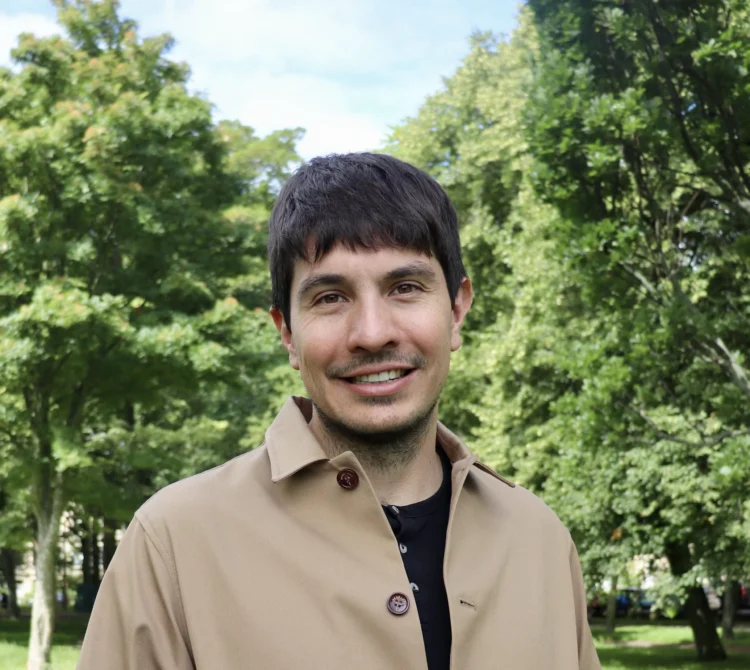
Dr Jacob Gardner, lead author of the study from the University of Reading,(pictured) said the long-running debate among scientists over body size evolution stemmed largely from researchers examining different parts of the fossil record rather than the complete picture.
“For years, different studies have come to different conclusions about whether our ancestors steadily grew bigger over time or jumped in size at some key point in our Homo ancestors,” Gardner explained. “We think that’s because everyone was looking at slightly different pieces of a much bigger puzzle.”
According to Gardner, bringing together fossil evidence from across the human family tree and analysing competing explanations within a single framework allowed researchers to reconcile what had previously appeared to be contradictory findings.
Commenting on the recent studies, prominent Prof Joseph Henrich, Chair of the Department of Human Evolutionary Biology at Harvard, famous for his work on culture-gene coevolution and how human psychological traits evolved said:
“When you put all the fossils together, examine multiple competing ideas, and account for how species are related to each other, a clearer picture emerges,” he said. “The answer is most likely a combination of these ideas.”
The research team appears to have examined body weight estimates derived from 386 fossils representing 21 different hominin species. Using advanced statistical modelling techniques, they tracked how body size changed over millions of years and evaluated competing theories about the evolutionary processes behind those changes.
”One of the reasons previous studies may have reached different conclusions is that researchers often focused on different stages of human evolution. Some concentrated on early ancestors such as Australopithecus, while others examined later members of the Homo lineage. Different methods of estimating body weight from fossil bones also contributed to varying results. In addition, earlier analyses frequently failed to account for uncertainties inherent in the fossil record, including incomplete specimens and ongoing debates about how fossils should be classified.
‘Incorporating these uncertainties and considering the evolutionary relationships among species, the new study provides what researchers believe is the most comprehensive assessment yet of hominin body size evolution.
‘The results indicate that body size did increase gradually among earlier hominins, particularly within Australopithecus and related groups. However, this trend was followed by a much more dramatic jump in body mass later within the Homo lineage. In effect, both sides of the long-standing scientific debate were partially correct.
Growth occurred steadily for a time, but the most important change happened suddenly and much later. The timing of this evolutionary leap is especially significant because it coincides with several other major developments in human evolution. Around the same period, members of Homo were becoming more efficient at walking long distances on two legs, expanding their geographical ranges and adopting diets that included greater quantities of meat.
Scientists believe these behavioural and ecological changes may help explain why larger bodies evolved. A bigger physique would have provided several advantages, including greater endurance for long-distance travel, improved energy storage and enhanced ability to exploit diverse food resources. As early humans spread across larger territories and adapted to changing environments, increased body size may have become an important evolutionary asset.
The study suggests that body size was not an isolated characteristic evolving independently of other traits. Instead, it appears to have been closely connected to broader shifts in behaviour, ecology and survival strategies.
Dr Thomas Püschel, co-author of the study(pictured) from the School of Anthropology and Museum Ethnography at the University of Oxford- a PhD holder in Adaptive Organismal Biology, 2018 said the findings reveal a much richer and more dynamic evolutionary story than previously understood.
“Our results suggest that human body size evolution was not simply a story of steady growth over time,” Püschel said. “Although body mass generally increased throughout our evolutionary history, the most significant shift occurred later within the genus Homo.”
He added that the timing of this change aligns closely with transformations in how early humans interacted with their environments.
“This change coincided with broader developments in how our ancestors moved across landscapes and exploited their environments, pointing to a close relationship between body size and major ecological and behavioural transitions,” he said.
Oxford University is consistently regarded as one of the world’s leading centres for evolutionary anthropology and human origins research, and has internationally recognised researchers who specialise Human origins and hominin evolution Paleoanthropology, Evolutionary geneticsHuman behavioural evolution, and Primate evolution
The research also highlights an important lesson about evolution itself. Rather than progressing in a single direction toward a predetermined outcome, evolution often produces multiple solutions to the challenges posed by changing environments. While some human relatives became larger and more mobile, others remained small and successfully occupied different ecological niches.
University of Reading generally has major strengths in:Archaeology, Biological anthropology, Zooarchaeology, Palaeoenvironmental studies
Reading offers opportunities to study aspects of human evolution through archaeology and anthropology-related research, but it does not have the same scale, breadth, or global prominence in human evolutionary
This diversity underscores the complexity of the human family tree. Far from being a simple ladder leading directly to modern humans, it resembles a branching network of species experimenting with different ways of surviving and thriving.
Anthropologists say the findings offer a new framework for understanding one of the most visible features of human evolution. They say they provide a reminder that the path from our earliest ancestors to modern Homo sapiens was neither linear nor inevitable.
Instead, the research suggests that the evolution of human body size was shaped by a combination of gradual change, sudden innovation and remarkable diversity. The largest leap forward occurred not across the entire hominin lineage but within a specific branch of our evolutionary family. At the same time, some of our closest relatives continued to remain small, demonstrating that there was never a single route to evolutionary success.
This latest study offers one of the clearest indications yet that the evolution of the human body was far more complicated—and far more fascinating—than the simple narrative of steady growth that has dominated public understanding for decades.

AD: Heritage And Restaurant Lounge Bar