
By Tim Parsons
England’s World Cup campaign could hardly have begun in more dramatic fashion. In a pulsating encounter in Dallas, Thomas Tuchel’s side overcame Croatia 4-2 in a match that showcased the exhilarating attacking potential of this new-look England team while simultaneously exposing weaknesses that must be addressed if the Three Lions are to challenge for football’s biggest prize.For long periods, this was an England performance that supporters have craved for years. It was bold, adventurous and, above all, fearless. The caution that often characterised previous tournament campaigns appeared to have been replaced by a willingness to attack opponents with pace, imagination and relentless energy. By the final whistle, England had delivered one of the most entertaining performances of the opening round of the 2026 World Cup and sent a message to rivals that they intend to be among the tournament’s leading contenders.
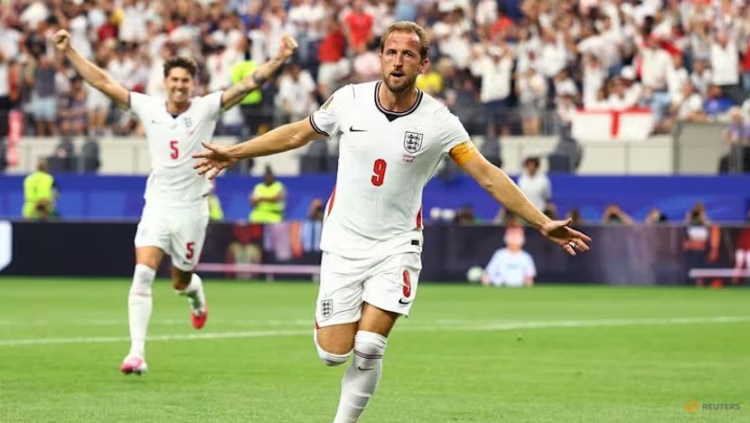
The victory was built upon the leadership and finishing ability of captain Harry Kane, who scored twice to help steer his side through a challenging contest. Kane’s goals took his World Cup tally to ten, drawing him level with Gary Lineker’s long-standing England World Cup scoring record and further cementing his place among the nation’s footballing greats.

AD: Capeesh Restaurant
Yet this was about far more than Kane alone. Jude Bellingham once again demonstrated why he is regarded as one of the finest young players in world football. His powerful second-half goal shifted momentum decisively in England’s favour and underlined his growing influence within the national team. Marcus Rashford added a late strike to seal the victory, while England’s attacking players repeatedly stretched and unsettled a Croatian side that struggled to cope with the pace of Tuchel’s men after the interval.
The first half, however, had been far from straightforward. Croatia twice fought their way back into the match, exposing defensive vulnerabilities that will concern Tuchel and his coaching staff. Martin Baturina and Petar Musa both found the net as England’s defensive organisation occasionally deserted them. At times, Croatia appeared capable of taking control of midfield, with England struggling to establish rhythm and consistency.
The turning point arrived during the interval. According to Kane, Tuchel delivered a calm but inspirational team talk, urging his players to remove the shackles and play with freedom. The message resonated immediately. England emerged from the dressing room transformed, displaying a level of attacking intensity rarely seen from the national side in recent major tournaments.

AD: Oysterian Sea Food Restaurant And Bar
The response was emphatic. England’s pressing became sharper, their passing more incisive and their movement significantly more fluid. Croatia, a side renowned for technical quality and tournament resilience, suddenly found themselves overwhelmed by wave after wave of England attacks. Bellingham’s decisive intervention epitomised the shift in mentality. Where caution may once have prevailed, confidence and conviction took over. The midfielder drove forward, seized his opportunity and restored England’s advantage at a critical moment.
For England supporters, the performance represented something deeper than three points. It suggested that Tuchel is beginning to imprint his own identity upon the team. Since taking charge, the German coach has spoken about restoring greater intensity and attacking ambition to England’s play. Against Croatia, those ambitions were visible for all to see. There was a willingness to take risks, commit players forward and impose themselves upon opponents rather than simply react to them.
Yet amid the celebrations, important questions remain unanswered. Croatia’s goals highlighted defensive frailties that stronger opponents could exploit more ruthlessly. England’s back line occasionally appeared uncertain under pressure, while midfield spacing sometimes allowed Croatia opportunities to attack through central areas. Defensive lapses ended England’s run of competitive clean sheets and served as a reminder that tournament success ultimately depends upon balance as much as attacking flair.
The fitness of Declan Rice may also become a concern. Rice was withdrawn after experiencing minor discomfort, although Tuchel sought to reassure supporters that the substitution was precautionary. Nevertheless, England’s midfield balance is heavily influenced by Rice’s presence, and any absence would be keenly felt as the competition progresses.
What cannot be questioned is the strength of England’s attacking options. Kane remains one of the world’s most reliable goalscorers. Bellingham continues to mature into a world-class midfielder capable of influencing the biggest matches. Rashford’s impact from the bench demonstrated the depth available to Tuchel, while players such as Bukayo Saka and Anthony Gordon provide additional pace and creativity. When operating at full capacity, England possess enough attacking quality to trouble any defence in world football.
Attention now turns to England’s next group-stage assignment against Ghana. On paper, England will enter the match as favourites, buoyed by confidence and momentum following their victory over Croatia. However, Ghana represent a very different challenge. They are likely to offer greater athleticism, physicality and direct attacking threat, forcing England to demonstrate greater defensive discipline than they showed in Dallas.
Tuchel’s selection decisions will come under intense scrutiny. Questions remain regarding the composition of his midfield and whether adjustments are required in defence. Some observers have suggested that changes at centre-back may be considered if England are to tighten up at the back. The manager’s ability to find the right balance between attacking freedom and defensive stability could determine how far this team progresses in the tournament.
England’s objective against Ghana will be straightforward: secure qualification momentum and move closer to the knockout stages. A second consecutive victory would place them in a commanding position within the group and further enhance belief that this squad can challenge the world’s elite. It would also provide valuable breathing space before their final group encounter.
For now, though, England can reflect on a memorable opening night. World Cups are often defined by moments that capture the imagination of a nation, and this performance possessed many of the ingredients supporters have long desired. There were goals, drama, attacking adventure and signs of a team willing to embrace the biggest stage rather than fear it.
The road ahead remains long, and sterner examinations undoubtedly await. Brazil, France, Argentina and other traditional powers will observe England’s performance with interest, noting both the attacking brilliance and the defensive vulnerabilities. Yet football tournaments are built upon confidence, and England now possess that in abundance.
As the celebrations continued in Dallas and supporters dared to dream, one conclusion felt unavoidable. Under Thomas Tuchel, England appear determined to write a new chapter. If they can combine the fearless attacking football witnessed against Croatia with greater defensive control, the possibility of a deep World Cup run may become far more than hopeful speculation.
For one unforgettable evening, England did not merely win. They announced themselves.

AD: Heritage And Restaurant Lounge Bar