
By Gavin Mackintosh-
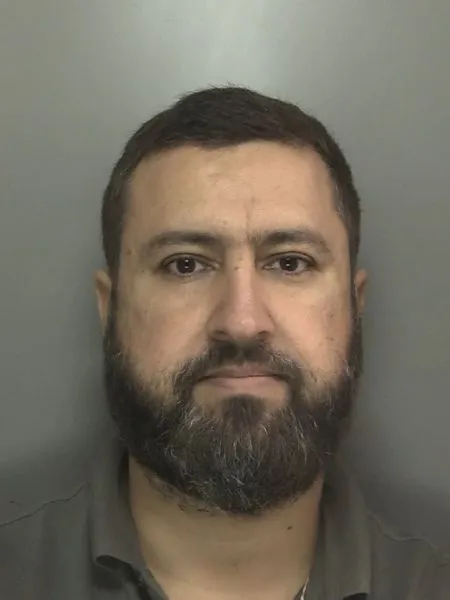
A Liverpool man who earned more than £300,000 by completing coursework and examinations on behalf of university students around the world has been jailed for three years, with prosecutors now moving to seize assets believed to have been obtained through his criminal activities. Shahid Adnan, 43, (pictured)from the Everton area of Liverpool, was sentenced at Liverpool Crown Court after admitting fraud, unauthorised access to computer systems and money laundering offences linked to a sophisticated contract-cheating operation that investigators believe involved at least 124 students.
On 7 October 2025, at Liverpool Crown Court, he changed his position and admitted converting criminal property, an offence commonly described as money laundering.

AD: Capeesh Restaurant
That guilty plea paved the way for sentencing, which took place on 17 June 2026.
The court imposed a three-year prison sentence for his offences.
Following the sentencing, prosecutors confirmed that proceedings will now begin under the Proceeds of Crime Act (POCA) to recover money and assets linked to Adnan’s offending.

AD: Oysterian Sea Food Restaurant And Bar
The confiscation process is designed to strip convicted criminals of financial gains made through illegal activity. Under POCA, the court will examine Adnan’s assets, income and expenditure to determine how much he benefited from his crimes. Prosecutors will seek a confiscation order requiring him to repay the value of that criminal benefit, subject to the assets available to him. If a confiscation order is granted and the amount is not paid within the period set by the court, additional penalties can be imposed, including further imprisonment. Authorities may also pursue the sale or seizure of assets such as money held in bank accounts, vehicles and other valuable property to satisfy the order.
The case centred on a business that enabled students to outsource academic work while presenting it as their own, undermining the integrity of university assessments.
The fraud first came to light on 24 February 2023 after a student submitted a USB memory stick containing coursework to a senior manager in the computer forensics department at Liverpool John Moores University (LJMU).
As part of routine verification procedures, the manager examined the digital files to ensure the work genuinely belonged to the student. A forensic analysis of the USB device revealed unexpected links to Adnan.
Investigators found that the pen drive had previously been used by Adnan and contained documents associated with a company he operated called Study Sharp Ltd. The examination also uncovered spreadsheets containing detailed information about other students, including course modules, assignment deadlines and, critically, login credentials for the university’s computer network.
The discovery immediately raised concerns that somebody was gaining access to student accounts and submitting work on their behalf.
Further enquiries by university staff confirmed suspicions that Adnan had been using students’ usernames and passwords to access university systems, upload assignments and even complete online examinations while impersonating the account holders.
The matter was referred to Merseyside Police’s Cyber Dependant Crime Unit, which launched a criminal investigation.
Officers subsequently obtained a search warrant and raided Adnan’s home, where he was arrested.
During police interviews, Adnan admitted that he had taken at least one online examination on behalf of the student who submitted the USB stick. He acknowledged logging into the student’s university account using personal credentials and completing the assessment in exchange for a payment of £250.
According to investigators, Adnan claimed he did not realise he required authority from the university to access the account.
However, the evidence gathered by police suggested a far more extensive operation.
Financial investigators began examining Adnan’s finances and quickly identified what they described as a lifestyle that appeared inconsistent with his declared sources of income. Officially, Adnan worked as a tutor and as a delivery driver for Amazon Flex. Yet the scale of wealth uncovered during the investigation raised immediate questions.
Police found that Adnan controlled three bank accounts as well as a trading account. He owned two vehicles, an Audi and a BMW, and lived in a home furnished with expensive household goods.
More significantly, investigators discovered substantial sums of money held across various financial accounts.
A Barclays account contained more than £1.5 million, while a personal Lloyds Bank account held over £600,000. A separate Lloyds business account contained more than £245,000, and a PayPal account held in excess of £110,000.
Officers also recovered significant quantities of cash during searches of his property.
Prosecutors later alleged that Adnan had created complex financial trails in an effort to disguise the origins of funds and frustrate efforts by authorities to trace the proceeds of his activities.
As investigators examined digital evidence and financial records, the scale of the operation became increasingly clear. Police concluded that Adnan may have been carrying out work for as many as 124 students attending universities across the globe.
The findings highlighted growing concerns within higher education about contract cheating, where students pay third parties to complete academic work while falsely claiming authorship. Such practices are regarded as a serious threat to academic standards because they allow individuals to obtain qualifications without demonstrating the knowledge or skills required.
Adnan was eventually charged with fraud by false representation, causing a computer to perform a function to secure or enable unauthorised access to data or programs, and money laundering.
The criminal proceedings progressed through the courts over several years.
Following the hearing, Senior Crown Prosecutor Andrew Madden said the case had involved extensive work to uncover the full extent of Adnan’s offending and trace the financial benefits generated by the scheme.
He said investigators had been required to piece together complex evidence and financial records in order to expose the operation.
Madden stated that Adnan had attempted to conceal his activities through complicated banking arrangements and had enjoyed a lavish lifestyle funded by the proceeds of crime. He said the defendant sought financial rewards beyond what his declared employment could provide and had attempted to evade detection by authorities.
The prosecutor also thanked Merseyside Police and Liverpool John Moores University for their assistance in bringing the case before the courts.
While the prison sentence marks the conclusion of the criminal prosecution, the financial consequences for Adnan are far from over.
The forthcoming confiscation proceedings will determine how much of his wealth can be recovered by the state. Investigators will seek to establish the value of the criminal benefit obtained through the cheating operation and identify assets available for confiscation. Those proceedings are expected to examine the large sums held in bank accounts, cash recovered during searches and other assets linked to Adnan. Any confiscation order granted by the court would represent a further significant penalty and reinforce the principle that crime should not pay.
The case stands as one of the most significant examples of contract-cheating fraud uncovered in the UK and serves as a warning that both academic misconduct and the profits generated from it can carry serious criminal consequences.

AD: Heritage And Restaurant Lounge Bar