
By Aaron Miller-
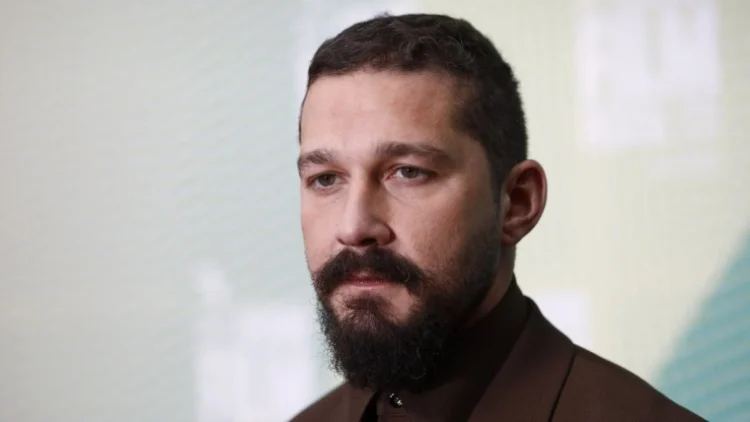
Actor Shia LaBeouf has been sentenced to probation after pleading guilty to assault-related charges stemming from a violent altercation outside a New Orleans bar during Mardi Gras celebrations, marking another legal setback for the Hollywood star whose career has repeatedly been overshadowed by personal and legal troubles.
The 39-year-old actor, best known for his breakout roles in films such as Transformers and Indiana Jones and the Kingdom of the Crystal Skull, entered the guilty plea in connection with a February 2026 incident in which he was accused of punching multiple patrons outside a venue in the French Quarter.

AD: Capeesh Restaurant
Court records and police accounts indicate the confrontation escalated after LaBeouf was asked to leave the premises, leading to physical violence that left at least one victim injured, including reports of a possible broken nose.
According to prosecutors, LaBeouf admitted to multiple counts of simple battery as part of a negotiated plea agreement that allowed him to avoid jail time. Instead, an Orleans Parish judge imposed a suspended prison sentence and ordered him to serve two years of probation.
The court also mandated participation in an alcohol treatment programme and additional behavioural counselling, reflecting concerns about substance use and anger management issues raised during proceedings.

AD: Oysterian Sea Food Restaurant And Bar
The case has drawn widespread attention due to both LaBeouf’s celebrity status and the chaotic circumstances surrounding the Mardi Gras incident, which was partially captured on video and circulated online.
Footage allegedly shows the actor shirtless and visibly agitated as he engaged with bar patrons before being restrained by bystanders. Witness statements presented in court described a rapidly escalating confrontation that required police intervention.
Court ruling and probation terms
According to Associated Press reporting, Orleans Parish Criminal Court Judge Simone Levine emphasised accountability while accepting Shia LaBeouf’s guilty plea in the Mardi Gras bar assault case, noting concerns about public safety and the seriousness of the offence; as part of his sentence, LaBeouf was placed on two years’ probation with a suspended prison term and ordered to comply with strict conditions including mandatory alcohol treatment and weekly drug testing, as well as staying away from the victims and the bar where the incident occurred, requirements prosecutors supported given his history of prior public disturbances and substance-related issues highlighted during sentencing proceedings.
Legal representatives for LaBeour told the court that the actor intended to focus on recovery, stability, and work commitments moving forward. The plea deal effectively closes the immediate criminal case, though any violation of probation could result in the suspended prison sentence being activated.
This latest ruling adds to a long record of legal issues for LaBeouf, who has previously faced charges related to disorderly conduct and battery over the past decade. His earlier cases similarly involved public intoxication allegations and court-ordered treatment programmes, underscoring a recurring pattern that has periodically interrupted his acting career.
Despite the legal outcome, public reaction has remained mixed, with some viewing the sentence as lenient given the severity of the alleged assault, while others note that the probation terms and mandatory treatment reflect a broader emphasis on rehabilitation rather than incarceration.
Attention now shifts to whether LaBeouf will comply with the court’s conditions and attempt a sustained return to professional work. For a figure long associated with both critical acclaim and controversy, the outcome represents another turning point in a career defined as much by its turbulence as its success.
In practical terms, LaBeouf’s immediate future is now shaped less by Hollywood projects and more by the obligations of probation, which typically require strict adherence to behavioural conditions, regular check-ins with supervising officers, and compliance with treatment or counselling programmes ordered by the court.
While the exact structure of his supervision has not been fully detailed publicly, similar sentencing frameworks in Louisiana often include alcohol monitoring, anger management counselling, and restrictions on contact with victims or locations tied to the offence.
A public figure whose past legal troubles have frequently intersected with periods of professional activity, this structured oversight effectively places a boundary around how quickly, and how freely, he can re-enter major studio work or high-profile production environments.
LaBeouf’s career trajectory has long been shaped by contrasts. He rose to prominence in the early 2000s as a Disney Channel standout before transitioning into blockbuster cinema with Transformers, a franchise that made him one of Hollywood’s most recognisable young leads.
Even at the height of his commercial success, his public image was increasingly marked by erratic behaviour, arrests, and clashes with paparazzi and law enforcement. Over time, he shifted toward independent and experimental film work, collaborating with auteur directors and taking on roles that reflected a more introspective and fragmented artistic identity.
In recent years, however, those artistic efforts have often been overshadowed by personal controversy. Allegations of misconduct, public incidents, and legal entanglements have repeatedly interrupted periods of attempted career rehabilitation.
This pattern has contributed to a perception within parts of the industry that LaBeouf is a high-risk collaborator, despite his continued recognition for intense, committed performances in projects that do manage to move forward with him attached.
The Mardi Gras incident, and its legal aftermath, adds another layer to that complicated reputation. While probation allows him to avoid incarceration, it also places his behaviour under formal scrutiny at a time when the entertainment industry is particularly sensitive to reliability, public relations risk, and on-set conduct.
Studios and independent producers alike often weigh not only talent but also insurability, scheduling reliability, and reputational exposure when casting or financing projects. Any violation of probation could therefore have consequences that extend far beyond the courtroom, potentially affecting future employment opportunities.
There remains a segment of audiences and filmmakers who continue to view LaBeouf through the lens of artistic potential rather than personal history. His work in films such as Honey Boy, which drew heavily on autobiographical themes, was widely praised for its emotional honesty and willingness to confront trauma and family dysfunction.
That film, in particular, suggested a possible pathway for LaBeouf to channel his experiences into creative output that resonates with both critics and viewers.
Whether this moment becomes another temporary pause or a lasting turning point will depend largely on what follows outside the public eye. Probation periods often function as both legal constraints and informal testing grounds, where long-term patterns of behaviour become more visible than short-term compliance.
With LaBeouf, whose career has repeatedly oscillated between reinvention and relapse into controversy, the coming months may determine whether this latest chapter marks a stabilisation or simply another cycle in a longer, unresolved narrative.

AD: Heritage And Restaurant Lounge Bar