
By Theodore Brown-
A prominent environmental artist has filed a $25m lawsuit against FIFA and associated organisations after his large-scale whale mural in downtown Dallas was painted over in preparation for the 2026 World Cup, escalating a growing dispute over the treatment of public art during major sporting events.
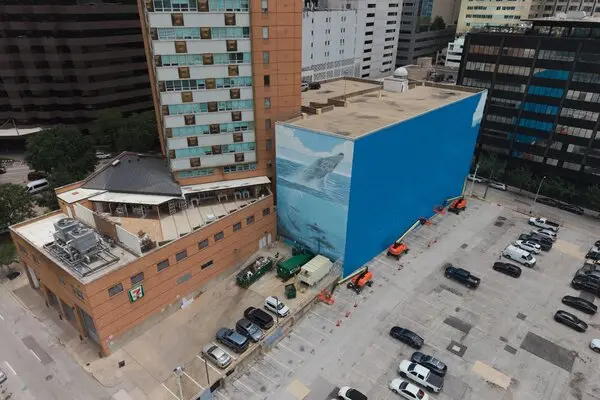
The lawsuit, brought by marine artist Robert Wyland, centers on his 1999 mural Ocean Life, also known as “Whaling Wall 82,” which had covered the side of a downtown building for more than two decades. The artwork, depicting whales and marine life across an expansive façade, was allegedly covered with blue paint without Wyland’s consent as part of a wider effort to prepare visual branding and new installations tied to the tournament.

AD: Capeesh Restaurant
Filed in federal court in Texas, the complaint accuses FIFA, its affiliated entities, and building stakeholders of violating the U.S. Visual Artists Rights Act (VARA), a law that protects certain works of public art from destruction or modification without the artist’s approval.
Wyland is seeking at least $25 million in damages, arguing that the mural was not only an artistic work but also a long-standing cultural landmark embedded in the identity of downtown Dallas.
Legal battle over public art rights and World Cup preparations
At the center of the case is a broader legal and cultural question: how far cities and event organisers can go in reshaping public spaces for global events. Wyland’s legal team argues that the mural was removed without proper notice or consultation, despite its status as a widely recognised piece of environmental art that had stood since 1999.

AD: Oysterian Sea Food Restaurant And Bar
The complaint alleges that the decision to paint over the mural was made hastily during World Cup preparations, with the intention of replacing it with new promotional artwork linked to the tournament. FIFA has denied direct responsibility for the mural’s destruction, stating that it had no involvement in the decision and referring inquiries to the local World Cup organising committee. Property owners involved in the case have suggested they were informed that the mural would be replaced by a new installation and believed the artist had been notified, a claim Wyland disputes.
The legal complaint also highlights the Visual Artists Rights Act, a relatively narrow but significant piece of U.S. copyright law that gives artists the right to prevent intentional destruction of works deemed of “recognised stature.” Wyland’s attorneys argue that Ocean Life clearly meets that threshold, pointing to its longevity, public recognition, and role as part of Dallas’s urban landscape.
The dispute has also reignited broader debate over the balance between commercial event branding and cultural preservation, as Dallas undergoes significant visual and civic transformation ahead of its role as a 2026 World Cup host city.
City preparations have included widespread rebranding efforts and the introduction of new World Cup-themed artwork across downtown spaces, part of a broader push to reshape the urban landscape for international audiences and visiting fans.
Objectors of the decision to paint over Wyland’s decades-old whale mural insist such large-scale promotional efforts risk erasing established cultural landmarks that predate the tournament by generations, particularly public artworks tied to environmental and community identity.
While highlighted in reports the mural’s removal has fuelled backlash from residents and advocates who view it as an example of how major sporting events can override long-standing artistic and cultural heritage in favour of temporary branding installations.
Those in favour of Wyland’s position say the case could become a defining test of how VARA is applied in high-profile urban redevelopment contexts, especially when large-scale international events intersect with established public art.

AD: Heritage And Restaurant Lounge Bar
The legal proceedings advance, the case is anticipated to examine not only who authorised the mural’s removal, but also whether sufficient legal and procedural safeguards were followed to preserve or relocate the artwork before it was painted over.
Central to that inquiry will be questions about communication between property owners, contractors, and organisations linked to FIFA’s 2026 World Cup preparations, as well as whether the artist was given proper notice under relevant protections for public artworks.
The dispute is expected to test how existing cultural preservation laws apply in fast-moving urban redevelopment contexts, particularly when international sporting events accelerate timelines for visual transformation across host cities.
At the heart of the case is the Visual Artists Rights Act (VARA), which protects certain works of “recognised stature” from intentional destruction or modification without the artist’s consent. Legal experts note that cases under VARA often hinge on whether a work is formally recognised as culturally significant and whether reasonable steps were taken to avoid irreversible damage.
In this instance, the court may be asked to determine whether a decades-old mural that had become part of the city’s visual identity meets that threshold, and if so, whether painting over it constitutes unlawful destruction rather than permissible alteration of property. That distinction could have broader implications for how public art is treated during large-scale redevelopment projects nationwide.
The investigation is also likely to explore the chain of decision-making that led to the mural being covered. In disputes of this nature, responsibility can become fragmented between multiple parties, including building owners, event contractors, and municipal authorities involved in coordinating World Cup-related branding.
Establishing who had final authority over the wall’s alteration may prove crucial in determining liability. The court could also examine whether any alternative options were considered, such as temporary coverings, relocation of the mural, or integration of the artwork into the new design plans for the area.
Within legal liability, the case has drawn attention to the cultural consequences of rapid urban rebranding. Cities hosting global events often undergo accelerated redevelopment to meet branding requirements, improve infrastructure, and enhance visitor experience. However, critics argue that this process can unintentionally erase long-standing cultural markers that contribute to local identity.
In this context, the whale mural long regarded as part of Dallas’s urban landscape has become a focal point for broader concerns about how cities balance global commercial obligations with the preservation of community heritage.
At present, the once-prominent mural has been replaced by a plain blue surface that dominates the building façade. What was previously a detailed and widely recognised piece of public art now stands as an absence, drawing attention precisely because of what is no longer there.
While residents and passers-by, the blank wall has become a visual reminder of the ongoing dispute, symbolising the tension between artistic legacy and commercial redevelopment priorities.
The case moves forward, further hearings are expected to clarify not only the legal responsibilities of those involved but also the standards that should govern public art in evolving urban environments. The outcome may influence how future host cities manage cultural assets during large-scale international events, particularly when timelines are compressed and branding pressures are high.
Now, the blank blue canvas remains in place in downtown Dallas, quietly anchoring a legal battle that is likely to continue shaping debate long after the World Cup preparations are complete.