
By Kenneth Williams-
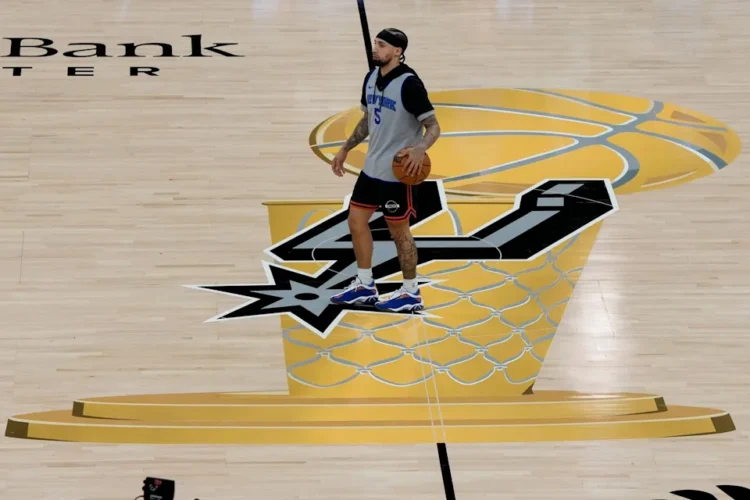
The 2026 NBA Finals, tipping off Wednesday, is being framed as more than just a championship series it is a generational turning point. When the New York Knicks and San Antonio Spurs meet in Game 1 at the Frost Bank Center, many of the league’s biggest names will be stepping into the Finals spotlight for the first time, ushering in what players, coaches and analysts are calling a “new world” of basketball.
With the Knicks, it marks their first Finals appearance since 1999, ending a 27-year absence from the league’s biggest stage. With the Spurs, it is a rapid return to contention built around a young core led by Victor Wembanyama, whose rise has accelerated expectations far ahead of schedule. Together, the two franchises represent opposite timelines one built on long-awaited revival, the other on sudden emergence.

AD: Capeesh Restaurant
The series also carries historical weight. It revives a Finals matchup between the franchises for the first time since the Spurs defeated the Knicks in 1999, a series that remains a touchstone moment in San Antonio’s championship legacy.
Now, more than two decades later, both teams arrive with dramatically different rosters but equally high stakes, as the Knicks chase their first title since 1973 and the Spurs aim to add another banner to a modern dynasty in the making.
Much of the intrigue heading into Game 1 revolves around how untested many key players are on this stage. The Knicks’ core, led by Jalen Brunson, Karl-Anthony Towns, Mikal Bridges and OG Anunoby, has dominated the Eastern Conference playoffs, but none of them have played in the Finals as the centerpiece of a contender.

AD: Oysterian Sea Food Restaurant And Bar
Their run has been defined by defensive discipline and balanced scoring, with Brunson emerging as the primary offensive engine during high-pressure moments.
On the other side, the Spurs arrive with arguably the most compelling young superstar in the sport. Wembanyama’s combination of rim protection, perimeter shooting and playmaking has already reshaped how opponents approach San Antonio. Supported by emerging contributors like Stephon Castle and Devin Vassell and a returning De’Aaron Fox the Spurs have blended youth and experience in a way few expected this soon.
What makes this matchup especially unusual is how quickly both teams have arrived here. The Knicks, long considered a franchise weighed down by decades of near-misses, rebuilt through trades and free-agent acquisitions that finally clicked in a cohesive playoff run. Their 11-game postseason winning streak leading into the Finals underscored a level of consistency that had eluded them for years.
The Spurs, meanwhile, were projected as a team still a year or two away from true contention. Instead, their playoff surge including a dramatic Western Conference Finals victory has placed them in position to challenge immediately. That rapid ascent has forced a recalibration of expectations not only in San Antonio but across the league.
Pressure, identity and the first game of a shifting landscape
Game 1 approaches, the Finals narrative is increasingly focused on adaptation how quickly each team adjusts to the intensity and unpredictability of this stage. The Knicks enter with the advantage of playoff experience across their rotation, even if Finals experience is absent.
Their defensive structure, built around switching versatility and physical interior play, will be tested by San Antonio’s pace and Wembanyama’s ability to stretch the floor.
With the Spurs, the challenge is psychological as much as tactical. Despite being one of the youngest teams to reach the Finals, San Antonio has consistently defied expectations about how inexperience should translate under pressure, leaning instead on resilience, adaptability, and collective execution to navigate high-stakes moments.
Reports highlighted that their postseason identity has been shaped less by individual brilliance and more by a system that values discipline and rapid adjustment, allowing them to respond effectively even after difficult stretches in games and series.
Head coach Mitch Johnson has been central to that approach, guiding a rapidly evolving roster through structured preparation and in-series tactical shifts that prioritise composure and clarity over emotional reaction.
Offensively, the Spurs have avoided stagnant half-court isolation in favour of motion, spacing, and coordinated actions designed to force defensive rotations and create mismatches across the floor, a style that has been key to their playoff success.
Within that framework, composure is defined not by age or experience but by execution, as San Antonio continues to show that structured basketball and tactical discipline can allow a young team to operate with surprising control on the league’s biggest stage.
Across the league, analysts have pointed to this series as potentially the beginning of a broader power shift. The NBA has already seen multiple different champions in recent years, and another new titleholder would extend that trend further, underscoring the league’s growing parity.
There is also a commercial and cultural dimension to the matchup. Ticket demand has surged in both cities, with prices reaching unprecedented levels for Finals games, reflecting both market intensity and fan anticipation. But beyond economics, the deeper storyline is generational: established veterans versus ascending stars, structured experience versus explosive youth.
The Finals represent the culmination of a long rebuild and a chance to restore a championship identity not seen in over half a century. For San Antonio, it is the beginning of what could be a new era anchored by a transcendent talent already drawing comparisons to some of the game’s greatest defensive forces.
Wednesday approaches, neither team is pretending this is just another series. It is a collision between timelines, expectations and basketball philosophies, and for many of the players involved, it is the first time they will discover exactly what the NBA’s biggest stage demands. The Finals strip the game down to its most unforgiving form.
Possessions slow, defensive schemes tighten, and the smallest lapses in judgement are magnified into turning points that can define an entire championship. What once felt like fluid playoff basketball becomes a more deliberate contest of discipline, where instinct must constantly negotiate with structure.
Younger players in particular, the adjustment is as psychological as it is tactical. The arenas are louder, the stakes are clearer, and the scrutiny is immediate. Shots that once felt routine in earlier rounds now arrive with the weight of expectation attached to every release. Defensive possessions require near-perfect communication, because opponents have had weeks to study tendencies and prepare counters.
Even veterans who have deep playoff experience often describe the Finals as a different sport entirely, one where rhythm is harder to find and easier to lose.
Coaches have emphasised composure as much as execution, knowing that momentum swings in the Finals tend to be sharper and more consequential. A single run can redefine a game, and sometimes an entire series, forcing teams to remain patient even when pressure suggests urgency.
That balance between control and aggression will likely shape how both sides approach the opening games, as they attempt to impose identity without overextending themselves.
There is also opportunity embedded in the pressure. The Finals have a way of accelerating reputations and rewriting expectations. Players who adapt quickly can shift from promising talent to defining figure almost overnight, while teams that maintain clarity under stress often find themselves separating from equally gifted opponents.
Both squads, this moment represents not just the culmination of a season but the beginning of a deeper test one that will reveal not only who can win, but who can endure the full intensity of championship basketball when every possession feels like it carries the weight of history.

AD: Heritage And Restaurant Lounge Bar