
By Isabelle Wilson-
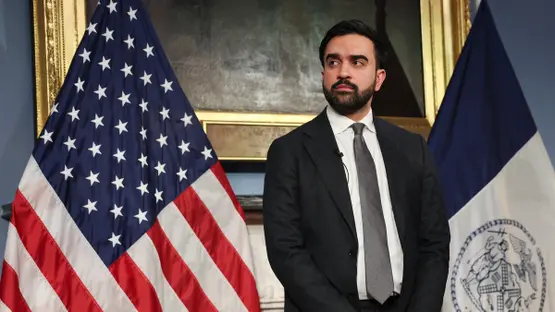
New York City Mayor Zohran Mamdani has broken with a decades-long political tradition by declining to attend the city’s annual Israel Day on Fifth parade, a decision that has intensified debate across
New York’s political and religious communities while placing renewed focus on the city’s handling of tensions surrounding the Israel-Palestine conflict.

AD: Capeesh Restaurant
The first-term mayor, who has long been outspoken in his support for Palestinian rights, confirmed ahead of the parade that he would not participate in the event. He pledged what city officials described as a comprehensive security operation to protect marchers, spectators and surrounding neighbourhoods during one of the largest annual gatherings in New York City.
According to reports, Mamdani’s absence marks a major departure from a political custom that has been observed by New York City mayors for more than six decades. The parade, held annually along Fifth Avenue, has historically drawn broad support from elected officials across party lines and has served as a symbolic celebration of Israel’s founding and the city’s large Jewish community.The mayor’s decision comes amid heightened political sensitivity surrounding the war in Gaza and growing divisions within American politics over U.S. policy toward Israel.
Mamdani, New York City’s first Muslim mayor, has repeatedly argued that criticism of the Israeli government should not be conflated with hostility toward Jewish people. He has maintained that his opposition is directed at government policies rather than at Israel’s existence or New York’s Jewish residents.

AD: Oysterian Sea Food Restaurant And Bar
Speaking before the event, Mamdani emphasised that public safety would remain his administration’s highest priority. He pledged a significant deployment of New York Police Department personnel throughout the parade route and surrounding areas, promising that participants would be able to celebrate without fear of disruption or violence.
The security assurances were welcomed by many organisers, though they did little to ease criticism from some Jewish leaders who viewed the mayor’s absence as a symbolic rejection of a longstanding civic tradition. Several community figures argued that attendance at the parade has historically represented support for New York’s Jewish population rather than endorsement of any particular Israeli government.
The annual event, now known as Israel Day on Fifth, has been held since 1964 and is regarded by organisers as one of the largest pro-Israel gatherings in the world.
Political Fallout and Community Reactions
Reaction to Mamdani’s announcement was swift and deeply divided. Supporters of the mayor argued that he was remaining consistent with positions he articulated throughout his political rise. A democratic socialist closely identified with progressive causes, Mamdani has repeatedly criticised Israeli military actions in Gaza and expressed support for Palestinian rights, positions that became a defining feature of his mayoral campaign.
Mamdani’s outspoken stance on the Gaza war was described as central to both his appeal among younger progressive voters and the backlash he faced from critics.
Similarly, It noted that his criticism of Israel’s treatment of Palestinians helped define his political identity and distinguished him from more traditional Democratic leaders. Supporters therefore contended that attending the Israel Day parade would have contradicted views he has publicly defended for years, even as those positions have generated political controversy.
However, described the decision as a missed opportunity to demonstrate solidarity with Jewish New Yorkers at a time when concerns about antisemitism remain elevated. Rabbi Marc Schneier and other prominent voices within the Jewish community questioned whether the mayor was adequately recognising the emotional significance the parade holds for many residents. According to reports, several Jewish leaders accused the mayor of distancing himself from a key community constituency.
Police Commissioner Jessica Tisch, who is expected to attend the parade, sought to reassure participants regarding safety preparations. City officials said extensive planning had been underway for weeks, involving coordination among local, state and federal authorities.
The security effort follows months of heightened concern over antisemitic incidents and political demonstrations related to the Middle East conflict. The controversy surrounding the parade has also become a flashpoint in New York’s broader political landscape. Former Mayor Michael Bloomberg announced he would attend the event, with reports suggesting that his participation was intended in part as a response to Mamdani’s absence.
Former Mayor Eric Adams likewise signaled support for the parade and criticised the current mayor’s decision. Their interventions highlight how the issue has become a symbol of larger ideological battles playing out in the city.
Recent demonstrations have underscored the intensity of feeling on all sides. Pro-Israel activists have staged protests criticising Mamdani’s approach to antisemitism and his views on Israel, while pro-Palestinian supporters have defended his decision as a principled stand. The competing narratives reflect a broader national debate that has become increasingly prominent since the outbreak of the Gaza war.
A Defining Test for a New Mayor
With Mamdani, the controversy represents one of the most politically significant moments of his young mayoralty. Since taking office in January, he has sought to balance his progressive political identity with the practical demands of governing America’s largest city.
His administration has already faced scrutiny over several Israel-related policy decisions and public statements, including moves that drew criticism from pro-Israel organisations and praise from progressive activists.
Observers note that New York’s unique demographic makeup makes the issue especially sensitive. The city is home to one of the world’s largest Jewish populations outside Israel, while also containing large Muslim, Arab and immigrant communities with diverse perspectives on the conflict. As a result, political leaders often find themselves navigating competing expectations and emotional responses.
Mamdani has attempted to frame his position as one rooted in human rights and universal principles. He has repeatedly stated that supporting Palestinian rights does not conflict with protecting Jewish New Yorkers. His administration has pointed to ongoing investments in security initiatives and the city’s Office to Combat Antisemitism as evidence of that commitment.
Critics argue that symbolism matters in politics as much as policy. With many supporters of the parade, the mayor’s absence carries significance beyond any practical security measures. They contend that the event is not merely a political rally but also a cultural and communal celebration that has historically brought together New Yorkers of different backgrounds.
The dispute arrives at a moment when public opinion regarding Israel and Palestine is shifting across the United States. Polling and political debates have revealed widening generational and ideological divides, particularly among Democrats. Mamdani’s stance reflects those changing dynamics and highlights how local leaders are increasingly being drawn into international controversies.
Despite the political turbulence, the parade proceeded with thousands expected to line Fifth Avenue. Organisers expressed confidence that the event would remain peaceful and well attended. City officials, meanwhile, reiterated that security preparations were among the most extensive ever deployed for the celebration.
Whether Mamdani’s decision ultimately strengthens or weakens his standing remains uncertain. Supporters view it as evidence of political consistency and moral conviction. Opponents see it as an unnecessary break with a tradition that has long symbolised unity between New York’s elected leaders and its Jewish community. The controversy has transformed a yearly cultural event into a defining political moment, one that will likely shape perceptions of Mamdani’s leadership far beyond a single day on Fifth Avenue.

AD: Heritage And Restaurant Lounge Bar