
By Kenneth Williams
The deadly disaster at a Washington state paper mill has left behind more than twisted steel, toxic chemicals, and unanswered questions. It has devastated a tightly connected community where generations of families built their lives around the lumber and paper industries, and where the victims were known not simply as workers, but as fathers, husbands, grandfathers, neighbors, and lifelong friends.
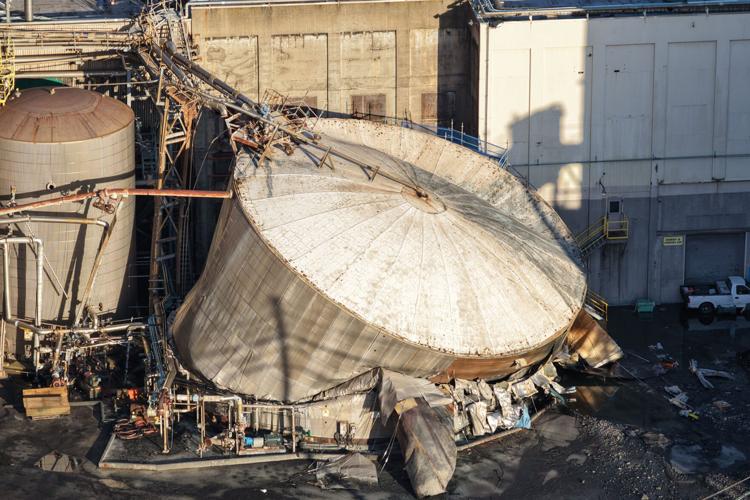
Authorities continued recovery operations Thursday at the Nippon Dynawave Packaging Co. facility in Longview after a massive chemical tank rupture released hundreds of thousands of gallons of corrosive “white liquor,” a hazardous substance used in paper manufacturing.

AD: Capeesh Restaurant
Officials say at least two workers have been confirmed dead while nine others remain missing and are presumed dead, making the catastrophe one of the deadliest industrial accidents in modern Washington state history.
Investigators work to determine what caused the implosion, grieving families across Longview are struggling to process the sudden loss of loved ones who left for work expecting an ordinary Tuesday morning.
Among the victims was Gilbert Bernal, an experienced electrician remembered by relatives as a dependable family man who rarely refused anyone asking for help. His daughter described him as someone who prioritised family above everything else and had recently been preparing to celebrate his wedding anniversary.

AD: Oysterian Sea Food Restaurant And Bar
Friends said Bernal spent decades working in industrial trades across southwest Washington, building a reputation for reliability and kindness.
Another victim identified by family members was 26-year-old CJ Doran, a young husband whose relatives described him as compassionate, deeply spiritual, and devoted to those around him. Friends organising fundraising efforts for grieving families said Doran represented the younger generation of mill workers carrying on Longview’s industrial traditions.
Community members gathered Wednesday evening for a candlelight vigil at a local park, where mourners embraced, prayed, and shared stories about the men who never returned home.
The explosion occurred shortly after 7 a.m. during what officials believe may have been a shift change at the facility. Emergency crews responded to reports that a massive storage tank containing white liquor had ruptured, causing extensive structural damage throughout part of the mill complex. Witnesses described hearing a thunderous boom followed by clouds of steam and chemical mist rising above the industrial skyline.
Hospital officials confirmed that multiple injured workers were treated for chemical burns and inhalation injuries. Some victims were transferred to specialised burn centers in Oregon as rescue teams worked through unstable debris and lingering chemical hazards.
Families Face Agonising Wait for Answers
Recovery operations have moved slowly because of continuing safety concerns surrounding the damaged tank. Authorities say tens of thousands of gallons of caustic liquid remained trapped inside portions of the compromised structure after the rupture, forcing crews to stabilize the area before entering fully.
Fire officials acknowledged there is virtually no hope of finding survivors among the missing workers. Search efforts have instead shifted toward recovery and identification, a painful reality that has deepened the emotional toll on families waiting for confirmation about loved ones.
Governor Bob Ferguson called the disaster potentially “the deadliest industrial tragedy in modern Washington state history,” while pledging state support for both the investigation and recovery mission.
Environmental teams from the Washington Department of Ecology and federal agencies are monitoring nearby waterways after some chemical runoff reportedly reached the Columbia River. Officials insist there is currently no threat to local drinking water or air quality.
The tragedy has also renewed scrutiny over safety conditions inside aging industrial facilities across the Pacific Northwest. The U.S. Chemical Safety and Hazard Investigation Board has launched an inquiry into the cause of the rupture, including whether maintenance failures, corrosion, or operational errors contributed to the collapse.
Longview’s economy has long depended on paper and timber production, industries that provide stable jobs but also expose workers to dangerous machinery, chemicals, and high-risk industrial processes. Many residents say nearly every family in the city has some connection to the mills, either through current employment or generations of labor history.
Online discussions among former paper mill workers and industrial employees have highlighted the dangers associated with pulp manufacturing. Workers familiar with the industry described paper mills as highly hazardous environments combining chemical processing, power generation, and heavy industrial equipment within aging infrastructure.
Several residents also questioned whether enough safeguards existed to prevent such a catastrophic failure. While investigators have not publicly linked prior safety violations to the disaster, records reviewed by local media reportedly show previous concerns involving industrial operations at the Longview facility. Labor advocates argue the incident underscores broader concerns about workplace safety standards in heavy industry.
Families of the victims, however, those debates remain secondary to grief and uncertainty. Relatives continue waiting for official identifications while funeral funds and support campaigns spread across social media. Churches, union halls, and community organizations throughout Longview have organized meals, vigils, and donation drives for affected families.
Outside the plant gates Thursday, bouquets of flowers and handwritten notes accumulated near temporary memorials as workers arriving for nearby shifts stopped to pay their respects. Some stood silently while others embraced coworkers through tears, reflecting the emotional weight hanging over the community.
The disaster has also shaken confidence among industrial workers across the region. Many described seeing the tragedy not as a distant headline but as a reminder of the risks tied to physically demanding jobs that often sustain entire communities.
Discussions among mill workers online revealed fears about aging equipment, maintenance pressures, and dangerous shutdown operations common throughout the industry.
Authorities have not yet announced when recovery operations will conclude, warning that unstable debris and hazardous chemicals continue to complicate access to parts of the site. Investigators are expected to spend weeks, if not months, examining the structural failure and reviewing operational records from the facility.
In Longview, meanwhile, the focus remains on the people lost in the catastrophe. Residents describe the victims not simply as names in a news report, but as men who coached youth sports, attended church services, helped neighbours repair homes, and spent decades supporting families through difficult industrial work.
With the community mourning, many residents say the tragedy has exposed both the strength and vulnerability of towns built around heavy industry. Longview’s paper mills helped shape the city for generations, providing jobs and identity to thousands of workers.
Now, after one devastating morning, the same industry has left families confronting unimaginable loss and a future forever altered by one of Washington’s worst workplace disasters.

AD: Heritage And Restaurant Lounge Bar