
By Tim Parsons-
Major League Baseball owners have formally proposed a salary cap for the first time since the devastating 1994-95 strike, reigniting one of the sport’s most bitter labor battles and setting the stage for what could become baseball’s most contentious negotiations in three decades.
The proposal, introduced during collective bargaining talks this week, immediately drew fierce resistance from the MLB Players Association, which has long considered a salary cap a non-negotiable issue. The current collective bargaining agreement expires in December 2026, but the latest move has already escalated fears of a work stoppage that could threaten the 2027 season.

AD: Capeesh Restaurant
According to reports and multiple baseball outlets, owners proposed a system that would establish a payroll cap of roughly $245 million per team while also creating a salary floor exceeding $170 million.
Owners say the plan would improve competitive balance and prevent large-market franchises from dramatically outspending smaller clubs. Players, however, see the proposal as an attempt to suppress salaries and weaken the union’s bargaining power.
The issue cuts directly into baseball’s economic identity. Unlike the NFL, NBA and NHL, Major League Baseball has operated without a hard salary cap for decades. Instead, MLB uses a luxury-tax system formally called the Competitive Balance Tax designed to penalise excessive spending without imposing an outright payroll ceiling.

AD: Oysterian Sea Food Restaurant And Bar
That structure has allowed wealthy clubs such as the Los Angeles Dodgers and New York Mets to spend aggressively on superstar talent. Recent mega-contracts, including Juan Soto’s reported $765 million deal with the Mets, have intensified frustration among smaller-market owners who argue the current system has widened competitive inequality.
At the center of the debate is a growing financial divide across the sport. Reports indicate the Dodgers carried payroll obligations exceeding $500 million last season when luxury-tax penalties were included, while teams such as the Miami Marlins operated with payrolls below $70 million. Owners claim that imbalance damages competitive integrity and discourages fan investment in lower-revenue markets.
The players’ union rejects that argument entirely. Union leadership has consistently maintained that salary caps primarily benefit owners by artificially limiting player earnings. Players instead want stronger revenue sharing among clubs, earlier arbitration eligibility, expanded free agency rights and higher minimum salaries.
Their own proposal reportedly includes significant increases to the league minimum salary and additional penalties for teams that consistently operate near the bottom of payroll rankings.
Echoes of Baseball’s Darkest Labour War
With baseball historians and longtime fans, the return of salary-cap negotiations evokes memories of the darkest labour dispute in modern MLB history.
The last serious salary-cap proposal came in 1994, when owners attempted to install a system tied to revenue sharing and payroll restrictions. The players responded with a strike that lasted more than seven months and ultimately forced the cancellation of the World Series for the first time in 90 years.
That strike inflicted enormous damage on the sport. Attendance collapsed in the aftermath, television ratings declined and public trust in both ownership and players deteriorated. Many baseball executives still privately view the 1994-95 conflict as a cautionary tale about how quickly labour warfare can alienate fans.
The conflict also reshaped labour relations permanently. The MLB Players Association emerged from the strike with its anti-cap position strengthened, and owners largely avoided revisiting the issue publicly for more than 30 years. Even during recent lockouts and labor disputes, league officials avoided proposing a direct salary cap, understanding how explosive the topic remained within the union.
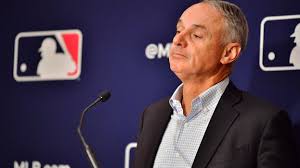
But baseball’s economic environment has changed dramatically since then. Local television revenues, streaming uncertainty and widening payroll disparities have pushed many owners toward structural reform. Commissioner Rob Manfred has repeatedly acknowledged concerns about competitive balance and the long-term sustainability of the sport’s current financial model.
Some owners also believe MLB’s lack of a cap places franchises at a disadvantage compared with the NFL and NBA, where cost certainty has helped franchise valuations soar.
The union’s resistance remains deeply entrenched. MLB players have historically viewed salary caps as fundamentally anti-labour, arguing that teams already generate enormous revenues and that ownership should spend more aggressively rather than limit player compensation.
The union also points to MLB’s recent financial growth. League revenues reportedly surpassed $12 billion in recent seasons, while attendance and national interest have improved following rule changes designed to speed up the game and increase offense. From the players’ perspective, the sport is thriving without a hard payroll ceiling.
Billion-Dollar Stakes for Baseball’s Future
The economic stakes surrounding the negotiations are enormous. A prolonged labor stoppage would jeopardise billions in revenue tied to ticket sales, sponsorships, television contracts and streaming agreements. Baseball is already preparing for major media-rights negotiations in the coming years as regional sports network instability continues to reshape sports broadcasting across North America.
Owners argue that a salary cap paired with expanded revenue sharing could create a more stable financial system and potentially eliminate local television blackouts that have frustrated fans for years. Under the proposal, revenues would reportedly be split more evenly between players and ownership groups. Players remain sceptical.
Many within the union believe the proposed cap-and-floor system would eventually suppress superstar contracts while allowing owners to preserve profits. Union officials have also questioned whether some clubs genuinely intend to compete, arguing that certain low-payroll franchises continue to collect revenue-sharing money without reinvesting sufficiently in their rosters.
The disagreement reflects a philosophical divide that has defined baseball labor relations for generations: whether financial disparity should be corrected by limiting spending at the top or forcing greater investment at the bottom. At present, neither side appears close to compromise.
Industry insiders widely expect a lockout once the current labor agreement expires in late 2026 if substantial progress is not made beforehand. Negotiations are expected to intensify early next year, particularly if spring training schedules or regular-season games become vulnerable.
Some analysts believe both sides are already preparing financially for a prolonged dispute. Reports indicate owners and players have accumulated significant reserve funds ahead of negotiations, suggesting that each side anticipates a potentially lengthy confrontation.
Now, baseball continues under the shadow of uncertainty. Fans are once again hearing language that once seemed buried in the sport’s past: salary cap, lockout, strike, revenue split. Those terms carry historical scars that still linger across the game.
Whether the latest proposal ultimately becomes the foundation for compromise or the spark for another crippling labour war may define the next decade of Major League Baseball. But after more than 30 years of avoiding the issue, owners have finally reopened the sport’s most explosive debate and neither side appears willing to back down.

AD: Heritage And Restaurant Lounge Bar