
By Theodore Brown-
Federal investigators say the two teenagers accused of carrying out a deadly shooting at a San Diego mosque met online, shared extremist beliefs and left behind writings filled with racist and anti-Islamic hatred, deepening concerns about online radicalization and domestic extremism in the United States.
The FBI revealed Tuesday that the suspects, ages 17 and 18, had developed a relationship over the internet before allegedly planning the attack on the Islamic Center of San Diego, where three people were killed and several others injured during Sunday’s shooting. Authorities say the pair later died from self-inflicted gunshot wounds after fleeing the scene.

AD: Capeesh Restaurant
Investigators described the attack as a likely hate crime and said evidence recovered from the suspects’ vehicle and residences pointed to a broader ideology rooted in racism, anti-Muslim rhetoric and extremist online content. FBI officials said the teens left behind documents and writings expressing hatred toward multiple religions and racial groups.
“This appears to be motivated by hate,” FBI spokesperson Mark Remily said during a briefing Tuesday, adding that authorities are still examining whether the suspects had plans for additional attacks or connections to wider extremist networks.
The shooting unfolded shortly before midday prayers at the Islamic Center of San Diego, one of the region’s largest mosques and a major hub for the Muslim community in Southern California. Witnesses described scenes of panic as gunfire erupted outside the mosque while worshippers and children attending classes inside rushed for safety.

AD: Oysterian Sea Food Restaurant And Bar
Among those killed was a mosque security guard identified by community members as Amin Abdullah, who has since been hailed as a hero for confronting the attackers and helping protect families and children inside the building.
Police said officers arrived within minutes after emergency calls flooded dispatch centers reporting an active shooter situation. The suspects fled in a vehicle before being found dead a short distance away. Authorities later recovered multiple firearms, ammunition and tactical gear from the car and homes connected to the investigation.
Investigators said one suspect’s mother had contacted police hours before the shooting, reporting that her teenage son was suicidal, had taken firearms from the family home and had left in her vehicle. According to San Diego Police Chief Scott Wahl, officers began searching for the teen after receiving the report but had no indication at the time that a mosque or Muslim community center might be targeted.
The revelation that the suspects allegedly met online and bonded over extremist views has renewed national debate about the role internet platforms play in spreading hate ideologies among young people.
Law enforcement officials say online radicalisation has become one of the most difficult aspects of modern domestic terrorism investigations. Extremist content, including white supremacist propaganda and anti-religious conspiracy theories, can spread rapidly through encrypted chats, fringe forums and gaming communities, often targeting isolated or vulnerable young users.
According to reports, authorities discovered anti-Islamic writings inside the suspects’ vehicle, including language investigators described as hateful and extremist. Several media reports also indicated investigators recovered notes referencing “racial pride” and broader racist ideology.
The FBI said it is still examining digital evidence, including online communications, devices and social media activity, to determine how long the suspects had been planning the attack and whether anyone else may have been aware of their intentions.
Community in Mourning
The attack has shaken Muslim communities across California and prompted heightened security measures at mosques, synagogues and other religious institutions throughout the region.
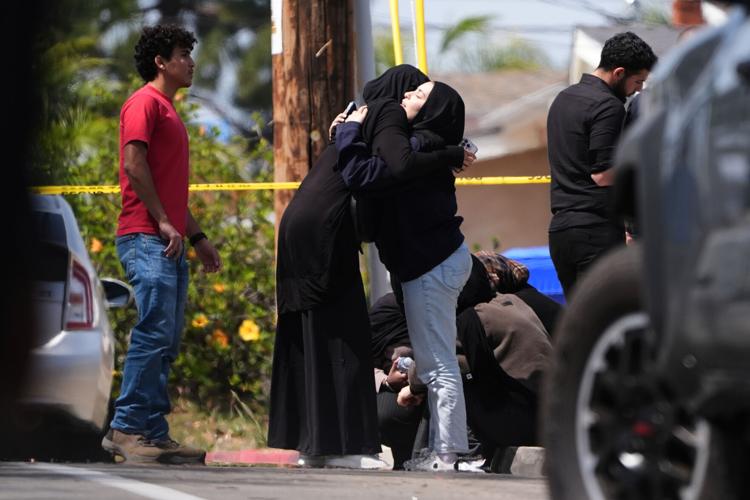
Outside the Islamic Center of San Diego on Tuesday, mourners gathered for vigils and prayer services as flowers, candles and handwritten messages accumulated near the mosque entrance. Community leaders called for unity while condemning what they described as rising levels of Islamophobia and hate-driven violence nationwide.
“This was an attack on innocent people gathered in prayer,” Imam Taha Hassane told reporters, urging the public not to allow fear and division to define the community’s response.
Officials said no children attending the mosque’s affiliated school were physically harmed during the shooting, though counselling services have been made available for students, staff and families traumatised by the violence. The Council on American-Islamic Relations, one of the nation’s largest Muslim civil rights organisations, called for stronger protections against hate crimes and warned that anti-Muslim rhetoric has intensified in recent years.
Civil rights groups point to a growing number of threats and attacks targeting Muslim Americans since the start of the Israel-Hamas conflict in the Middle East, which has heightened tensions and contributed to spikes in reported hate incidents nationwide.
The San Diego shooting also revived painful memories of previous attacks targeting religious communities in California, including the 2019 synagogue shooting in Poway and the 2019 arson attack on a mosque in Escondido. Both incidents were linked to extremist ideology and online radicalisation. Experts on domestic extremism say the latest attack reflects a broader trend in which perpetrators increasingly radicalise through internet communities rather than formal extremist organisations.
Researchers have warned for years that young people can become immersed in violent ideologies through algorithm-driven content and online forums that normalise racism, conspiracy theories and political violence. Investigators are now attempting to determine which websites, platforms or digital communities may have influenced the suspects.
Authorities said more than 30 firearms and a crossbow were recovered during searches connected to the case, raising additional questions about how the teenagers obtained access to weapons. Federal agents continue to analyse ballistic evidence, digital records and handwritten materials seized during the investigation. Officials cautioned that many details remain preliminary and urged the public not to spread unverified information online.
San Diego Mayor Todd Gloria condemned the shooting as “an act of hate” and vowed continued support for the Muslim community. California Governor Gavin Newsom also issued a statement denouncing anti-Muslim violence and promising state assistance during the investigation.
Security has since been increased around religious institutions across Southern California and in several major U.S. cities amid concerns over potential copycat attacks. Community members described feelings of grief, fear and disbelief that a place of prayer became the scene of bloodshed. Some said they now worry about attending religious services openly, while others emphasised the importance of refusing to surrender to fear.
Investigators continue piecing together the suspects’ motives and online history, federal authorities say the case underscores the growing threat posed by hate-fuelled extremism among young people radicalised online.

AD: Heritage And Restaurant Lounge Bar