
By Lucy Caulkett-
A French woman infected during a hantavirus outbreak linked to the cruise ship MV Hondius remains critically ill and dependent on an artificial lung machine as health authorities across Europe and the United States race to contain a growing cluster of cases that has now risen to 11.
The outbreak, which has already claimed three lives, has prompted renewed global concern over the rare but potentially deadly Andes strain of hantavirus and intensified international monitoring efforts amid fears that additional infections could emerge in the coming weeks.

AD: Capeesh Restaurant
French doctors confirmed Tuesday that the woman is being treated at Bichat Hospital in Paris, where she has been placed on extracorporeal membrane oxygenation, or ECMO, a form of life support often referred to as an artificial lung. The treatment is typically reserved for patients suffering catastrophic respiratory failure when conventional ventilation is no longer sufficient.
According to physicians involved in her care, the patient’s lungs and cardiovascular system were severely damaged after developing complications associated with hantavirus pulmonary syndrome, one of the most dangerous manifestations of the infection.
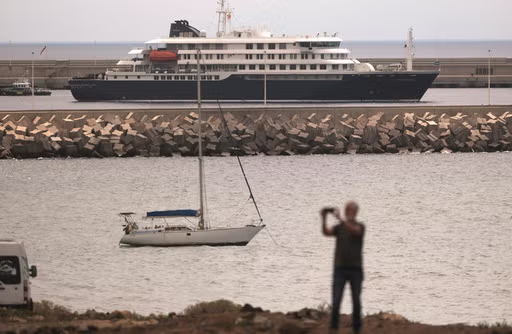
The outbreak has been traced to the Dutch-flagged expedition cruise ship MV Hondius, which departed from Ushuaia, Argentina, in April carrying 147 passengers and crew members from more than 20 countries. The vessel traveled through the South Atlantic and Antarctic regions before health authorities began detecting clusters of severe respiratory illness among passengers.

AD: Oysterian Sea Food Restaurant And Bar
Since then, confirmed and probable cases have been identified in France, Spain, Switzerland, the Netherlands, Germany, and the United States.
Health officials believe the outbreak involves the Andes virus strain, a particularly concerning variant of hantavirus because, unlike most forms of the disease, it has demonstrated limited human-to-human transmission in previous outbreaks in South America.
Laboratory analysis conducted through international health agencies confirmed that all known infections connected to the cruise ship involve the Andes strain.
The World Health Organization said Tuesday that although the overall global risk remains low, governments should prepare for the possibility of additional cases due to the virus’s unusually long incubation period, which can extend up to six weeks.
WHO Director-General Tedros Adhanom Ghebreyesus urged countries to remain vigilant while emphasising that current evidence does not suggest the beginning of a widespread pandemic event.
The French patient’s worsening condition has become one of the most serious developments since the outbreak first emerged earlier this month. French Health Minister Stéphanie Rist said the government had activated enhanced containment protocols after the woman’s diagnosis and subsequent deterioration. Authorities identified at least 22 contact cases linked to her travel and hospitalisation, prompting expanded isolation measures and close medical monitoring.
International response intensifies as outbreak spreads across borders
The rise in total cases to 11 has prompted a coordinated multinational public health response involving the World Health Organization, the European Centre for Disease Prevention and Control, the U.S. Centers for Disease Control and Prevention, and multiple national health ministries.
Several countries have implemented mandatory quarantine measures for passengers and crew who traveled aboard the MV Hondius, while others have launched contact tracing efforts involving airports, hospitals, and transportation hubs.
Spain confirmed Tuesday that one evacuated passenger remains isolated at Madrid’s Gómez Ulla military hospital after testing positive for the virus.
Other Spanish nationals who had contact with the infected traveler have so far tested negative but remain under observation. Meanwhile, Switzerland reported another positive case involving a passenger who traveled internationally after disembarking from the ship.
The Netherlands has also tightened medical precautions after a hospital handling an infected patient reportedly placed 12 healthcare workers into quarantine because of errors involving the handling of bodily fluids. Dutch authorities described the move as precautionary but acknowledged concerns surrounding the possibility of secondary exposure.
In the United States, the CDC elevated its response operations and issued a nationwide Health Advisory warning clinicians to monitor for possible imported cases tied to the outbreak. American passengers from the cruise ship were transferred to specialised quarantine and biocontainment facilities in Nebraska capable of handling high-risk infectious diseases.
Federal officials stressed that the risk to the wider U.S. population remains extremely low but acknowledged the unusual circumstances surrounding the Andes strain.
Medical experts say hantavirus infections remain rare globally but can become highly lethal once symptoms progress into respiratory failure.
The virus is typically spread through contact with rodent droppings, saliva, or urine, though the Andes variant has previously demonstrated person-to-person transmission through close contact in parts of Argentina and Chile. Symptoms often begin with fever, muscle pain, headaches, nausea, and fatigue before rapidly escalating into severe breathing complications.
The exact source of exposure aboard the MV Hondius remains under investigation. Health authorities believe the earliest infections may have occurred during wildlife excursions or shore visits in South America before the ship entered the Atlantic crossing.
Some reports indicate that a Dutch couple who later died from the virus had participated in a birdwatching excursion near a waste site believed to have rodent activity.
Argentina has dispatched epidemiologists and infectious disease specialists to assist in tracing the outbreak’s origin, while WHO officials continue sequencing virus samples collected from infected passengers.
Scientists are also studying whether any mutations may have affected transmissibility or severity, although French authorities said there is currently no evidence suggesting the strain has significantly changed.
Concerns Grow Over Cruise Ship health Risks And preparedness
The outbreak has renewed broader concerns about infectious disease preparedness aboard cruise ships, which became a major international issue during the COVID-19 pandemic. Public health experts note that cruise vessels create conditions favorable for rapid disease spread because of close living quarters, shared ventilation systems, and prolonged passenger interaction.
Although hantavirus outbreaks aboard cruise ships are considered extremely rare, epidemiologists say the MV Hondiusincident demonstrates how global tourism and international travel can rapidly transform isolated infections into multinational health emergencies.
Governments across Europe and North America have already begun reviewing protocols for managing infectious disease events involving expedition cruises and remote maritime travel.
The MV Hondius itself is now returning to the Netherlands, where authorities plan to conduct extensive cleaning and disinfection procedures before determining whether the vessel can return to service. Most remaining crew members and passengers have already been evacuated under strict biosecurity measures, including protective equipment and controlled transport corridors.
Meanwhile, anxiety continues to spread among former passengers and their families as health officials warn that additional infections could emerge because of the virus’s long incubation period. WHO guidelines currently recommend monitoring exposed individuals for up to 42 days, significantly longer than many respiratory illnesses.
Some governments have introduced mandatory isolation orders for returning passengers, while others are relying on voluntary monitoring and testing. France has adopted some of the strictest measures so far, requiring extended isolation for exposed individuals and broad contact tracing linked to international flights and medical facilities.
Despite mounting concern, infectious disease specialists continue emphasising that the outbreak does not currently resemble the early stages of COVID-19 or another globally spreading pandemic.
Experts note that hantaviruses generally require much closer exposure than airborne respiratory viruses and historically have not demonstrated sustained community transmission outside limited outbreaks involving the Andes strain.
The severity of the illness in several patients particularly the French woman now dependent on artificial lung support has heightened public attention and prompted governments to adopt a cautious approach. Public health agencies in multiple countries are continuing to monitor travellers, coordinate laboratory testing, and prepare hospitals for the possibility of further severe cases.
Officials say the outbreak remains contained largely to passengers and crew associated with the MV Hondius. Yet with the number of infections continuing to rise and critically ill patients fighting for survival across several countries, international health authorities are warning that vigilance will remain essential in the weeks ahead.

AD: Heritage And Restaurant Lounge Bar