
By Isabelle Wilson-
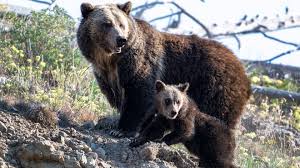
Two hikers were injured in a bear attack on Monday afternoon in Yellowstone National Park, prompting temporary trail closures and a large-scale response from park authorities as officials investigate one of the latest wildlife incidents in the United States’ most visited national parks.
The attack occurred on the Mystic Falls Trail near the Old Faithful geyser area, a heavily trafficked section of the park known for its waterfalls, geothermal features, and relatively accessible hiking routes.

AD: Capeesh Restaurant
Park officials confirmed that one or more bears were involved, though they have not yet determined whether the animal was a grizzly or black bear. Both species inhabit Yellowstone’s 2.2 million-acre ecosystem and are commonly encountered by visitors, particularly during warmer months when tourism peaks.
Emergency responders reached the scene shortly after the incident and provided medical assistance to the injured hikers before transporting them for further treatment. Officials have not released details on the severity of the injuries or the identities of those involved. Several nearby trails and backcountry areas were closed as wildlife officers searched the region and assessed potential risks to other visitors.
The National Park Service said the closure was a precautionary measure while investigators attempt to determine what triggered the encounter and whether the bear remains in the area. Yellowstone’s spokesperson said it was too early to confirm whether the incident involved defensive behaviour from the animal or another cause.

AD: Oysterian Sea Food Restaurant And Bar
While bear attacks in Yellowstone are rare relative to the park’s millions of annual visitors, they are not unprecedented. The park is home to both grizzly bears and black bears, and wildlife encounters remain an inherent risk in a landscape designed to balance tourism and conservation.
Officials have repeatedly warned visitors to remain vigilant, especially when hiking in forested or backcountry areas where visibility is limited. Park guidelines typically recommend travelling in groups, making noise on trails, and carrying bear spray, a deterrent that has been credited with reducing the severity of many encounters.
Recent years have still seen occasional incidents. In September 2025, a hiker suffered serious injuries in a bear encounter on another Yellowstone trail, underscoring that even defensive encounters can result in significant harm when wildlife and humans cross paths unexpectedly.
Monday’s attack has renewed attention on safety measures inside the park, particularly as Yellowstone continues to experience high visitor numbers following a post-pandemic tourism surge. According to park data, more than four million people visit Yellowstone annually, making it one of the busiest national parks in the United States.
Wildlife experts say that while bears generally avoid human contact, encounters can escalate quickly if animals are surprised at close range or protecting food sources or cubs. In such situations, even experienced hikers can find themselves in danger within seconds.
Park officials say the priority is ensuring public safety while continuing to gather information about Monday’s incident. The affected trails will remain closed until wildlife teams complete their assessment and determine whether any additional precautions are necessary.
Yellowstone prepares for the peak summer season, the incident serves as a reminder of the fragile balance between human exploration and one of North America’s most intact predator ecosystems a balance that, while carefully managed, can still turn unpredictable in an instant.
Each year, the park’s vast wilderness draws millions of visitors hoping to witness wildlife in its natural habitat, from grazing bison in open valleys to grizzly bears moving through forested ridgelines. But that proximity to one of the continent’s most complete predator-prey systems carries inherent risk, even in areas designated as safe and heavily trafficked.
Park officials have long stressed that Yellowstone is not a controlled zoo environment, but a functioning ecosystem where animals move freely across hundreds of miles without regard for human boundaries. Grizzly bears, in particular, remain one of the park’s most closely monitored species, with management strategies designed to reduce conflict while preserving their ecological role.
Despite these efforts, encounters still occur, especially in spring and early summer when bears are emerging from hibernation and food availability shifts rapidly across the landscape.
Wildlife managers say that most incidents involving bears are defensive rather than predatory, often triggered when animals are surprised at close range or feel threatened. Even so, the speed and unpredictability of such encounters leave little room for error. A sudden turn on a forested trail or an unexpected encounter near a food source can escalate in seconds, leaving hikers with minimal time to react.
This is why park authorities continue to emphasise preparedness, including travelling in groups, maintaining awareness in dense vegetation, and carrying bear deterrents such as spray.
The National Park Service has also invested heavily in education campaigns aimed at reducing human-wildlife conflict. Signage across Yellowstone’s most popular trails provides guidance on safe distances, proper food storage, and how to respond during an encounter.
Rangers routinely patrol high-traffic areas during peak months, but the sheer scale of the park more than 2.2 million acres means that much of it remains remote and largely unmonitored at any given time.
The latest incident has renewed discussion among conservationists and visitors about how to maintain public access while minimizing risk. Yellowstone’s popularity has surged in recent years, driven in part by social media exposure and a growing interest in outdoor recreation.
That influx has placed additional pressure on park infrastructure and safety systems, particularly in areas where trails intersect with known wildlife corridors.
According to park data, bear-related incidents remain statistically rare when compared with the millions of recreational visits each year. Even isolated cases tend to attract widespread attention due to the park’s symbolic status as a wilderness stronghold in the United States.
Yellowstone is one of the few places in the lower 48 states where both grizzly bears and wolves continue to play their historic ecological roles, making it a focal point for debates over conservation and human access.
In recent years, climate variability and changing food patterns have also influenced bear behaviour, with some studies suggesting shifts in foraging ranges and timing. While researchers caution against over interpreting individual incidents, they acknowledge that environmental changes can affect movement patterns in ways that occasionally increase the likelihood of human encounters.
However, Yellowstone’s appeal lies precisely in its unpredictability the possibility of witnessing wildlife behaving entirely on its own terms. That sense of immersion is central to the park’s identity, but it also demands a level of respect for the forces that shape it.
Rangers often describe the park as a place where humans are guests rather than controllers, a distinction that becomes most apparent when encounters like Monday’s occur.
With summer approaches, park authorities are expected to increase ranger presence in high-traffic corridors and reinforce visitor education efforts. Temporary trail closures following the attack reflect a cautious approach aimed at assessing animal movement and preventing further incidents while investigations continue.
The challenge facing Yellowstone is not new: how to preserve one of the world’s most iconic wilderness areas in a way that allows millions of people to experience it safely, without diminishing the ecological processes that define it.
The recent attack shows that, even with modern management tools and decades of research, the boundary between human recreation and wild nature remains inherently fragile capable of shifting without warning, and always shaped by forces beyond complete control.

AD: Heritage And Restaurant Lounge Bar