
By Aaron Miller-
Voters across Ohio and Indiana went to the polls on Tuesday in a closely watched set of primary elections that serve as an early barometer of political sentiment ahead of the 2026 U.S. midterms. The contests are the first major statewide primaries of the election cycle and are being viewed as an early test of party strength, voter enthusiasm, and the continuing influence of former President Donald Trump on Republican politics.
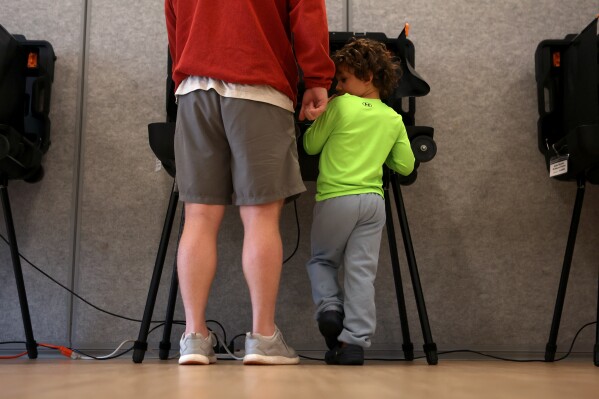
Election officials reported steady turnout across both states as polling stations opened in the morning and remained active throughout the day, with early and absentee voting already accounting for a significant share of ballots in some counties.

AD: Capeesh Restaurant
In Ohio, voters are selecting nominees for high-stakes races including the U.S. Senate, governorship, and competitive House districts, while Indiana voters are deciding key congressional and state legislative nominations that will shape the general election landscape in November.
The primaries are unfolding in a national context marked by deep political polarisation and intensified intraparty competition, particularly within the Republican Party, where Trump-backed candidates and establishment figures are again competing for control of the party’s direction.
High-stakes races define Ohio’s political landscape
Ohio has emerged as the most closely watched battleground in Tuesday’s primaries, with races for governor and U.S. Senate drawing national attention.

AD: Oysterian Sea Food Restaurant And Bar
In the Senate contest, former Democratic Senator Sherrod Brown is widely expected to advance as Democrats seek to reclaim a seat central to their strategy for retaking the chamber.
On the Republican side, appointed Senator Jon Husted is running effectively unopposed in the primary after replacing now–Vice President JD Vance, setting up a general election showdown that could help determine control of the Senate.
The gubernatorial race is also shaping up as a defining contest, with Republican entrepreneur Vivek Ramaswamy, a prominent Trump ally, leading the field in the GOP primary. Democrats, meanwhile, have rallied behind former Ohio Department of Health director Amy Acton, who is running unopposed in her primary after gaining national recognition during the COVID-19 pandemic.
Beyond statewide offices, Ohio’s congressional primaries are drawing attention due to redistricting disputes and competitive districts, particularly in suburban and working-class regions that have swung between parties in recent elections.
Election analysts say Ohio remains a political bellwether, even as it has trended more Republican in recent cycles, with turnout in the primaries seen as a key indicator of November competitiveness.
In Indiana, the primary contests are smaller in national profile but politically significant, particularly as Republicans navigate internal divisions over redistricting, party loyalty, and Trump’s continued influence over endorsements.
One of the most closely watched dynamics is a series of Republican primaries in the state legislature, where Trump-aligned candidates are targeting incumbents who resisted efforts to redraw congressional maps in line with his political priorities. The outcome of these races is expected to shape Indiana’s legislative direction ahead of the general election and could influence future redistricting battles.
At the federal level, Indiana’s congressional primaries are also setting up competitive general election races in districts that Democrats hope to make more competitive in November. Party officials on both sides view the state as part of a broader effort to test messaging on the economy, immigration, and public trust in government institutions.
Polls close later in the evening in Indiana than in Ohio due to time zone differences in some counties, with early results expected shortly after voting ends.
While Indiana typically leans Republican, analysts say internal GOP divisions and shifting suburban demographics could make several districts unexpectedly competitive in the general election.

AD: Heritage And Restaurant Lounge Bar
In Washington, party strategists are treating these primaries less as isolated state contests and more as early diagnostics of national mood. With Democrats, the central question is whether suburban voters and younger turnout groups, which helped them perform strongly in recent cycles, remain engaged in a political environment still shaped by inflation concerns, cultural polarisation, and fatigue with national leadership.
With Republicans, the focus is on whether the party’s Trump-aligned candidates can maintain momentum in both safe and competitive districts, and whether primary voters are continuing to favour ideological loyalty over electoral pragmatism.
Ohio, in particular, is being watched as a political bellwether. While the state has moved rightward in presidential elections, it still contains a mix of urban Democratic strongholds, suburban swing counties, and rural Republican bases that together reflect many of the tensions seen nationally.
High turnout in Democratic-leaning areas like Cleveland, Columbus, and Cincinnati suburbs could signal renewed competitiveness in statewide races, while strong Republican margins in rural counties would reinforce the GOP’s structural advantage.
Analysts are especially attentive to suburban counties that have shifted back and forth in recent elections, as these areas are likely to determine the outcome of the general election.
In Indiana, the dynamics are different but no less important. The state remains reliably Republican at the federal level, but internal divisions within the GOP have become more visible in recent cycles. Primary contests involving incumbents and challengers backed by different wings of the party are being interpreted as a measure of how unified Republicans will be going into November.
A strong showing for candidates aligned with the party’s more populist, Trump-backed faction would suggest continued consolidation of that influence at the state level, while victories for establishment Republicans could indicate resistance to that trend in certain districts.
Democrats, meanwhile, are using Indiana as a testing ground for messaging in traditionally difficult terrain. Even in races they are unlikely to win, party officials are looking for signs of voter persuasion in suburban and college-educated areas, which could inform strategy in similar districts across the Midwest.
Election officials in both states have emphasised the logistical significance of high turnout in early primaries. Increased use of absentee ballots and early voting has changed the rhythm of election night reporting, with a growing share of results already effectively determined before polls close. This shift has also prompted campaigns to invest heavily in early outreach, reshaping how candidates allocate time and resources.
Nationally, these primaries are also occurring against the backdrop of ongoing debates over voting access, redistricting, and election administration. Court challenges and legislative changes in several states have added another layer of uncertainty to the electoral landscape, making each early contest more consequential as a test of system resilience and voter engagement.
The attention will quickly turn from individual winners to broader patterns: where turnout surged, where it lagged, and how closely outcomes align with polling expectations. Political operatives on both sides will be dissecting not just who won, but how and why, looking for clues that could shape campaign strategy, fundraising priorities, and candidate recruitment in the months ahead.
In that sense, Ohio and Indiana’s primaries are doing more than selecting nominees. They are offering an early reading of a country still politically divided, still shifting in its alignments, and heading toward an election cycle that will determine the balance of power in Congress and the direction of national policy beyond 2026.