
By Isabelle Wilson-
A man charged in the long-unsolved 2002 killing of Jam Master Jay, the pioneering DJ of the hip-hop group Run-DMC, has pleaded guilty in a major development that brings new clarity to a case that has spanned nearly a quarter of a century.
The admission by Jay Bryant marks the first time any defendant has formally acknowledged involvement in the murder of the influential artist, whose real name was Jason Mizell.

AD: Capeesh Restaurant
Bryant entered his plea in federal court in Brooklyn, admitting that he played a role in the fatal shooting by helping facilitate access to the Queens recording studio where Mizell was killed. Prosecutors said he allowed the gunmen inside knowing that a firearm would be used, effectively enabling the attack that shocked the music world in October 2002.
The guilty plea represents a turning point in a case that had long baffled investigators and remained one of hip-hop’s most enduring unsolved crimes. Authorities said breakthroughs in forensic evidence, including DNA recovered from a hat found at the scene, were key to linking Bryant to the killing decades after it occurred.
Bryant now faces a potential prison sentence of between 15 and 20 years, taking into account both the murder charge and additional drug and firearms offences tied to the case.

AD: Oysterian Sea Food Restaurant And Bar
A cold case shaped by decades of twists
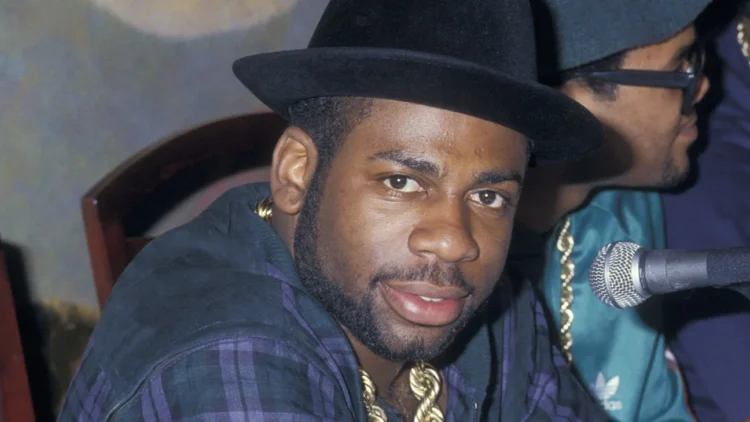
Jam Master Jay, a founding member of Run-DMC, was shot dead at the age of 37 inside his studio in the Hollis neighbourhood of Queens. The killing stunned fans and fellow artists alike, particularly given the group’s reputation for helping bring hip-hop into the mainstream during the 1980s.
Despite early investigative efforts, the case went unsolved for years, becoming emblematic of the challenges law enforcement faced in tackling high-profile crimes tied to the music industry. It was not until 2020 that federal prosecutors charged two men, Karl Jordan Jr. and Ronald Washington, alleging that they carried out the murder as part of a drug-related dispute.
In 2024, a federal jury found both Karl Jordan Jr. and Ronald Washington guilty of the killing, marking what initially appeared to be a decisive breakthrough in the long-running case. The legal outcome shifted significantly when a judge later set aside Jordan’s conviction, citing insufficient evidence to fully support the verdict, while allowing Washington’s conviction to stand.
The mixed ruling introduced fresh uncertainty into proceedings that had already stretched over decades, leaving parts of the prosecution’s narrative open to continued scrutiny and raising lingering questions about the precise sequence of events inside the studio on the night Jam Master Jay was killed.
Bryant, who was charged separately in 2023, was accused of acting as an accomplice rather than the gunman. Prosecutors said he played a crucial role by granting access to the studio through a back entrance, allowing the attackers to carry out the shooting undetected.
The motive for the killing has long been linked to a failed drug deal. According to court testimony and investigative reporting, Mizell had become involved in cocaine distribution later in his life, and tensions over a lucrative transaction may have triggered the fatal attack.
Bryant’s admission provides new confirmation of elements of that narrative, particularly how the attackers were able to gain entry and execute the plan.
Search for closure as legacy endures
With prosecutors and investigators, the guilty plea represents a significant step toward resolving a case that has lingered for decades. While it does not answer every question, it offers a clearer account of the events leading up to the murder and reinforces the prosecution’s long-standing theory of a coordinated attack.
Jam Master Jay’s killing continues to resonate deeply not only with his family but across the wider hip-hop community, where his influence remains widely acknowledged. Jason Mizell was far more than a performer; he was a defining figure in the rise of hip-hop, helping shape both its sound and its cultural identity during the genre’s formative years.
A member of Run-DMC, he played a pivotal role in bringing rap music into the mainstream in the 1980s, contributing to a transformation that saw hip-hop evolve from a local movement into a global cultural force. His work behind the turntables helped define the group’s distinctive style and set a template that would influence generations of artists who followed.
The case has also highlighted the evolving nature of criminal investigations. Advances in DNA analysis and renewed prosecutorial focus allowed authorities to revisit evidence that had remained dormant for years, ultimately leading to charges and convictions long after the crime took place.
Yet even with Bryant’s guilty plea, the legal process is not entirely complete. Appeals and ongoing proceedings connected to earlier convictions may continue to shape the final outcome of the case. Questions also remain about the full extent of the conspiracy and whether all those involved have been fully identified or held accountable.
The request signifies a crucial turning point. Almost 24 years after the murder, a case that previously appeared likely to stay unresolved has approached resolution. With the legal process approaches its conclusion, the legacy of Jam Master Jay remains alive not just through the courtroom proceedings, but through the enduring cultural influence of an artist who shaped a musical era.
Investigators and prosecutors, the case stands as an example of how persistence and advances in forensic science can eventually bring answers, even after decades of uncertainty. Evidence once considered inconclusive has taken on new meaning with modern techniques, allowing authorities to reconstruct events that had long remained obscured.
However, the passage of time has not diminished the emotional weight of the loss. Each legal development has reopened wounds while also offering the possibility of long-awaited accountability. The slow pace of justice has underscored the complexity of the case, but it has also highlighted the determination to ensure that it is not forgotten.
Within the wider hip-hop community, the case has served as a reminder of both the genre’s cultural power and the real-world struggles that have at times intersected with its history.
Meanwhile, the influence of Run-DMC continues to echo across generations of artists, many of whom cite the group as a foundational inspiration. Their fusion of street culture with mainstream appeal helped redefine the boundaries of popular music, and Mizell’s role within that transformation remains central to his legacy.
With the legal chapter nears its end, the broader story is less about closure alone and more about remembrance ensuring that the contributions of a pioneering figure are recognised alongside the pursuit of justice that followed his death.

AD: Heritage And Restaurant Lounge Bar