
By Aaron MIller-
The man accused of opening fire at a high-profile Washington gala had expressed deep grievances against former President Donald Trump in writings sent to family members shortly before the attack, according to investigators piecing together the motive behind the incident.
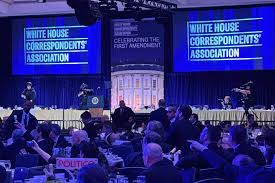
Authorities say the suspect, identified by multiple outlets as 31-year-old Cole Tomas Allen, launched the assault during the White House Correspondents’ Association dinner on April 25, a major political and media event attended by senior officials, journalists and celebrities. No fatalities were reported, though a federal officer was struck by gunfire but protected by a ballistic vest.

AD: Capeesh Restaurant
The attack triggered panic inside the Washington Hilton, where more than 2,000 guests had gathered. Secret Service agents swiftly evacuated Trump and other top officials as the suspect attempted to breach security near the ballroom.
Central to the investigation are messages and writings the suspect allegedly sent to family members minutes before the shooting, which authorities say contained strong anti-Trump sentiment and broader political grievances.
According to law enforcement officials cited in news reports, the suspect referred to himself as a “Friendly Federal Assassin” and railed against policies associated with the Trump administration. These writings are now a key piece of evidence as investigators assess whether the attack was politically motivated.

AD: Oysterian Sea Food Restaurant And Bar
Additional documents recovered from the suspect’s hotel room and home appear to reinforce that conclusion. Authorities believe he intended to target Trump and other senior administration figures, a determination based largely on those writings and other materials uncovered during the investigation.
In one account, officials said the suspect’s manifesto also referenced U.S. government actions and expressed anger over political and military policies, suggesting a broader ideological motive rather than a spontaneous act of violence.
President Donald Trump said the suspect had produced a manifesto containing anti-Christian views and described him as a deeply troubled individual. Reports notes that the attacker had shared anti-Trump and anti-Christian sentiments and sent a manifesto to family members shortly before the incident.
Trump also said relatives had raised concerns about the suspect’s behaviour prior to the attack, a claim that has intensified scrutiny over whether earlier warning signs might have been missed.
The suspect’s family has since cooperated with law enforcement, providing additional communications and background information that may help clarify his motivations and mental state leading up to the attack.
Security response and wider implications
The shooting unfolded rapidly, with witnesses describing confusion and fear as gunfire erupted near the event’s entrance. Guests initially struggled to understand what was happening, with some mistaking the noise for dropped equipment before realising the severity of the situation.
Law enforcement officials say the suspect acted alone, travelling across the country before arriving in Washington and checking into the hotel where the event was being held. He was armed with multiple weapons, including a shotgun and handgun, and managed to reach a security checkpoint before being confronted and subdued.
The incident has renewed concerns about political violence in the United States, particularly given its proximity to senior government officials and the symbolic nature of the event. Analysts note that the White House Correspondents’ Dinner, traditionally a space for interaction between the press and political leaders, has increasingly taken place against a backdrop of heightened tension.
Officials have indicated that the suspect could face a range of federal charges, including attempted murder of a federal officer and potentially charges related to an attempted assassination, depending on the outcome of the investigation.
The attack also prompted renewed debate over security protocols at major political gatherings. President Trump has pointed to the incident as justification for moving such events to more secure government-controlled venues, arguing that private locations like hotels may not offer sufficient protection.
Despite the chaos, authorities emphasised that the rapid response by the Secret Service and other law enforcement agencies likely prevented a far more serious outcome. Within moments of the first shots, the suspect was neutralised and high-profile attendees were escorted to safety.
Investigators are examining not only the suspect’s writings and digital footprint but also the question of whether earlier intervention could have prevented the attack. The involvement of family members, who reportedly flagged concerns about his behaviour, has added another layer to the inquiry.
The focus remains on understanding the motivations behind the attack and ensuring accountability through the legal process. Yet the incident stands as another stark reminder of the volatile intersection of politics and violence in the United States a reality underscored by the suspect’s own words, which appear to have foreshadowed the events that followed.
In the aftermath, federal investigators have moved swiftly to reconstruct the suspect’s timeline, examining digital communications, travel records and personal writings to determine how intent hardened into action.
Officials familiar with the case say particular attention is being paid to messages sent to relatives in the hours before the shooting, as well as any online activity that may reveal ideological influences or signs of escalation.
This effort reflects a broader shift in counterterrorism and law enforcement strategy, where behavioural patterns and warning indicators are increasingly scrutinised in an attempt to prevent attacks before they occur.
Legal experts note that the prosecution is likely to centre not only on the act itself but on demonstrating premeditation. If evidence shows the suspect deliberately targeted a high-profile political gathering with specific individuals in mind, prosecutors could pursue some of the most serious federal charges available.
Defence attorneys may point to the suspect’s mental state, raising questions about competency and responsibility that could shape the course of the trial. Such cases often become complex legal battles, balancing the demand for justice with the requirement to ensure due process.
The incident has reignited a wider national conversation about political rhetoric and its potential consequences. Analysts across the political spectrum have warned that increasingly polarised discourse, amplified by social media and partisan media ecosystems, can create an environment in which extreme views are reinforced rather than challenged.
While the overwhelming majority of individuals expressing political grievances do not turn to violence, experts caution that the normalisation of hostile language can, in rare cases, contribute to a climate where such acts become more conceivable.
Security officials are also reassessing the safeguards surrounding major political events. The attack has prompted renewed debate over whether existing measures are sufficient in an era of heightened tensions, particularly when gatherings bring together senior government figures, journalists and public personalities in relatively accessible venues.
Some policymakers have already suggested stricter protocols, including expanded perimeters, enhanced screening procedures and closer coordination between federal and local agencies.
However, the deeper concern lies not only in how the attack was carried out, but in what it represents. The convergence of personal grievance, political anger and access to weapons continues to pose a persistent challenge for authorities.
With the investigation unfolds, the case is likely to be examined not just as an isolated act, but as part of a broader pattern that has periodically surfaced in American public life.

AD: Heritage And Restaurant Lounge Bar