
By Lucy Caulkett-
The chief executive of South East Water has agreed to give up his annual bonus after a series of major outages left thousands of households without running water, prompting public outrage, political scrutiny and renewed questions over accountability in the UK’s water industry.
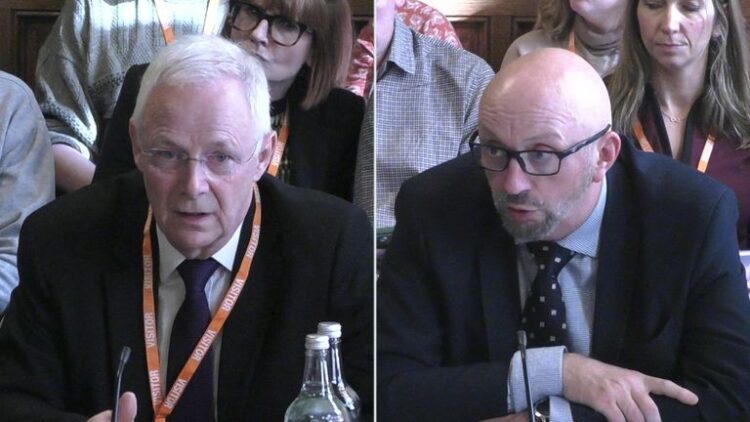
David Hinton, who leads the utility serving parts of Kent and Sussex, confirmed he would forgo a performance-related payment for the 2025–26 financial year following what he described as “unacceptable outages.” The decision comes after months of disruption that saw homes lose access to drinking water, schools forced to close, and businesses severely impacted.

AD: Capeesh Restaurant
Speaking before MPs on the Environment, Food and Rural Affairs Committee, Hinton apologised to customers and admitted the company had fallen short in its core responsibility to provide a reliable water supply. He will continue to receive his base salary, reported to be around £400,000, but said it would be inappropriate to accept any additional performance payment given the scale of the failures.
The move is widely seen as an attempt to quell mounting criticism from politicians, regulators and customers, many of whom have questioned how executives at underperforming utilities can continue to receive substantial bonuses despite repeated service failures.
The controversy stems from a series of breakdowns in late 2025 and early 2026 that exposed significant weaknesses in the company’s infrastructure and crisis response. In November and December, tens of thousands of properties particularly around Tunbridge Wells were left without water after failures at a treatment plant forced supplies to be cut off.

AD: Oysterian Sea Food Restaurant And Bar
The disruption did not end there. Further outages in January extended the crisis across parts of Kent and Sussex, leaving households unable to wash, cook or flush toilets. Schools were forced to shut their doors, while businesses reported heavy financial losses as normal operations became impossible.
Residents described scenes of chaos, with long queues forming at emergency water distribution points and some households resorting to collecting rainwater for basic sanitation. Vulnerable customers, including elderly residents and those with medical needs, were among the hardest hit, raising concerns about public health and emergency preparedness.
The scale of the disruption has had a lasting impact on public confidence. Surveys suggest a significant proportion of affected residents now rely on bottled water or stockpile supplies in anticipation of future outages, reflecting a deep erosion of trust in the company’s ability to deliver essential services.
Investigations by regulators have suggested that at least some of the failures were foreseeable. The Drinking Water Inspectorate found shortcomings in maintenance and monitoring at key facilities, while MPs raised concerns about whether warning signs had been ignored in the run-up to the crisis.
Criticism has also focused on the company’s communication during the outages. Customers complained of delayed updates, inconsistent information and a lack of clear guidance on when supplies would be restored. In some cases, the company was accused of downplaying the severity of the situation or failing to provide timely support to those most in need.
Leadership under pressure amid wider industry scrutiny
While Hinton’s decision to give up his bonus has been welcomed by some as a necessary gesture of accountability, it has done little to silence calls for deeper structural change within both the company and the wider water sector.
MPs have openly questioned whether the current leadership should remain in place, with some describing the situation as a “failure” that goes beyond individual decisions and reflects systemic issues within the organisation. Despite this, the company’s board has so far backed Hinton, opting to strengthen the executive team rather than pursue a change in leadership.
The episode has also reignited debate over executive pay in the privatised water industry. Critics argue that the ability of water company bosses to receive large salaries and bonuses even in the face of operational failures—undermines public trust and highlights flaws in the regulatory framework.
Recent efforts by the UK government and regulator Ofwat to curb bonuses have faced challenges, with some companies finding ways to circumvent restrictions through alternative payment structures. The controversy surrounding South East Water is likely to intensify pressure for stricter rules and greater transparency.
The crisis has drawn attention to deeper issues within the sector, including ageing infrastructure, high levels of debt and underinvestment. Analysts note that repeated outages across multiple regions suggest systemic vulnerabilities that cannot be addressed through short-term fixes alone.
South East Water itself has faced ongoing scrutiny in recent years, with previous incidents of supply disruption and regulatory fines adding to concerns about its performance. The company has received significant financial support from its owners to stabilise its operations, but doubts remain about its long-term resilience.
However, the immediate concern is more practical: whether they can rely on a consistent supply of water in the future. While the company has pledged to invest in infrastructure improvements and strengthen its operational capabilities, many residents remain sceptical.
The coming months are expected to prove critical as regulatory investigations are ongoing, and further hearings could determine whether additional sanctions or leadership changes are required. The company faces the challenge of rebuilding trust with customers who have experienced repeated disruptions to a service most take for granted.
Hinton has acknowledged that restoring confidence will take time, stating that the company must demonstrate tangible improvements rather than rely on promises. His decision to forgo his bonus may be a symbolic step, but for many customers, it will be judged against the more fundamental question of whether such failures can be prevented in the future.
While scrutiny of the water industry intensifies, the situation at South East Water has become a focal point in a broader national debate about accountability, regulation and the balance between private profit and public service.
The latest crisis has sharpened long-standing concerns that essential utilities, operating under private ownership, may not always be sufficiently incentivised to prioritise resilience over financial returns.
Consumer groups argue that repeated service failures across the sector point to structural weaknesses that go beyond any single company. They say that while bonus forfeitures and boardroom apologies may signal accountability in the short term, they do little to address what they describe as a “systemic underinvestment problem” that has built up over decades.
Many of these groups have called for tougher enforcement powers for regulators such as Ofwat, alongside clearer penalties for repeated breaches of service standards.
Political pressure is also mounting. MPs from across the Commons have questioned whether the current regulatory framework is strong enough to hold water companies fully accountable when critical infrastructure fails. Some have suggested that the existing model, which allows companies to distribute dividends and executive bonuses even in years of poor performance, risks undermining public trust in essential services.
Water companies themselves argue that the challenges they face are complex and often shaped by long-term factors such as population growth, climate change and the rising frequency of extreme weather events. They maintain that significant investment is already being made to modernise infrastructure, but that the scale of the upgrades required inevitably takes time to deliver.
This tension between immediate public expectations and long-term engineering realities sits at the heart of the current debate. For customers affected by outages, however, the focus remains on reliability and transparency in the present moment rather than future promises of improvement.
With investigations continue and political debate intensifies, South East Water’s difficulties are likely to remain emblematic of a wider reckoning for the industry. The question increasingly being asked is not only how such failures occurred, but whether the current system is capable of preventing them from happening again.

AD: Heritage And Restaurant Lounge Bar