
By Theodore Brown-
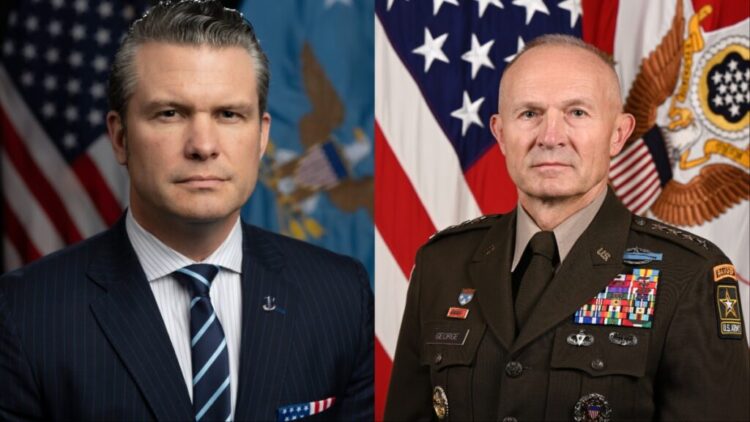
In an extraordinary and politically charged moment at the Pentagon this week, Gen. Randy George, the recently ousted U.S. Army Chief of Staff, issued a pointed farewell message underlining his belief that American soldiers deserve “courageous leaders of character.”
The remarks, which circulated widely in official circles and online, came just days after Defence Secretary Pete Hegseth compelled George to retire immediately cutting short his term during an active conflict abroad.

AD: Capeesh Restaurant
George’s departure is the latest in a sweeping series of leadership changes orchestrated by Hegseth since taking over as Secretary of War, a role that has drawn both support and criticism for the speed and scope of its personnel decisions. His removal has highlighted tensions within the Pentagon and raised questions about military leadership, civilian oversight, and the future direction of U.S. defense policy.
In his final email to senior Army officials, George a career officer with nearly four decades of service spoke of pride in his time leading the Army but also emphasised what he sees as an enduring truth about the institution he served.
“Our soldiers are truly the best in the world they deserve tough training and courageous leaders of character,” he wrote, later adding, “I have no doubt you will all continue to lead with courage, character, and grit.”

AD: Oysterian Sea Food Restaurant And Bar
A Sudden Exit Amid Wartime Leadership Turmoil
The abrupt nature of George’s retirement was notable. Army chiefs of staff typically serve four‑year terms, but Hegseth’s directive effectively ended George’s tenure more than a year early, as the United States continues its military engagement in the Middle East, including operations related to tensions with Iran.
According to Pentagon insiders and media reports, the decision reflects a broader effort by Hegseth to install top leaders who are aligned with his and President Donald Trump’s strategic vision for the U.S. military.
Sources have told press outlets that Hegseth is looking to consolidate a leadership team he believes will aggressively pursue his objectives and approach especially in wartime though official statements have described the transition in more neutral terms.
The change also included the departure of other senior officers, such as Gen. David Hodne and Maj. Gen. William Green Jr., suggesting a more comprehensive shake‑up in Army command. Hegseth’s supporters argue that such sweeping adjustments are necessary to reinvigorate the force and ensure unity of purpose at the highest levels.
Critics, however, warn that frequent turnover among senior commanders during an active war risks undermining continuity, morale, and strategic coherence.
To George, who was confirmed just over two years ago and had previously served as a senior military aide and in multiple combat and leadership assignments, the timing of his ouster underscored how unprecedented the current period is for Pentagon politics.
Military analysts note that removing a service chief during wartime especially without a clear and publicly articulated rationale is highly uncommon and likely to reverberate across defence circles for months.
George’s farewell message, though brief and formal in tone, carried heavier symbolic weight because of its timing and content. His emphasis on character and courage was seen by some observers inside and outside the military as a subtle critique of the shake‑up that removed him.
Through highlighting the needs of frontline soldiers, George’s words resonated far beyond the audience of senior officers who directly received his email.
“For many service members, the chief’s remarks struck a chord,” said one former defense official. “It’s one thing to talk about leadership in abstract terms; it’s another to remind those in power about the human cost of decisions that affect the men and women in uniform.”
At the Pentagon, reactions have been mixed. Some military leaders expressed respect for George’s long record and the dignity of his departure statement. Others emphasised that loyalty to civilian oversight is a central principle of the U.S. military, and changes at the top while disruptive are part of that dynamic.
Analysts also see the episode as part of a larger debate over the role of political loyalty, strategic alignment, and professional military judgment in senior defense appointments.
In recent months, Hegseth’s tenure has included reshaping the Joint Chiefs of Staff and removing other high‑ranking officials, moves that have drawn scrutiny from lawmakers, military experts, and veteran leaders who caution against excessive turnover at the highest levels.
With many rank‑and‑file soldiers and junior officers, however, the focus remains on the everyday demands of service and combat readiness. George’s parting words that they deserve tough training and courageous leadership reflect a sentiment that transcends internal Pentagon politics, touching on a belief shared by many in the force about what it means to be prepared and principled under fire.
While the military adjusts to new leadership under acting chiefs and ongoing geopolitical challenges, the legacy of this sudden change at the top of the Army will continue to unfold.
George’s departure message may be remembered not only as a farewell but as a defining moment in a contentious era for civil‑military relations, one that could shape discussions about leadership, loyalty, and the character expected of those who command America’s armed forces.
Observers note that the abrupt removal of a service chief during a period of active military engagement is highly unusual, and it casts a spotlight on the delicate balance between civilian oversight and professional military judgement.
Military scholars suggest that decisions like these inevitably influence morale, strategic planning, and the perception of stability within the armed forces. While acting leaders step in to fill the administrative and operational gaps, the broader implications of such a high‑profile departure resonate with both current service members and future generations of officers.
George’s emphasis on “courageous leaders of character” underscores a fundamental principle that transcends political agendas: that soldiers in the field rely not only on strategy and resources but also on integrity, resilience, and moral courage from those at the top.

AD: Heritage And Restaurant Lounge Bar