
By Lucy Caulkett-
On Easter Sunday, the British Royal Family’s traditional appearance at St George’s Chapel offered a vivid snapshot of a monarchy navigating continuity and change in a complex public moment.
Against a backdrop of enduring traditions, family dynamics and public scrutiny, this year’s service underscored both the institution’s cultural weight and its ongoing evolution in the 21st century.

AD: Capeesh Restaurant
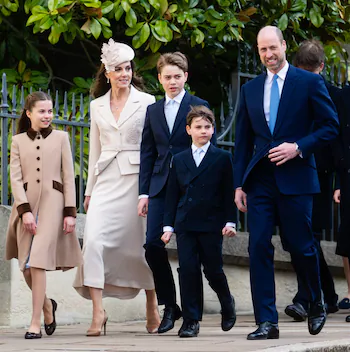
The service, held at Windsor Castle, brought together King Charles III and Queen Camilla, along with senior members of the royal family, including Prince William, Princess Catherine, the Princess of Wales, and their three children Prince George, Princess Charlotte and Prince Louis. With the Wales family, the occasion marked a notable public return after a two‑year absence due to Catherine’s health challenges.
Attendees arrived amid cool spring weather, greeted by well‑wishers gathered outside the chapel’s iconic stone entrance. The sight of multiple generations of royals walking together for many observers reinforced the ceremonial continuity that has long defined Easter at Windsor a tradition that blends solemn religious observance with public visibility and soft power.
Yet, this year’s gathering was shaped as much by who was absent as by who was present. Princesses Beatrice and Eugenie, along with their father, Andrew Mountbatten‑Windsor the former Duke of York did not attend.

AD: Oysterian Sea Food Restaurant And Bar
Their decision to make alternative plans, reportedly with the approval of King Charles, came amid ongoing controversy and fallout from Andrew’s legal troubles and his removal of royal titles earlier this year.
The dynamic echoed broader challenges confronting the monarchy, where public duty and private struggles intersect in highly visible ways. Royal commentators said the absence of certain family members underscored the complex balancing act the institution faces in managing reputation, tradition and internal unity.
In contrast, the Wales family’s presence especially with the children was widely interpreted as a signal of renewal and resilience for the future of the dynasty.
Adding another layer to the narrative, Buckingham Palace this year chose not to issue a personal Easter message from King Charles, a departure from recent practice that sparked conversation among Britons online and in the media.
Instead, the Royal Family shared a social media greeting on Easter Sunday, wishing Christians across the Commonwealth a “joyous Easter” and marking the holiday in a more collective public voice.
Critics on social platforms said the absence of a formal message from the monarch left a gap in national communication during a time many Britons view as spiritually significant, while others noted that Easter social media posts helped maintain relevance in digitally connected spaces.
The shift reflects how the monarchy is adapting its public engagement strategies in an era where traditional addresses compete with fast‑moving online discourse.
Observers said the Windsor service, beyond its solemn and ceremonial aspects, also served as a barometer of public sentiment toward the institution. Easter remains one of the few occasions where royals assemble in formal attire for a religious service a ritual that simultaneously affirms national heritage and invites contemporary interpretation.
Indeed, the event highlighted how the modern British monarchy operates at the intersection of pageantry and pragmatism. The family’s shared appearance offered continuity with centuries‑old rituals, while the conscious choices around appearances, absences and communications signalled an awareness of current cultural pressures and media narratives.
To many onlookers, the presence of young royals especially Prince George, Princess Charlotte and Prince Louis provided a forward‑looking image of the institution. Their participation, especially after a prolonged absence, was widely celebrated by royal supporters and seen as reinforcing a generational thread that links tradition with a future still unfolding under public observation.
But Easter at Windsor this year was not only about symbolism and visuals. It also reflected real conversations about the monarchy’s role in a changing society including questions about how the family manages controversy, treats internal divisions and communicates with a global audience that increasingly expects transparency and engagement.
While the sun set over the chapel’s historic stone walls and the royal party dispersed, Easter Sunday left a layered impression: one of remembrance and ritual, yes, but also of adaptation, negotiation and very deliberate public presence.
In an age where monarchy exists both as an ancient institution and a modern brand, this year’s Easter celebration offered a snapshot of how it continues to reconcile legacy with contemporary expectations.
Across the Commonwealth and beyond, Easter at Windsor was broadcast, shared, discussed, and debated a moment that showed that the British royals, even amid internal controversy and cultural flux, remain a touchpoint for national identity, collective memory, and ongoing public fascination.
The service, streamed online and covered extensively by international media, allowed millions to witness the pageantry and ritual that have long defined the monarchy, reaffirming its role as a living symbol of tradition while also demonstrating its ability to adapt to the demands of modern media consumption.
In a world where public attention spans are fragmented across digital platforms, the Windsor Easter service was both a reminder of enduring ceremonial gravitas and a test of the monarchy’s relevance in the 21st century.
To royal observers and analysts, the event highlighted the careful choreography that now accompanies public appearances. Each gesture, each choice of attire, and each moment of interaction whether between King Charles and his grandchildren or among senior family members was scrutinised for both symbolic meaning and human warmth.
The presence of younger royals, particularly Prince George, Princess Charlotte, and Prince Louis, added a sense of continuity and optimism, suggesting that the monarchy is conscious of bridging generational divides while maintaining its historical gravitas.
Their involvement also helped reinforce the image of a family grounded in both duty and affection, a balance that has become central to the modern royal narrative.
Simultaneously, the absence of certain senior royals reminded viewers that the monarchy is not immune to internal tensions and controversies.
Discussions across social media platforms, news forums, and televised commentary reflected the public’s complex relationship with the institution: admiration for its history and pageantry, curiosity about its private dynamics, and scrutiny of its role in contemporary society.
Easter at Windsor acted as both a mirror and a magnifying glass, reflecting the enduring ceremonial significance of the royals while amplifying ongoing debates about transparency, family cohesion, and national symbolism.
The Easter service demonstrated that the monarchy continues to occupy a unique space in public consciousness one that is simultaneously historic, performative, and profoundly human. Even amid evolving expectations and occasional discord, the British royals remain a focal point for conversation, cultural reflection, and shared identity across the Commonwealth and the wider world.

AD: Heritage And Restaurant Lounge Bar