
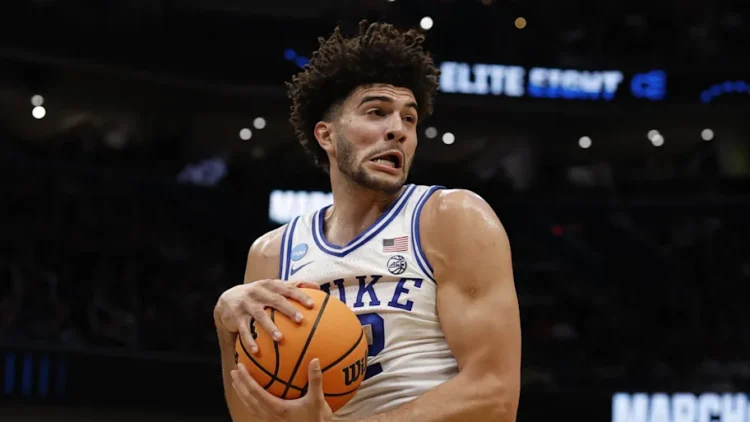
In a weekend of mixed emotions at the NCAA Final Four site, Cameron Boozer, the young star freshman for the Duke Blue Devils, spoke candidly about the difficult process of healing both physically and emotionally after a crushing Elite Eight loss to UConn Huskies and a hard‑fought season that nevertheless earned him college basketball’s highest individual honour.
Though Boozer was recently named the Associated Press men’s national player of the year, the sting of Duke’s 73‑72 defeat continues to linger even as he begins what his coaches describe as a critical recovery period.
Boozer, who averaged 22.5 points, 10.2 rebounds and 4.1 assists during the season, helped propel the Blue Devils to a 35‑3 record and a No. 1 seed in the NCAA Tournament, becoming only the fifth freshman in history to receive the AP honour.

AD: Capeesh Restaurant
In the Elite Eight confrontation with UConn, his relentless play was emblematic of his season even as he battled through a facial injury sustained during the game.
Boozer revealed he suffered “a couple of fractures” after an opponent’s elbow struck him near the right eye, causing significant swelling that marked the final hours of Duke’s season. Despite the injury, he finished with 27 points, a testament to his resilience and competitive spirit.
The physical toll of the season was not limited to that single moment. Boozer played through multiple bruises, scrapes and hard fouls including a fiercely contested late‑season matchup at N.C. State where he carried visible scratches on his shoulder.

AD: Oysterian Sea Food Restaurant And Bar
But it was the dramatic final loss to UConn sealed by a last‑second three‑pointer after a stunning comeback from a 19‑point deficit that seemed to cut deepest. watched the game slip away, and the emotional impact was evident, not just on Boozer but across the entire Duke roster.
At Sunday’s award presentation, Boozer addressed both sides of the experience the pride of personal accomplishment and the grief of a shared team loss. “I have a couple of fractures, but I’m all good,” he said, describing the early stages of his recovery and his decision to forgo surgery, opting instead to let time heal the injury.
He spoke openly about the mental challenge of reconciling individual accolades with collective disappointment, acknowledging that being present at Lucas Oil Stadium where the national title participants held press conferences mere feet away added layers of emotional complexity to his weekend.
“It’s a lot of emotions going into it,” Boozer said, the Minnesota‑born player reflecting on the dichotomy of celebrating a historic personal season while confronting the abrupt end of what had been a promising championship run.
His twin brother, Cayden Boozer, also a key contributor for Duke, faced a torrent of online criticism after committing the final turnover before UConn’s winning shot, adding another emotional burden for the family.
Boozer’s story this season was one of exceptional achievement tempered by the reality of college basketball’s unforgiving single‑elimination tournament. As Duke reflects on what might have been, Boozer’s coaches and teammates have rallied around him, emphasising his leadership on and off the court.
The sense among those close to the program is that the lessons from this season both triumphant and painful will strengthen him as he prepares for life beyond college basketball.
Despite the frustration of falling short, Boozer emphasized a team‑first mentality in his public comments, deflecting pressure from his brother and insisting that a single play did not define Duke’s entire campaign. The connection he shared with his teammates “a super‑connected group,” as he described it remains a source of pride and a foundation for future growth.
With recovery continuing, Boozer’s focus remains on healing and gaining perspective. Amid a wave of national recognition, including the AP Player of the Year award and other accolades, his journey has become a compelling chapter in a remarkable freshman campaign that captured the attention of fans, scouts, and pundits alike.
While the heartbreak of March lingers, the path forward for this emerging basketball star is filled with promise, both in recovery and in potential career milestones yet to come.
Physically, Boozer is approaching his rehabilitation with a discipline that mirrors his approach on the court. The facial injury sustained during the Elite Eight clash with UConn has required careful monitoring, and though he has opted to forgo surgery, medical staff emphasise that proper rest, physical therapy, and gradual conditioning are essential to ensure he returns to peak form.
Coaches have highlighted Boozer’s commitment to recovery, noting that he approaches treatment with the same focus and precision he brings to practice sessions and game preparation. This meticulous attention to his body’s healing reflects a maturity beyond his years, reinforcing why many consider him a future leader in professional basketball.
Emotionally, the process has been equally demanding. While a freshman thrust into the national spotlight, Boozer has navigated the intensity of both praise and criticism with composure. While being named the AP Player of the Year is a historic achievement, the sting of Duke’s loss to UConn has underscored the harsh realities of high-stakes college basketball.
Boozer has spoken candidly about balancing pride in his personal accomplishments with the disappointment of a team defeat that slipped through the final moments. Conversations with teammates, mentors, and family have been pivotal in helping him process the emotions of the season, offering perspective that blends ambition with reflection.
Scouts and analysts continue to follow Boozer’s progress closely, projecting his potential at the professional level. His combination of size, athleticism, and basketball IQ has made him one of the most watched prospects in the country.
Each recovery milestone he achieves is not only a personal victory but a signal to recruiters that he possesses the resilience necessary to thrive at higher levels of competition. Observers note that the way young athletes handle setbacks, both physical and emotional, often defines their long-term trajectory and Boozer’s measured response has only enhanced his growing reputation.
Off the court, Boozer has embraced the responsibilities that come with national recognition. Media appearances, interviews, and philanthropic initiatives have become part of his daily routine, challenging him to cultivate poise and professionalism.
These experiences, coupled with lessons learned from intense competition, contribute to the holistic development of a young athlete learning to manage fame, expectation, and personal growth simultaneously.
Looking ahead, Boozer’s journey remains a narrative of promise tempered by challenge. The heartbreak of March serves as a lesson in resilience, while his accolades and the national spotlight reinforce the possibilities of his burgeoning career.
While he continues to recover, both physically and mentally, the next steps in his basketball journey whether leading Duke in the coming season or preparing for professional opportunities will be shaped by the balance of determination, maturity, and perspective that has already distinguished his freshman year.
The road ahead is filled with potential, and if Boozer continues to navigate it with the same intensity and focus that defined his breakout season, the basketball world will be watching closely for the next chapter in what promises to be an extraordinary career.

AD: Heritage And Restaurant Lounge Bar