
By Theodore Brown-
A U.S. Marine corporal has been arrested and charged in a sweeping federal case that has raised alarms about military weapons security and potential criminal networks operating beyond military bases.
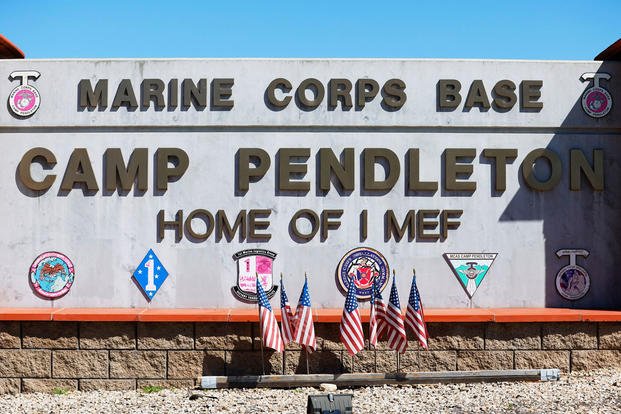
Corporal Andrew Paul Amarillas, 23, faces a series of serious charges after prosecutors say he stole restricted military hardware including a shoulder‑fired missile system from Marine Corps Base Camp Pendleton in Southern California and sold the stolen items in Arizona. The allegations have shocked military officials and law enforcement alike, prompting scrutiny of how controlled weapons could be diverted from secure armouries to illicit markets.

AD: Capeesh Restaurant
According to a federal grand jury indictment, Amarillas served as an ammunition specialist at the School of Infantry West at Camp Pendleton, where he had authorised access to a range of military‑grade weapons and ammunition.
Prosecutors allege that between February 2022 and November 2025 he exploited that position to systematically steal items including at least one Javelin anti‑tank missile system, thousands of rounds of ammunition, and other restricted weapons components and then trafficked them for profit. Some of the stolen property has been recovered, but authorities say a significant amount remains outstanding.
Amarillas was taken into federal custody in Phoenix last week after pleading not guilty to multiple counts, including conspiracy to commit theft and embezzlement of government property and possession and sale of stolen ammunition. A federal judge ordered him held without bail pending trial, citing concerns that he could be a flight risk and a danger to ongoing investigations.

AD: Oysterian Sea Food Restaurant And Bar
Court filings portray a detailed and troubling narrative of how the thefts occurred and the networks allegedly involved. Investigators say Amarillas shipped or transported the stolen military property to his home state of Arizona, where he is accused of working with unnamed co‑conspirators who helped market and resell the weapons and ammunition.
Text messages included in the indictment some exchanged directly with alleged accomplices reportedly discussed specific items, with Amarillas referring to having “some javs and some other ones” and offering to show multiple launchers to interested buyers.
Federal agents were able to recover at least part of the arsenal during undercover purchases and coordinated law‑enforcement actions. Some of the recovered ammunition was traced back to supply depots at Camp Pendleton, where lot numbers matched those signed out by Amarillas, according to court documents.
Despite this, prosecutors told the court that not all stolen materials have been located, suggesting that a substantial quantity potentially including live munitions may still be missing.
The Javelin missile system allegedly stolen in this case is designed as a shoulder‑fired anti‑tank weapon produced for military use only. These systems, which can also be used to engage low‑flying aircraft, are tightly controlled; possession by civilians or unauthorised persons is strictly prohibited.
The prospect that such weaponry could enter unlawful channels has raised urgent questions among defence and law‑enforcement officials.
Officials from the Naval Criminal Investigative Service (NCIS), which is leading the military investigation, stressed their commitment to following the case wherever it leads.
The military agency has worked alongside other federal authorities to trace movements of the stolen property and has signalled that the investigation remains active. Statements from NCIS emphasise that securing military assets, especially controlled weapons and ammunition, is a top priority.
The arraignment and subsequent custody order in Phoenix brought Amarillas briefly before a federal judge, where he entered his not‑guilty plea and was remanded. His attorney has not publicly commented on the accusations, and officials at Camp Pendleton have declined to release detailed statements, citing the ongoing nature of the probe.
This case comes at a time when the U.S. military is increasingly attentive to internal security and the safeguarding of restricted armaments, particularly as domestic extremism, theft and black‑market trafficking of military materials have been areas of concern for federal agencies in recent years.
Though isolated incidents of weapons theft are rare, the potential consequences of restricted arms including missiles and military ammunition circulating outside authorised channels are profound and could pose serious risks to public safety and national security.
Observers note that the alleged theft by a Marine entrusted with safeguarding armaments deepens the seriousness of the case. In addition to the legal battle ahead, the incident has triggered internal reviews within the Marine Corps and NCIS about current access controls, inventory tracking, and oversight practices at major bases like Camp Pendleton.
These measures are intended to prevent similar breaches and reinforce confidence that military stockpiles remain secure and accounted for.
The ongoing federal investigation could also lead to additional charges or co‑defendants as more evidence is reviewed and connections to resale networks are clarified. While authorities continue to search for missing weapons and ammunition, the story that highlights gaps in security and the complex challenges of policing military materials.
With Amarillas, the next major court appearance will help determine whether the evidence prosecutors have gathered is sufficient to move the case toward trial. Legal experts emphasise that the charges he faces carry significant potential penalties, particularly given the seriousness of theft and illegal sale of military property.
Convictions on such counts could result in decades of incarceration, substantial fines, and the forfeiture of any illicitly obtained property. Beyond the immediate legal ramifications for Amarillas, the case also carries broader implications for the military community and public confidence in the security of weapons stockpiles.
Meanwhile, residents in both California and Arizona are watching developments closely as details unfold in one of the most unusual military crime cases in recent memory. Social media has amplified public interest, with widespread discussion about how such a breach could occur and what measures might prevent future incidents.
Law enforcement agencies and military officials have pledged transparency where possible, acknowledging both public concern and the sensitive nature of classified materials. Analysts suggest the case could prompt reviews across multiple bases nationwide, potentially influencing policies on access control, inventory monitoring, and background checks.
With Amarillas, the upcoming proceedings will be pivotal, but for the military and the public, the case is shaping into a defining moment that underscores the critical importance of safeguarding the nation’s weapons and maintaining trust in military institutions.

AD: Heritage And Restaurant Lounge Bar