
By Ben Kerrigan-
In an extraordinary international development that bridges sports, geopolitics and human rights, U.S. President Donald Trump has inserted himself into the fraught situation surrounding the Iranian women’s national football team following their controversial response to their national anthem at the AFC Women’s Asian Cup. What began as a moment of silent protest on the pitch has rapidly escalated into a diplomatic confrontation, as fears grow over the safety of the players should they return to a country in the grip of political turmoil and violent repression.
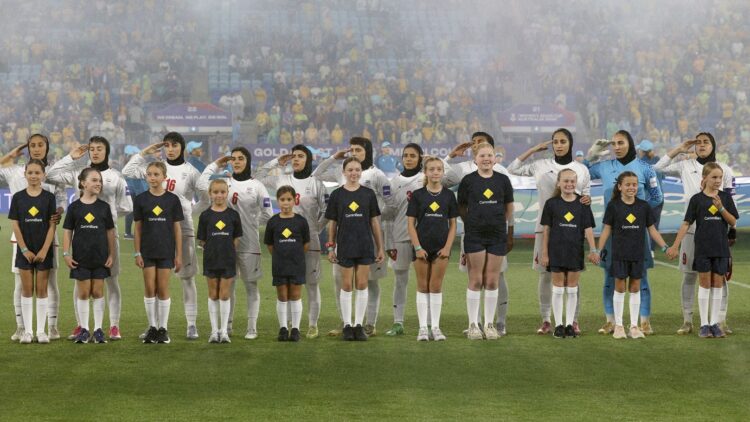
The team’s refusal to sing Iran’s national anthem before their opening match against South Korea last week was widely interpreted as a quiet act of defiance, occurring against the backdrop of continuing protests inside Iran and heightened tensions after recent clashes in the Middle East.

AD: Capeesh Restaurant
Iranian state media labelled the players “wartime traitors,” stoking fears that their act of protest could have severe consequences back home.
Now, with asylum offers on the table and global attention sharpening on their plight, the world is watching how governments and political leaders respond. Recent developments have been dramatic and swift.
The controversy began during Iran’s first match at the Women’s Asian Cup in Australia, when members of the squad stood in silence as the Iranian anthem played, a gesture that many observers saw as a subtle protest against the political situation in their homeland.

AD: Oysterian Sea Food Restaurant And Bar
In response to rising concerns about the players’ future safety, President Trump issued a public call on Australia’s government where the tournament is being held to offer asylum to the team members rather than allow them to return home.
In a post on his Truth Social platform, Trump warned that sending the players back to Iran could put their lives at risk, saying Australia would be making a “terrible humanitarian mistake” if it did so, and asserting that the United States would step in to take them if Canberra could not.
Within hours, the situation took a dramatic turn. Australian authorities granted humanitarian visas to at least five of the team’s players who had indicated fears for their safety, allowing them to remain in the country under official protection.
This move seemed to be influenced by direct engagement between Trump and Australia’s Prime Minister Anthony Albanese, as both leaders discussed the delicate diplomatic circumstances facing the squad.
The decision marks a rare moment of cooperation between the United States and Australia on a high‑profile asylum issue, and it reflects increasing concerns among human rights groups and football organisations about the wellbeing of athletes who express dissent against authoritarian regimes.
While some players have applied for humanitarian visas, others reportedly still face agonising decisions about whether to return home. Some fear for the safety of family members who remain in Iran where protests and state crackdowns have intensified in recent months and have expressed conflicting desires to stay abroad or reunite with loved ones.
With their part, Iranian authorities continue to label the team’s initial refusal to sing the anthem as a “pinnacle of dishonour,” while local supporters in Australia have staged demonstrations at matches and around team transport, urging local officials to ensure the athletes’ safety.
Beyond Australia and the United States, the situation has drawn commentary from figures across cultural and political spheres. International players’ unions and advocacy groups have urged global governing bodies like FIFA and the AFC to take urgent action to safeguard the players, stressing that sport cannot be separated from the harsh realities they face.
In some countries, public figures have added their voices to the conversation. British author J.K. Rowling, for example, took to social media to urge football authorities and host governments to protect the team, describing their situation as perilously linked to broader struggles for women’s rights and protections in Iran.
Her message, shared widely on X (formerly Twitter), underscored the emotional stakes and human dimension of what might otherwise be viewed solely as a sporting incident.
Reddit threads and other online commentary have mirrored this international outcry, with users sharing both footage of the anthem protest and firsthand observations from the tournament. One widely circulated clip reportedly showed a player signalling for help from inside a team bus an image that galvanised support and intensified urgent calls for protective measures from human rights advocates.
Analysts note that the case of Iran’s women’s team intersects with larger questions about freedom of expression, gender equality and state repression.
The anthem protest at the Asian Cup, however subtle, resonated precisely because it occurred on a public international stage, prompting global audiences to confront forces in Iran that often go unseen.
With more players consider asylum or remain in protective custody with Australian authorities, the broader implications extend beyond sport. The incident highlights how athletic events especially international competitions can become arenas for political expression and international diplomacy.
It also raises questions about the role of host nations and sporting federations in safeguarding competitors whose decisions may put them at odds with authoritarian governments.
The response from the United States under Trump’s leadership is particularly noteworthy, given the administration’s broader stance on immigration and asylum.
While the offer to step in and take the Iranian team if Australia could not has been welcomed by human rights advocates, it also underscores the complexity of asylum politics, where geopolitical interests and humanitarian concerns frequently collide.
To many observers, the asylum offer signifies a moment of rare bipartisan moral clarity in U.S. foreign policy rhetoric, even if the implementation of such offers remains logistically and politically complex.
It also shines a spotlight on the personal courage of the athletes themselves individuals who, in choosing not to sing their national anthem, consciously stepped into the storm of international political controversy.
Whether more players will seek asylum, return to Iran or pursue alternative refuge remains uncertain. But one thing is clear: the episode has already reverberated far beyond the grassy pitches of the Asian Cup. It has ignited a global conversation about safety, sovereignty and the responsibility of nations sporting and political to protect individual freedoms.
While the situation continues to develop, governments, international sports federations and human rights organisations will be closely watching. For the players at the centre of this extraordinary story, the stakes could not be higher: personal safety, international solidarity and the future of women’s sports advocacy all hang in the balance.

AD: Heritage And Restaurant Lounge Bar