
By Sheila Mckenzie-
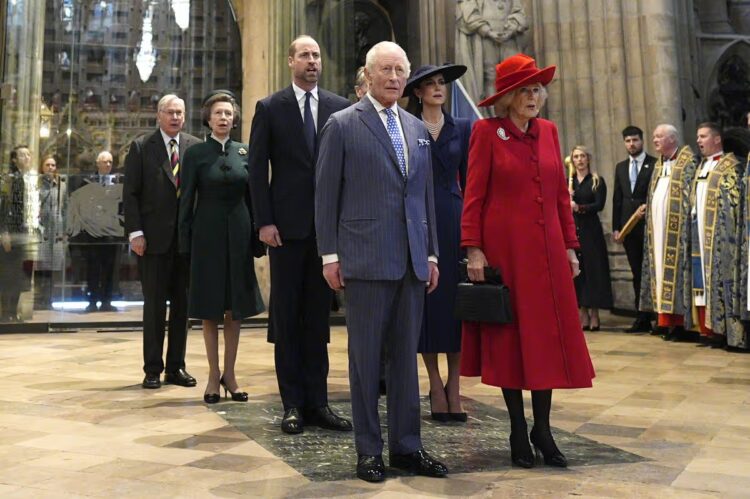
In a moment that blends pageantry with palpable tension, the British royal family gathered in public for the first time since the dramatic arrest of Andrew Mountbatten‑Windsor once known as Prince Andrew earlier this year. On Monday, March 9, King Charles III led senior royals to Westminster Abbey for the annual Commonwealth Day service, an event that became far more than a ceremonial fixture on the palace calendar. It was a symbolic display of unity at a fraught moment for the monarchy, drawing both widespread media attention and public protest.
Across London, protesters gathered outside the historic abbey, bearing placards that asked pointed questions about the monarchy’s handling of the scandal surrounding Andrew, and at times shouting “What did you know?” at arriving guests.

AD: Capeesh Restaurant
Inside, the atmosphere was calmer and more calculated. The King, flanked by Queen Camilla, Prince William and Catherine, Princess of Wales, delivered a message focused on cooperation and purpose, invoking the Commonwealth’s mission as a “force for good.” Despite the swirling controversy, the family maintained traditional ceremonial composure.
With millions watching live and following news coverage, the gathering was more than a moment on the royal calendar it was the first clear public performance of familial cohesion since Andrew’s arrest last month. The event marked a turning point in how the monarchy positions itself amid unprecedented legal and reputational turmoil.
The Commonwealth Day service has long been one of the most significant public engagements in the British royal schedule, bringing together supporters of the 56‑nation Commonwealth from the United Kingdom to far‑flung member states across Africa, Asia and the Caribbean.

AD: Oysterian Sea Food Restaurant And Bar
This year’s ceremony, attended by roughly 1,800 invited guests, took on an added layer of meaning following one of the most extraordinary chapters in recent royal history.
Andrew Mountbatten‑Windsor, the estranged brother of King Charles, was arrested on February 19 on suspicion of misconduct in public office the first time a member of the royal family has been detained in modern British history. Although he was held for around 11 hours and subsequently released under investigation, the episode shook public confidence and cast a long shadow over the monarchy.
In the weeks since, Andrew has remained absent from all official royal events. The family has refrained from publicly addressing the matter in detail, and his former residences including Royal Lodge on the Windsor estate were searched by police in relation to the probe.
While senior royals have continued with engagements, this Commonwealth gathering was the first high‑profile occasion on which they appeared together as a unit. The presence of Prince William and Princess Kate was especially scrutinised; the couple arrived at the abbey in coordinated attire, offering a visual signal of stability and continuity.
To many observers, their composure and cordial exchanges including a warm greeting between Kate and King Charles were seen as carefully managed appearances, designed to reassure supporters that the monarchy remains steady even as it navigates internal controversy.
However, not all critics were so easily placated. Republic, a leading anti‑monarchy campaign group, used the event to amplify calls for accountability and transparency, accusing the royals of cloaking serious questions about Andrew’s conduct behind ceremony and tradition.
Tradition Meets a Moment of Reckoning
Despite the protests outside, the service inside adhered to tradition, featuring prayers, readings and reflections that highlighted themes of unity and resilience.
Former Spice Girl Geri Halliwell‑Horner, serving as a Royal Commonwealth Society Ambassador, gave an address, while performers including dancer Oti Mabuse took part in the proceedings emphasising diversity and cultural collaboration across the Commonwealth.
King Charles used his platform to reiterate the Commonwealth’s enduring purpose in a world facing conflict, climate challenges and rapid geopolitical change. “We join together on this Commonwealth Day at a time of great challenge and great possibility,” his message read, according to advance previews of the service’s order.
The symbolism of the event, set against a backdrop of legal and political upheaval, was unmistakable. With the monarchy, projecting unity has become a strategic priority. With Prince Andrew sidelined and questions swirling over his future in the House of Windsor, the optics of cohesion carry substantial weight.
With supporters, the gathering was a reminder of continuity and tradition. To critics, it was a carefully curated moment that underscored deep cracks beneath a polished surface.
This Commonwealth Day also marked a rare break from broadcast tradition. The BBC which has aired the service for decades opted not to carry the full broadcast this year, a change attributed in part to broader scheduling decisions and funding pressures.
The shift meant that coverage of this key moment reached audiences primarily through international news outlets and online platforms rather than a single national broadcast.
Outside the abbey, protesters representing a range of viewpoints gathered under Union flags and republican banners alike. Some called for an independent inquiry into the monarchy’s handling of Andrew’s situation and wider systemic reforms to how the royal institution interacts with the press, government and public life.
While the ceremony focused on celebration and reflection, the juxtaposition of protest and pageantry illustrated the complex position the royal family occupies in contemporary Britain revered by many, questioned by others, and scrutinised by all.
To members of the royal household, the event was both a recommitment to duty and a reminder of the challenges that lie ahead. Following the service, key figures were reported to be engaging in discussions with Commonwealth representatives including conversations about Andrew’s standing and whether he should remain in the line of succession, a debate that may have long‑term constitutional implications beyond Britain’s borders.
Diplomatic relationships within the Commonwealth spanning Canada, Australia and New Zealand, among others are intertwined with the monarchy’s role as head of state in multiple realms, meaning decisions around Andrew could require common agreement and legal processes stretching across continents.
Despite the public drama, members of the royal family maintained a measured demeanor throughout the event. Catherine, Princess of Wales, was noted for her poised interaction with other guests, and Prince William’s role alongside his father reinforced his expected future role as monarch in waiting.
What was once a largely ceremonial event evolved this year into a focal point for broader conversations about accountability, representation and the modern monarchy’s place in a rapidly changing world.
While guests departed Westminster Abbey and television coverage concluded across various platforms, commentators reflected on how the royals balanced tradition with turbulence.
Some suggested the family’s willingness to uphold ceremony in the midst of controversy could strengthen its public legitimacy; others predicted ongoing debates about transparency and reform would follow them beyond this symbolic moment.
While the gathering stands as the most significant public assembly of the royal family since the events surrounding Andrew’s detention made global headlines a moment where tradition, crisis and public scrutiny converged under one roof at Westminster.

AD: Heritage And Restaurant Lounge Bar