
By Ben Kerrigan-
As the first UK government charter flight carrying British nationals stranded in the Middle East touched down in London in the early hours of Friday, one couple’s extraordinary story of survival and resilience has put a human face on the chaos gripping the region. Amelia Reid and her partner, Samuel Sharp, who had travelled to Dubai for a long weekend break, found themselves in a nightmare scenario that saw them sheltering in a hotel car park basement with around 100 other guests as regional tensions escalated into missile strikes and uncertainty. The couple finally made it home after more than 40 hours of travel a journey marked by fear, confusion and sheer determination.
Their ordeal began late last week when a US‑Israeli military campaign against targets in Iran sparked swift and far‑reaching retaliatory strikes across the Middle East, prompting air space closures, flight cancellations and the disruption of normal life in major hubs such as Dubai and Abu Dhabi.

AD: Capeesh Restaurant
Thousands of British tourists and expatriates were caught off‑guard as alarms wailed and emergency alerts flooded their phones, warning of incoming attacks. With no clear guidance and rising anxiety among travellers, scores of holidaymakers sought refuge wherever they could including the dimly lit, echoing basement of a hotel car park.
To Reid, who uses a wheelchair, and Sharp, sheltering was a frightening test of patience and nerves. “We ended up sleeping in a car park in the basement … after the alarms went off on our phones,” Sharp recalled, describing how the couple and other guests waited, “on edge for four days,” unsure whether it was safe to ascend to higher floors or leave the building altogether.
The British government, in response to the rapidly deteriorating situation, arranged chartered repatriation flights from Muscat, Oman a viable travel hub reachable by road from the UAE for those wishing to return home.

AD: Oysterian Sea Food Restaurant And Bar
The first of these, operated by Titan Airways, was due to depart on Wednesday night but was delayed by nearly 24 hours due to technical and logistical issues, adding to the anxiety of those already waiting in makeshift accommodations at airports.
After deciding they could no longer wait in Dubai, Reid and Sharp left on Thursday. They travelled from the emirate to the Oman border by road and then boarded a coach to Muscat airport, hoping to secure a place on the government‑arranged flight.
Despite the earlier disappointment of a cancelled take‑off due to pilot hours restrictions, the couple eventually boarded the delayed flight and landed at London Stansted Airport just before 1am UK time.
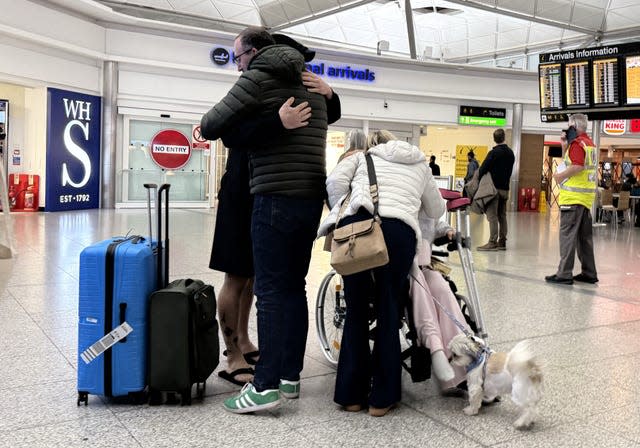
Upon arrival, they were reunited with loved ones including Reid’s parents and a small dog named Penny amid scenes of relief and joy in the arrivals lounge. But for many others, the journey home remains uncertain.
According to the latest data from the Foreign, Commonwealth & Development Office, more than 140,000 British nationals in the Gulf region have registered with the UK government for assistance, and just over 4,000 have returned home so far, many on commercial flights.
Across social media and interviews with fellow passengers, common themes of “chaos”, long queues, uncertain communications and emotional stress emerged. One family described a 36‑hour wait at Muscat Airport after a road journey of hundreds of miles, only to be told that their aircraft could not depart because the pilot had exceeded legally permissible flying hours earlier in the day.
Such experiences have underlined the broader logistical challenge the government faces in coordinating repatriation efforts amid dynamic security risks.
This unfolding evacuation effort is set against a broader backdrop of escalating geopolitical tensions in the Middle East. The war involving the United States, Israel and Iran entered its seventh day, with renewed missile strikes and air defence operations reported across the region.
Prime Minister Sir Keir Starmer confirmed that additional British Typhoon fighter jets would be deployed to support defensive operations, emphasising the severity and ongoing nature of the crisis.
The conflict’s ripple effects extend beyond travel disruptions. Celebrities and public figures such as Vicky Pattison have been reported among those stranded in the Gulf after flights were cancelled, highlighting how widespread the impact has been on both residents and visitors.
Meanwhile, political leaders in the UK are under pressure to balance diplomatic responses with urgent consular support for citizens caught far from home.
In recent statements, Deputy Prime Minister David Lammy suggested that there could be legal grounds for expanding the Royal Air Force’s operational role to directly counter missile threats a suggestion that signals how swiftly the situation is developing on a military and diplomatic front.
Back at London Stansted, returning passengers have shared mixed reactions. Some praised the government’s efforts, acknowledging the difficulties involved in organising emergency evacuations under volatile conditions.
Others voiced frustration at communication breakdowns and the prolonged waits at airports and borders before even reaching a departure point. What unites them, however, is a profound sense of relief at having finally made it home after days of uncertainty and fear.
With Reid and Sharp, the ordeal has underscored just how fragile travel plans can be in an increasingly unpredictable world. What began as a routine holiday, intended to provide a brief respite from work and daily pressures, quickly became a harrowing test of endurance, resourcefulness, and mutual support.
Trapped in the dim, echoing basement of a hotel car park alongside dozens of other stranded travellers, the couple faced uncertainty at every turn: intermittent mobile signals, conflicting reports from authorities, and the ever-present anxiety of not knowing whether it was safe to move above ground.
Simple tasks finding food, accessing water, or even charging their devices became exercises in improvisation, all against a backdrop of fear that each alarm or news alert could signal an escalation of conflict.
Through it all, Reid and Sharp relied on each other, drawing strength from companionship and shared determination. Their experience highlighted not only personal resilience but also the quiet solidarity that emerges among strangers in crisis.
Fellow guests in the car park shared stories, swapped supplies, and offered reassurance, creating a temporary community bound by the need to survive and wait out the chaos together.
Their eventual journey home a gruelling combination of road travel, long waits at airports, and finally boarding the government-arranged charter flight offered relief, but also reflection. Reid described the experience as “life-changing,” noting that even routine trips can unexpectedly intersect with larger forces beyond one’s control.
Sharp added that the ordeal had reinforced the importance of preparedness and patience, as well as gratitude for the small acts of kindness that made their wait tolerable.
With thousands of other British nationals remain stranded across the Middle East, Reid and Sharp’s story serves as a poignant reminder of the human cost of geopolitical conflict.
It illustrates the extraordinary lengths ordinary people will go to secure safety and reunite with loved ones, and underscores the broader responsibility of governments, airlines, and emergency services to support citizens in moments of unprecedented uncertainty.

AD: Heritage And Restaurant Lounge Bar