
By Ethan Rodriguez-
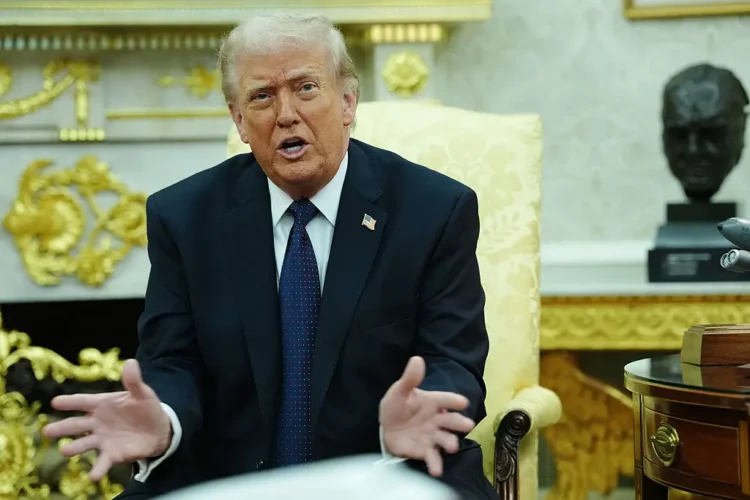
In a high-stakes press moment that’s reigniting debate over the U.S. entry into the war with Iran, President Donald Trump insisted Tuesday that the United States did not strike Tehran because Israel compelled Washington to act first but that he may have influenced Tel Aviv’s timing and that Iran was poised to strike American interests unless stopped.During a White House briefing with German Chancellor Friedrich Merz, Trump doubled down on his narrative that the United States struck Iran primarily to head off what he characterised as an imminent Iranian attack against U.S. forces and allies.
“We were having negotiations with these lunatics and it was my opinion that they were going to attack first,” Trump told ABC News’ Rachel Scott. “So, if anything, I might’ve forced Israel’s hand.”

AD: Capeesh Restaurant
This explanation comes amid conflicting accounts from senior U.S. officials about why and when the strikes were ordered. Last week, Secretary of State Marco Rubio appeared to acknowledge that knowledge of an impending Israeli military operation influenced the timing of the U.S. strike on Iranian targets, saying Washington feared retaliatory strikes on American forces if it waited.
The White House has since pushed back on the notion that Israel dictated U.S. decisions, including a denial from press secretary Karoline Leavitt that Rubio ever claimed Israel “dragged” the U.S. into war.
Trump’s framing combining deterrence of an Iranian first strike with a hint of strategic coordination with Israel marks a continuance of mixed messaging from the administration on how the conflict escalated.

AD: Oysterian Sea Food Restaurant And Bar
Critics in Congress, including members of both parties, have raised alarms over the lack of clear threat evidence and questioned whether such military action should proceed without specific authorisation from lawmakers.
Desertions from Trump’s narrative in intelligence circles have also surfaced, with reports suggesting U.S. agencies saw no confirmed credible evidence that Iran was on the brink of a direct assault on American soil.
Against this backdrop, Trump’s remarks seek to thread a narrow needle: justifying military action as necessary self-defense, while distancing the White House from perceptions of being steered by an ally’s battlefield timetable.
His critics, however, argue that contradictory explanations pre-emption, deterrence, allied pressure may muddle U.S. strategic clarity at a moment of intense regional escalation.
The conflict’s expansion has dramatically shifted dynamics across the Middle East in recent days. After joint U.S.–Israeli strikes against Iranian military and leadership targets, including the reported death of Supreme Leader Ali Khamenei, Tehran has responded with missile and drone attacks on allied Arab states and American bases in the region.
This volley of aggression has sent global oil markets into turmoil and raised fears about ongoing strikes disrupting shipping through the Strait of Hormuz, a critical energy artery.
Domestically, Trump’s defense that the war was justified to prevent a “first strike” by Iran has drawn intense scrutiny. Opponents in Congress have argued that this rationale resembles an after-the-fact justification rather than a transparent threat assessment, pointing to reported intelligence disputes about Iran’s capabilities and intentions.
That challenge has sparked calls for hearings and potential votes on war powers an uphill battle in a deeply polarised Capitol Hill but one that underscores longstanding constitutional debates.
Globally, reactions have been mixed. Several European governments, while condemning aggression from Tehran, have emphasized de-escalation and pressed for diplomatic channels even as they recognise the complexities of security commitments to allies.
Germany’s Merz, for example, expressed both support for collective defence measures and concern for the broader economic and humanitarian consequences of sustained military conflict.
In Tehran, state media has rejected U.S. and Israeli characterizations of Iranian intentions, framing their military response as legitimate defense against unprovoked attacks. The Iranian government maintains that its actions are reactive, denying any imminent plan to attack U.S. targets before the strikes a stance that experts say complicates narratives about “who struck first.”
Amid these developments, the narrative battle over whether military action was defensive or influenced by an ally’s agenda has taken on almost as much significance as the military campaign itself. Trump’s claim that he might have forced Israel’s hand is likely to remain a focal point in both domestic political battles and international analysis of how the Middle East war unfolded.
At the center of that debate is not only the question of timing, but of intent. President Donald Trump has framed the strikes as a necessary act of preemption, asserting that Iran was preparing to target U.S. personnel and facilities.
Suggesting he may have “forced” Israel to accelerate its own plans, Trump positions himself as the primary decision-maker not a reactive partner pulled into conflict, but the architect of a coordinated strategy designed to neutralise a shared threat.
Yet that framing collides with other accounts emerging from Washington and abroad. Secretary of State Marco Rubio previously indicated that Israel’s military timetable factored into the United States’ calculations, raising the possibility that Washington acted, at least in part, to avoid being caught flat-footed by events already set in motion.
Meanwhile, Israeli Prime Minister Benjamin Netanyahu has emphasised Israel’s sovereign right to defend itself, carefully avoiding language that would imply U.S. coercion or hesitation.
These subtle distinctions matter. In domestic politics, the difference between leading an alliance and being led by one can shape public perception of presidential authority.
Trump’s supporters argue that his remarks demonstrate strength a willingness to make hard decisions and rally allies behind American intelligence assessments. Critics counter that the shifting explanations risk undermining credibility, especially if intelligence findings presented to Congress do not align neatly with the White House’s claims of imminent danger.
On Capitol Hill, the debate is quickly morphing into a broader constitutional struggle. Lawmakers are demanding classified briefings detailing what evidence, if any, showed that Iran intended to strike first.
Some members have invoked the War Powers Resolution, arguing that regardless of allied coordination, the authority to initiate sustained military engagement ultimately rests with Congress. The administration, for its part, has signaled that it believes the strikes fall within the president’s Article II powers to defend U.S. forces from credible threats.
Internationally, the implications ripple outward. European allies including Germany, whose chancellor stood beside Trump during his remarks are weighing the credibility of the preemption argument as they assess their own diplomatic posture.
If the conflict is widely perceived as defensive, allied governments may be more inclined to offer logistical or political support. If, however, it appears driven by alliance politics or strategic opportunism, calls for de-escalation and mediation could intensify.
Beyond official statements, analysts note that narrative control can influence deterrence itself. If Tehran believes Washington’s actions were rooted in solid intelligence and firm resolve, it may recalibrate its response.
Conversely, if Iranian leaders interpret Trump’s comments as evidence of political calculation or alliance pressure, they may seek to exploit perceived fractures between the United States and Israel.
In this sense, the war’s opening chapter is being written not only in missile exchanges and military briefings, but also in speeches, interviews, and televised confrontations.
Trump’s assertion that he might have forced Israel’s hand will likely endure as a defining soundbite one that shapes hearings, campaign rhetoric, diplomatic cables, and historical assessments long after the immediate crisis subsides.

AD: Heritage And Restaurant Lounge Bar