
By Ben Kerrigan-
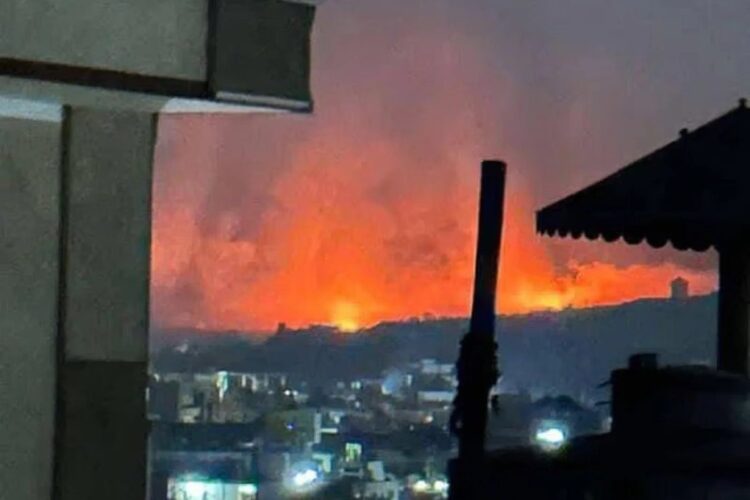
In a dramatic and dangerous escalation of hostilities in South Asia, Pakistan has launched airstrikes on Afghanistan’s capital, Kabul, and other major cities after weeks of intensifying border clashes, marking what its government has officially termed “open war” on its neighbour.
The strikes described by Pakistani defence officials as retaliation for cross‑border attacks, and condemned by Kabul as unwarranted aggression represent one of the gravest breakdowns in relations between the two countries in decades.

AD: Capeesh Restaurant
Jets and missile strikes were reported over Kabul, Kandahar and Paktia provinces overnight, with residents in both Afghanistan and Pakistan hearing explosions and air raid activity that shook city streets.
Pakistani Defence Minister Khawaja Muhammad Asif told reporters that Islamabad’s “patience has run out” after what it called repeated Afghan offensive actions against Pakistan’s military positions along the shared frontier.
Afghan officials sharply dispute Islamabad’s justification and casualty claims. While Pakistan claims hundreds of Taliban fighters were killed and positions destroyed, Afghanistan’s Taliban‑led government insists that Pakistani bombardments have struck civilian areas as well as military targets.

AD: Oysterian Sea Food Restaurant And Bar
Kabul has also released markedly different figures for losses and said Afghan forces had only acted to defend against recent Pakistani strikes.
The sudden intensification of violence threatens to undo months of intermittent ceasefire efforts and diplomatic engagement. A fragile truce mediated by Qatar and other regional actors had briefly reduced hostilities, but lingering mistrust, competing strategic interests, and accusations of harbouring militant groups have repeatedly derailed talks.
The latest eruption follows weeks of escalating tensions along the 2,611‑kilometre Durand Line border, which Afghanistan has never fully recognised and has long been a flashpoint between Kabul and Islamabad.
Islamabad has repeatedly accused Afghanistan’s Taliban authorities of allowing Tehreek‑e‑Taliban Pakistan (TTP) and other militant groups to use Afghan territory as a sanctuary to attack Pakistani targets, an allegation Kabul frequently denies.
In recent days, fierce ground engagements and cross‑border firing near strategic points like the Torkham and Chamancrossings spiralled into broader military exchanges. Afghan forces reportedly conducted offensive operations into Pakistani border areas, prompting Pakistan to respond with both ground and aerial operations deep inside Afghan territory.
Pakistan’s government framed its bombing campaign as a targeted effort against militant infrastructure and Taliban government positions. Defence officials said they struck brigade bases, ammunition depots and command centres, but Afghan authorities countered that civilians were injured in some of the strikes and denied that Pakistani claims accurately reflected the battlefield situation.
International observers have expressed alarm over the rapid deterioration of peace along the frontier. The clash is widely seen as a pivotal moment in a longstanding but hitherto contained dispute, one that has long involved not only bilateral tensions but wider regional dynamics including India‑Afghanistan relations and the role of militant groups that traverse the porous frontier.
Amid the intense bombardment, thousands of civilians have fled their homes, seeking shelter away from border towns and urban centres where fighting has been most pronounced. Refugee camps near crossing points like Torkham were evacuated earlier this week after reports of shelling and explosions, with humanitarian agencies warning of growing unrest and chaos among displaced communities.
Diplomacy Under Strain And Regulation Fall Out
While the conflict unfolds, diplomatic efforts are underway to halt the spiral. Pakistani and Saudi officials have initiated talks aimed at de‑escalation, while countries such as Russia have signalled readiness to mediate.
Both Islamabad and Kabul face mounting international pressure to avoid a full‑scale war that could destabilise the broader region and upend fragile peace initiatives across South and Central Asia.
The United Nations has issued urgent appeals for restraint, emphasising the need to protect civilians and reopen channels for negotiation. The UN Secretary‑General stressed that “continued military escalation only deepens suffering and undercuts the prospects for sustainable peace,” even as both governments trade blistering statements and conflicting casualty reports.
Adding to the complexity is the backdrop of a fractured ceasefire process. Previous peace talks, hosted by Qatar and Turkey, had sought to stem the violence but foundered amid mutual distrust and ongoing militant incursions on both sides. The resurgence of active combat now raises questions about whether any future agreement can hold in the face of such intense military confrontation.
Analysts warn that if hostilities continue unchecked, the conflict could draw in wider regional actors, exacerbate the humanitarian crisis and further entrench militant networks operating across borders.
The skies over Kabul, Kandahar, and Paktia continue to echo with explosions and military movement, the latest chapter in a long and turbulent history between neighbouring states whose relations remain riddled with unresolved disputes, deep suspicions, and rising stakes.
Each flare-up is not merely a military engagement but also a reflection of lingering historical grievances and mistrust that runs deep in both nations’ political and military psyche.
The current escalation is particularly concerning because it comes at a time when both countries were already grappling with internal instability.
Afghanistan, under its Taliban-led administration, continues to face economic hardship, sporadic insurgencies, and international isolation, while Pakistan deals with domestic unrest, political volatility, and the ongoing threat of Tehreek-e-Taliban Pakistan (TTP) and other militant groups operating across its western frontier.
The combination of these internal pressures and the highly charged border confrontations creates a volatile environment in which even minor provocations can trigger far-reaching consequences.
Civilian populations, meanwhile, bear the brunt of this renewed conflict. Reports of casualties, destruction of homes, and mass displacement are mounting as residents of border towns and even the outskirts of Kabul seek shelter from bombardments.
Schools, markets, and healthcare facilities are at risk, threatening the fragile social fabric and exacerbating the humanitarian crisis that has already strained local and international aid efforts. Humanitarian agencies warn that without immediate intervention, the conflict could push thousands more into displacement, further destabilizing a region already struggling to recover from decades of war.
Beyond the immediate human cost, the strategic implications are profound. Both Islamabad and Kabul are aware that the conflict is being closely monitored by regional and global powers, including India, China, Russia, and the United States, each with vested interests in South and Central Asia.
Military escalations in this corridor have the potential to draw in outside actors, either directly or indirectly, further complicating an already tense geopolitical landscape.
In the air, over the mountains, and along the frontier, every strike, maneuvre, and patrol carries not only tactical significance but also symbolic weight, underscoring the high-stakes nature of this confrontation and the fragility of peace in a region long defined by mistrust, strategic rivalries, and unresolved history.

AD: Heritage And Restaurant Lounge Bar