
By Aaron Miller-
With the 62nd Munich Security Conference opened on Friday, a high-profile Democratic delegation from the United States used the global stage to send a pointed message to European leaders to reject what they describe as the destabilising and transactional foreign policy posture of former President Donald Trump and stand up for enduring transatlantic cooperation and shared security values.
The delegation, which includes prominent figures such as California Governor Gavin Newsom, Representative Alexandria Ocasio-Cortez and Senators Allison Whitmer and Ruben Gallego, framed their intervention less as partisan posturing and more as a plea to European allies to resist political pressures that could undermine decades of alliance building and multilateral security arrangements.

AD: Capeesh Restaurant
“These conversations are not merely about current geopolitics; they’re about the future of a rules-based international order that has kept peace in Europe for generations,” said one Democratic attendee, underlining concerns that European leaders cannot afford complacency as political dynamics shift in Washington.
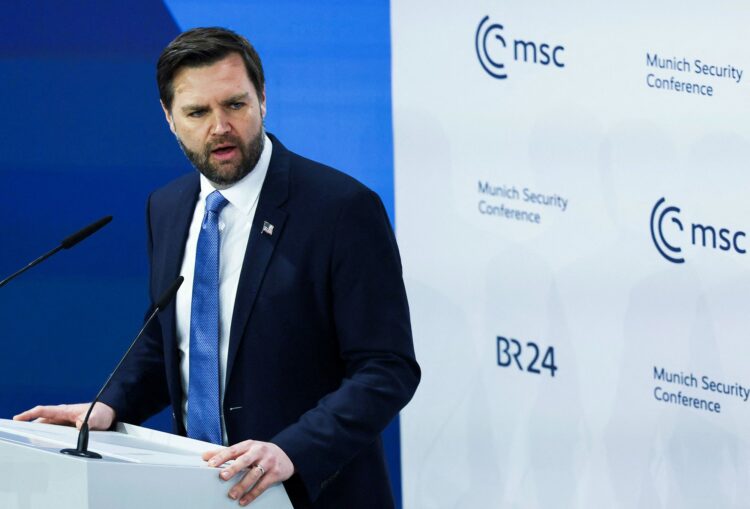
While the official U.S. delegation at Munich is led by Secretary of State Marco Rubio a Republican who is offering a more traditional diplomatic line compared with last year’s hardline rhetoric by then-Vice President JD Vance the Democratic group’s presence highlights a growing transatlantic debate about where U.S. foreign policy is headed.
Democrats at Munich voiced particular alarm over comments associated with Trump and senior Republicans that appear to question Washington’s automatic security commitments to European allies.

AD: Oysterian Sea Food Restaurant And Bar
These statements, widely reported in recent months, have alarmed capitals across the continent because they seem to weaken confidence in the North Atlantic Treaty Organization’s Article 5 collective defence guarantee, which has been the cornerstone of European security since 1949.
Analysts and European officials have emphasised that any perceived shift in U.S. commitment reverberates far beyond Washington, raising questions about the alliance’s future cohesion and deterrent capacity.
At the same time, commentators have noted that the Munich forum has become a backdrop for simmering debates over Europe’s defence autonomy. Some leaders, including French President Emmanuel Macron, are advocating for more robust European defence capabilities that can complement but not depend entirely on U.S. support.
Nottingham’s proposal for a multinational European force and similar initiatives point to a continent wrestling with how to maintain security if transatlantic ties become less predictable.
The Democrats have amplified these themes, urging Europeans not to acquiesce to unilateral U.S. pressures or allow short-term political considerations to erode long-established security frameworks. They warn that transactional approaches to alliances, if left unchecked, risk emboldening adversaries and leaving smaller nations vulnerable.
Their message resonates particularly against the backdrop of ongoing conflicts in Ukraine and broader geopolitical instability affecting regions from the Middle East to East Asia.
“This is not a moment for strategic retreat or isolation,” one Democratic official told reporters on the sidelines of the conference. “What we are seeing in Washington should not be interpreted as the end of American leadership but as a call to Europeans to strengthen their resolve and to reaffirm commitments that have kept this continent free and prosperous for decades.”
Part of the urgency behind the Democrats’ message stems from recent political developments in the United States that have strained confidence among NATO members.
While the official delegation at Munich seeks to emphasise continuity and cooperation, European diplomats privately acknowledge concerns about public positions emanating from Washington that appear ambivalent at best about traditional alliance obligations.
Former architecture of collective defence long taken for granted is being questioned in political debates back home, prompting European capitals to reassess their own strategic autonomy.
The Deutsche Welle newspaper notes that European leaders are “warily awaiting” the U.S. presence in Munich, indicating a mixture of hope and scepticism about Washington’s future contributions to NATO and global security.
This tension underpins a broader discussion not only about military spending targets and operational readiness, but also about the political will to uphold enduring commitments in an era of shifting geopolitical priorities.
Reporting from the Munich Security Conference shows that Democrats used the summit to urge European allies to reaffirm traditional alliances and resist rhetoric that could weaken collective defence frameworks such as NATO. Democratic figures openly encouraged European leaders to stand firm against pressure associated with Donald Trump’s approach to foreign policy, warning against accommodating positions that might undermine transatlantic unity.
Coverage drawing on Reuters also noted that a large bipartisan U.S. congressional delegation attended the conference amid what organisers described as a “crisis of trust” in transatlantic relations, underscoring that anxieties about the future of U.S.–Europe ties are shared on both sides of the Atlantic.
Broader policy analysis in outlets such as Modern Diplomacy has further contextualised these concerns, arguing that Trump-era challenges to NATO commitments and multilateral institutions have recalibrated the alliance and heightened European unease about long-term security guarantees.
Together, these sources support the view that Democratic messaging in Munich functioned both as a warning and an appeal: defend mutual defence principles, safeguard institutional cooperation, and prepare for potential shifts in U.S. leadership that could reshape global politics.
Nevertheless, European leaders have responded with a range of views. Some politicians insist that collaboration with the United States remains indispensable, especially given emerging challenges like cyber threats and geopolitical competition with powers such as China and Russia. Others advocate for greater European defence independence to hedge against uncertainty in Washington’s long-term commitments.
While Munich Security Conference continues through the weekend, lawmakers and diplomats will be watching closely to see whether Democrats’ calls resonate with European audiences and whether moderating voices within the U.S. delegation can bridge concerns about alliance reliability.
The conference has become a key stage for both signalling and testing the strength of transatlantic ties, providing an opportunity for leaders to voice priorities, anxieties, and proposals for safeguarding collective security.
European officials, in particular, are assessing whether the messages from the U.S. delegation signal a continuity of commitment or reveal deeper divisions that could complicate defence planning and long-term strategic coordination.
The evolving dialogue reflects not just political manoeuvring ahead of future U.S. elections but a fundamental reassessment of how democratic allies navigate security in an unpredictable era. Questions about NATO’s cohesion, the future of European defence autonomy, and the durability of U.S. support for Ukraine and other commitments dominate conversations behind closed doors.
Analysts note that the outcomes of these discussions could influence defence budgets, military exercises, and broader international collaboration for years to come. In this sense, the Munich forum is both a diplomatic stage and a barometer of transatlantic confidence, highlighting how domestic politics and global security considerations are increasingly intertwined.

AD: Heritage And Restaurant Lounge Bar