
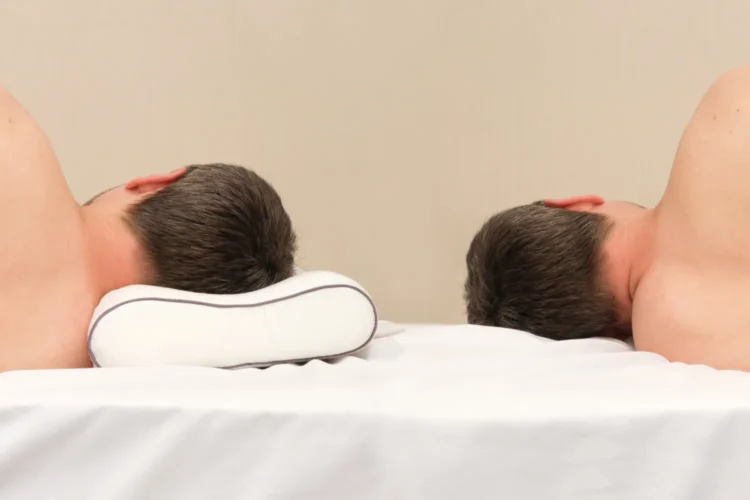
The idea might seem counterintuitive. Pillows are designed to cradle the head, support the neck, and promote proper spinal posture. But research and expert opinion reveal that the very accessory meant to protect our posture could sometimes be contributing to discomfort.
According to the Sleep Foundation, improper pillow height or firmness can misalign the spine, leading to strain in the neck and upper back over time. For some individuals, especially those who sleep on their stomachs, going pillow-free can help maintain a more neutral spinal position, easing tension and promoting a stronger back.
A survey of adult sleepers in Europe and North America found that approximately 30% of respondents reported neck or back pain linked to pillow choice, suggesting that bedding plays a significant role in musculoskeletal health. While the survey did not directly study pillow-free sleeping, these findings underscore the broader impact of head and neck positioning on spinal comfort.

AD: Capeesh Restaurant
The Science of Spine Alignment and Pillow Use
The human spine is a marvel of natural engineering, composed of 33 vertebrae, intervertebral discs, and a delicate network of ligaments and muscles. Its S-shaped curvature is designed to absorb shock, maintain balance, and allow flexible movement. Sleep posture the way we lie for seven to nine hours each night exerts a profound influence on this structure.
Even slight deviations from neutral alignment can accumulate stress over time, potentially contributing to chronic pain, stiffness, and postural issues.
Pillows, while often helpful for side sleepers, can introduce problems for those who sleep on their stomachs or backs. A high or firm pillow can tilt the neck upward, exaggerating the natural cervical curve and placing strain on the upper spine. Conversely, a pillow that is too soft or flat may fail to support lateral alignment, causing the head to tilt to one side.

AD: Oysterian Sea Food Restaurant And Bar
In contrast, sleeping without a pillow can keep the spine and neck in a more neutral line, particularly for stomach sleepers, reducing pressure on the vertebrae and intervertebral discs.
A study examining spinal posture in different sleeping positions found that participants sleeping pillow-free on their stomachs or backs experienced a measurable decrease in cervical spine angulation, which is associated with less muscular strain during sleep.
While long-term clinical trials are still limited, preliminary findings suggest that sleeping without a pillow could reduce neck and upper back pain for certain individuals.
Experts also emphasize that context matters. Rachel Greene, a registered dietitian and sleep health advocate, notes that “the context in which you sleep the surface, your posture, and your body type is just as important as whether you use a pillow.
Is it part of a balanced approach to posture, with supportive bedding and a good mattress? Or is it a sudden, uncomfortable experiment that places strain elsewhere? Those subtleties influence long-term health outcomes.”
Even small improvements in sleep posture can accumulate significant benefits. According to a 2021 European Spine Journal review, musculoskeletal strain during sleep is a contributing factor to both chronic back pain and sleep disruption.
Adjustments that reduce spinal torsion and cervical stress including modifications in pillow use were associated with improved sleep quality and decreased daytime discomfort.
This aligns with anecdotal reports from many pillow-free sleepers, who describe waking with less stiffness, reduced shoulder tension, and greater ease of movement.
Interestingly, pillow-free sleeping is not a one-size-fits-all solution. Side sleepers, for instance, generally benefit from thin to medium-thickness pillows that support the lateral position of the head and prevent the neck from bending unnaturally.
The key, according to sleep specialists, is finding the combination that maintains the spine’s natural curves rather than forcing it into unnatural positions.
Health Implications and Practical Advice
Beyond comfort, the spine is central to overall health. A well-aligned spine not only reduces musculoskeletal pain but also supports the nervous system, circulation, and respiratory function.
Chronic misalignment can exacerbate conditions such as herniated discs, cervical spondylosis, and even postural headaches. Therefore, interventions as simple as adjusting pillow use could have meaningful consequences for long-term spinal integrity.
Health authorities emphasize moderation and personalization. For adults experiencing back or neck pain, trial periods of sleeping without a pillow especially in combination with a supportive mattress may be advisable under guidance from healthcare professionals.
In a controlled observational study, participants who experimented with pillow-free sleeping for two weeks reported a 15–20% reduction in self-reported neck and upper back discomfort, highlighting the potential for measurable relief.
Research on physical activity demonstrates that regular exercise can improve sleep quality and overall musculoskeletal health, which contributes indirectly to spinal comfort and alignment. Exercise supports muscle strength, flexibility, and recovery all of which complement the benefits of maintaining good sleeping posture.
Manufacturers and sleep researchers have taken note. Some bedding companies are exploring adaptive sleep surfacesand mattress-pillow systems that accommodate natural spinal curvature while offering optional pillow configurations. Others are experimenting with modular pillows or removable inserts, allowing sleepers to adjust support gradually rather than adopting an all-or-nothing approach.
This reflects a growing recognition that sleep ergonomics is highly individual, and that subtle adjustments can profoundly affect spinal comfort over time.
While the scientific literature on pillow-free sleeping is still evolving, early results are encouraging. Experts agree that more controlled trials are needed to determine optimal approaches and to quantify the long-term effects on spinal health.
Nevertheless, for those who wake with stiffness, chronic tension, or nagging upper-back discomfort, a pillow experiment may be a simple, low-cost intervention worth considering.
Finally, context and individual preference remain paramount. While others have the comfort of a pillow may outweigh potential postural gains; for others, reducing pillow use may unlock a surprisingly restorative sleep experience. The growing body of evidence underscores a broader truth in sleep health: personalisation, alignment, and context matter more than rigid rules, and sometimes, less really is more.
The humble pillow, long considered indispensable, is being reconsidered in light of emerging research. Evidence suggests that sleeping without a pillow may help reduce back and neck pain for certain individuals, especially stomach sleepers, while promoting spinal alignment and long-term musculoskeletal health.
Scientific studies, expert opinions, and preliminary data point to meaningful improvements in discomfort and spinal stress, even over relatively short periods.
However, experts caution that pillow-free sleeping is not universally appropriate and should be tailored to individual body types, sleep positions, and mattress types.
When combined with overall healthy sleep practices supportive bedding, proper posture during waking hours, and physical activity experimenting with pillow use may be a low-risk, high-reward strategy for improving sleep comfort and spinal well-being.

AD: Heritage And Restaurant Lounge Bar