
By Tony O’Reilly-
In the wake of dramatic events in Venezuela, the United Kingdom has taken a carefully calibrated position, underlining its commitment to international law, clarifying non-involvement in foreign military action and stressing diplomatic engagement as the best path forward.
Over the opening days of January 2026, the UK government led by Prime Minister Sir Keir Starmer has sought to balance support for democratic transition with caution over unilateral force, even as global reactions and political divisions simmer around the crisis.

AD: Capeesh Restaurant
The situation in Venezuela intensified sharply on 3 January 2026, when the United States launched a military operation in Caracas that resulted in the capture of Venezuelan President Nicolás Maduro and his wife, who were flown out of the country.
The US described these as part of a broad offensive purportedly targeting sanctioned networks, while Venezuela decried the move as a violation of its sovereignty.
Against this turbulent background, the UK government’s initial response was unequivocal: Britain was not involved in the US operation in any way. Downing Street made it clear that the UK had neither participated in nor been consulted about the strikes, emphasising the ongoing need to establish full facts before forming a comprehensive policy response.

AD: Oysterian Sea Food Restaurant And Bar
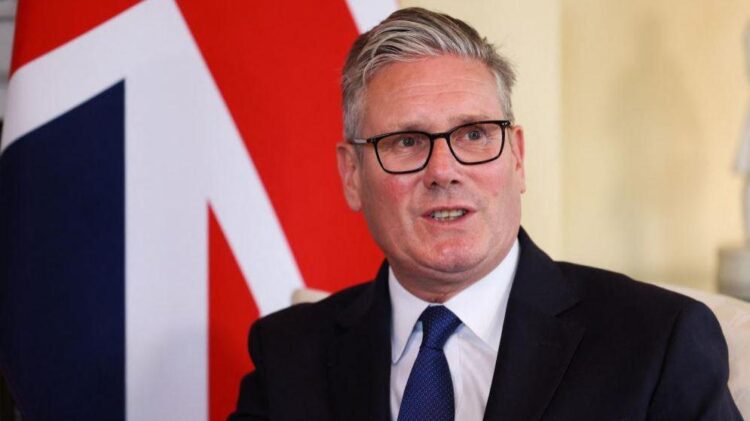
Sir Keir Starmer, speaking to the media following the US action, stressed the centrality of international law in the UK’s foreign policy approach. He said that “we should all uphold international law” and reiterated the government’s support for peaceful transition in Venezuela towards a legitimate government that reflects the will of the Venezuelan people.”
In a written statement on 3 January, the Prime Minister reiterated that the UK has long supported a transition of power in Venezuela and regarded Maduro as an illegitimate president, but emphasised that this did not equate to endorsing military intervention.
He stated that the UK would seek discussions with US counterparts “in the days ahead” to ensure that any path forward adhered to legal norms and safeguarded the Venezuelan people’s interests.
Foreign Office travel advice was also updated amid the chaos, with the UK government urging British nationals in Venezuela to shelter in place and warning against all travel due to the volatile security situation and potential border closures. This reflected a concern for citizen safety as much as diplomatic caution.
The UK’s nuanced response has drawn attention because it attempts to thread a needle between support for democratic principles and a reluctance to endorse or participate in military measures. The position reflects broader British foreign policy priorities: supporting human rights and democratic governance while resisting actions that could set dangerous precedents if carried out without clear legal mandate.
Echoing this approach, international voices such as Emily Thornberry, chair of the UK Parliament’s Foreign Affairs Committee, have warned that the removal of a sovereign leader in this manner could embolden other global powers like China and Russia by weakening the global norms against unilateral interventions. That underscores the UK’s articulated concern about protecting the rules-based international order.
Political Reactions and Debate at Home
Within the UK, the government’s stance has prompted debate across the political spectrum. Some commentators and opposition figures have been critical of what they see as cautiousness where stronger condemnation might have been expected.
Critics argue that failing to denounce the US action more forcefully risks undermining international law and the principle of national sovereignty. Others contend that the UK must maintain strong relations with allies like the US while advocating legal norms.
For example, opinions from some MPs and commentators highlighted concerns that the UK’s position effectively not condemning the US operation while also emphasising support for legal norms could be seen as contradictory. These arguments underscore the tension between maintaining strategic alliances and upholding principles of international legality and moderated foreign intervention.
Meanwhile, party leaders within the UK have offered their own reflections. Some emphasise the seriousness and complexity of the Venezuelan situation, advocating for careful assessment of facts and responsible engagement.
Others have welcomed the UK’s emphasis on democratic values and international law as essential components of any legitimate response to political crises abroad.
Beyond Westminster, a range of civil society voices including unions and activist groups have voiced dissent, urging the government to condemn the US action outright and to call for immediate cessation of military operations. Campaigns also demand a clearer articulation of humanitarian and human rights priorities.
The UK’s approach to Venezuela must also be viewed in the context of wider global reactions. Significant powers, including Russia and Iran, condemned the US strikes, while European states and the UK urged respect for international law even as they were critical of unilateral force.
These responses reflect deep divides in global geopolitics, particularly regarding interference in sovereign states and the enforcement of legal norms in international relations.
While the Venezuelan crisis continues to evolve, the UK government is likely to balance its strategic interests, legal principles, and support for democratic transition in its diplomatic engagement. Negotiations with American and European partners, as well as regional organisations, will be pivotal in shaping future policy.
This may include humanitarian support, diplomatic recognition of transitional authorities, and backing multilateral efforts aimed at restoring stability and eventual free elections.
In recent weeks, Venezuela under interim leadership has pursued internal reforms, including amnesty legislation for political prisoners and opening its oil sector to foreign investment developments that could shift the landscape of international engagement.
While these changes are primarily the result of Venezuelan political dynamics and US pressure, they form part of the backdrop against which UK policy must be considered.

AD: Heritage And Restaurant Lounge Bar