
By Theodore Brown-
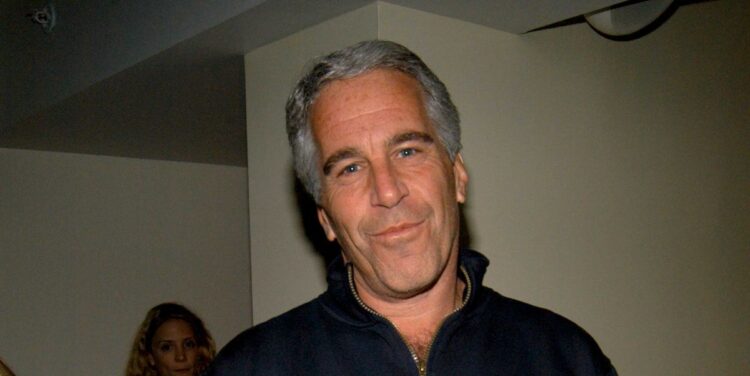
Washington, D.C. — The U.S. Department of Justice (DOJ) announced on Friday that it has released over 3 million pages of documents, along with more than 2,000 videos and approximately 180,000 images, linked to the late billionaire financier, Jefferey Epstein(pictured) sex-trafficking cases and his broader network of associates.
In one of the most significant developments in the long saga of Jeffrey Epstein’s criminal investigations,

AD: Capeesh Restaurant
The release marks what the Department describes as the largest single tranche of previously unreleased Epstein-related materials — an effort to comply with the Epstein Files Transparency Act (EFTA), the bipartisan law passed by Congress in late 2025 that compelled the DOJ to make its investigatory files public.
Deputy Attorney General Todd Blanche announced the release at a press conference in Washington, saying the documents were being posted in batches to the DOJ’s website and that they represent the product of an “unprecedented” process of review and redaction by dozens of prosecutors and attorneys.
Although headlines have focused on the sheer number of pages, the substance of the materials tells a more complicated story. According to DOJ officials and analysis of released metadata, the newly published content includes, among other categories:

AD: Oysterian Sea Food Restaurant And Bar
Investigative files from federal probes into Epstein’s sex-trafficking operations, collected over decades by the DOJ and the Federal Bureau of Investigation (FBI).
It contains Emails and internal communications seized from Epstein’s digital devices and those of his close associates. It additionally contains interview summaries and witness statements taken by FBI agents and federal prosecutors.
Included here are court filings, indictments and legal briefs related to multiple cases, including the 2019 federal sex-trafficking indictment against Epstein and related prosecutions involving his associate Ghislaine Maxwell.
Search warrants and subpoenas for financial records tied to Epstein, his companies, and his circle of employees, beneficiaries and clients, as well as property records and investigative logs documenting government searches and seizures at Epstein’s residences, including his New York City townhouse and his private island in the U.S. Virgin Islands.
There is also digital evidence — including videos and images — from seized devices ranging from personal communications to content captured by surveillance equipment.
In total, officials said approximately 3.5 million pages will ultimately be made public, with some 200,000 pages being withheld or redacted under legal privileges such as the attorney-client privilege and to protect victim identities.
Images and Videos: What’s Included and What’s Redacted
Among the most talked-about elements of the release are the images and videos now accessible to the public:
The DOJ confirmed the batch includes more than 2,000 videos and roughly 180,000 images.
Many of these visuals were obtained from electronic devices seized from Epstein’s properties and from digital storage of his associates. Some appear to be personal photos and recordings, while others are commercial material unrelated to illegal activity, including adult content not produced by Epstein.
Victims’ identities have been heavily redacted from all imagery and recordings in order to comply with legal protections for survivors of sexual abuse. Deputy AG Blanche said that, with few specific exceptions such as Ghislaine Maxwell’s booking photos, female subjects in the images were redacted unless there was no feasible way to redact them without obscuring male subjects as well.
Despite the volume of material now available, significant portions of the overall Epstein archive remain either withheld, redacted or undisclosed:
Victim medical files and personally identifying information of survivors are excluded to protect privacy rights.
Child sexual abuse material and similar imagery that could compromise ongoing investigations or constitute further distribution of illegal content has been removed or withheld.
Other excluded materials include information that could jeopardize active law enforcement investigations, including leads that federal authorities are still pursuing, is not public.
Privileged documents covered by attorney-client and deliberative process privileges have also been withheld from public publication.
Notably, some lawmakers and outside analysts have pointed out that the entirety of the materials potentially responsive to the Transparency Act likely exceeds 6 million pages of records — suggesting that the 3.5 million pages published so far are only a portion of the government’s total holdings.
Historical Context and the Path to This Release
The release of Epstein files has its roots not only in the sprawling investigations into his criminal enterprises but also in political pressure and legislative action:
Epstein was arrested in July 2019 on federal sex-trafficking charges and died by suicide in a New York City jail a month later.
His long time associate Ghislaine Maxwell was convicted in 2021 on charges related to sex-trafficking and is serving a long prison sentence.
Advocates, survivors and some lawmakers have for years alleged that government files relating to Epstein’s network were improperly withheld from public view. That controversy culminated in Congress’s Epstein Files Transparency Act, passed in November 2025 with overwhelming bipartisan support.
The law required the DOJ to make public all unclassified material by December 19, 2025, with certain exceptions for victim privacy and active investigations — but the department missed that deadline amid the logistical challenge of reviewing and redacting millions of pages.
Friday’s release represents a key moment of compliance with that statute, even if questions linger about the broader volume of records still under review.
Reactions to the release have been deeply divided as expected with a case of this magnitude.
Some members of Congress and survivors’ advocates have criticised the DOJ’s timeline and redactions, arguing that too much material remains unavailable and that the delay undercuts the spirit of the Transparency Act.
Other critics have fuelled unfounded speculation about suppression of politically sensitive information, despite repeated DOJ assurances that no materials were withheld to protect any individual for political reasons. Blanche directly addressed such claims at the press conference, saying the department “did not protect President Trump” or any other figure when reviewing the files.
Lawmakers have noted that members of Congress can request unredacted access to parts of the files for oversight purposes, though there is no publicly shared timeframe for additional disclosures.
The newly posted files are available for download via the Department of Justice’s official website, organized in downloadable datasets. Researchers, journalists and members of the public have already begun combing through the troves, although the sheer scale and extensive redactions make systematic analysis time-consuming.
Transparency
While today’s release represents a major milestone in the quest for transparency about Epstein’s crimes and the government’s investigations, many questions remain:
Officials say the DOJ will continue to work with Congress and legal partners to meet its obligations under the Transparency Act, but they also stress that privacy and victim rights must be protected. In the meantime, the public now has access to a historic and vast archive of material that officials hope will clarify, if not fully resolve, decades of unanswered questions about one of the most notorious criminal networks in recent American history.

AD: Heritage And Restaurant Lounge Bar