
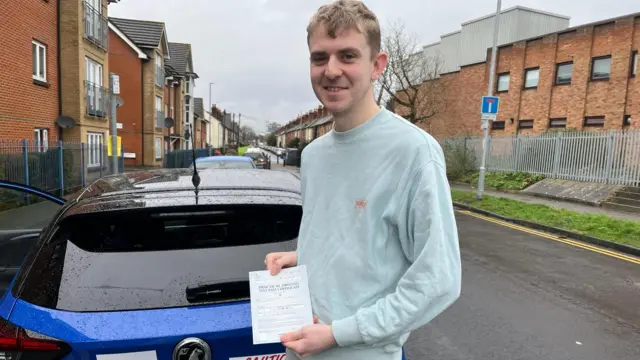
By Chris Williamson–
With many young people in the UK, passing a driving test is more than just a milestone It is a gateway to work, independence, and economic mobility. But for the past year and counting, learner drivers have faced an unprecedented backlog that has stretched waits for practical driving tests well beyond expectation.
What was once a matter of weeks has now become a waiting game of months, leaving many frustrated, financially strained, and worried about their futures. Youths looking forward to becoming drivers and car owners in 2026, are fuming about the new framework requiring them to wait six months for a license.

AD: Capeesh Restaurant
The topic of delays associated with driving tests was raised by researchers surveying first year university students at Leicester University about their GCSE and A level experiences, after driving was listed most by the freshers students amongst what they looked forward to most about being 18.
The overall aim of the research was to gather information from the students about how challenging they found different A level subjects, and how they compared this with their GCSE exams taken two years previously.
Second year English student from the University of Leicester, Matt Lucas, 19, told The Eye Of Media.Com: ”I think it is crazy that the system is making people wait that long. I was looking forward to becoming a driver this year, but to hear that I have to wait half a year is really annoying.

AD: Oysterian Sea Food Restaurant And Bar
Another youngster, Psychology student, Jason Matthews 19, from the same university of Leicester said : ‘I just cannot understand why the system has changed its rules in this way. It just does not make a lot of sense to me. I think they ought to be trying to make things look rather simple. Once a person has passed his test, they should be supplied with a license and allowed to drive their car.
He continued: ‘ University students especially want to enjoy student life, and driving is one of those things that makes it easier to get from A to B. It is difficult to understand what these politicians are thinking by making new drivers wait a whole six months before they can actually drive a car after passing their driving test. Just imagine a student has just saved up to buy a car, or their parent has bought them one as a present for passing their A levels, then they have to wait six months before they can actually drive. It’s just insane”
Broader exploration of the topic shows that this sentiment has been expressed for a while over the years.
One driving test candidate told The Independent last year that learner drivers in Britain face “significant delays,” with 81 % of test centres reporting the maximum waiting time of 24 weeks roughly five to six months for practical tests. This has marked a sharp increase from average waiting periods earlier in 2024, reflecting the deepening backlog across the country.
Official data and independent reporting reveal that the backlog has reached historic proportions. According to these figures, the average wait to secure a driving test was about 20 weeks in early 2025, up from roughly 14 weeks a year earlier an increase that highlights growing pressure on test centres.
Additional reporting confirms that some learners are waiting even longer, with one Auto Express article noting that the average wait stood at around 22 weeks nearly five and a half months toward the end of 2025. These waits are often observed at a high percentage of test centres across the UK.
A recent National Audit Office (NAO) report, referenced by driving advocacy outlets, further warns that the period required to achieve the DVSA’s nationwide target of a seven‑week average is unlikely to be reached before November 2027 without substantive reform, meaning many learners will continue to wait into the next decade to get their licences.
This backlog did not appear overnight. Test cancellations and postponements during the Covid‑19 pandemic created a large pipeline of exams that were delayed, and a surge in demand for test bookings followed as restrictions eased. Combined with staffing challenges and the use of automated booking bots siphoning available slots, this has created a system where learner drivers struggle to secure test dates.
The personal cost of these delays is substantial. For many young people, a driving licence is linked directly to employability. Roles in logistics, retail, care sectors, apprenticeships, and other entry‑level positions increasingly require mobility that only a full licence can deliver. Without it, job offers may be turned down, potential shifts missed, and professional pathways delayed.
A survey referenced in the NAO report found that around 30 % of learner drivers said they needed the licence for work, illustrating the broader economic impact of delayed practical tests on employment.
The backlog has also led to unexpected financial strain. Some learners are spending more on additional driving lessons simply to stay prepared until their test date arrives, while others turn to third‑party services that charge significantly higher fees for test bookings often described as a “secondary market” that takes advantage of official shortages.
Social media and community forums amplify these struggles. In online learner driver groups on Reddit such as r/LearnerDriverUK, users frequently share anecdotes of waiting six months or more just for a test date to be confirmed, only to have tests canceled and rescheduled further into the future, a pattern that has left many feeling angry and helpless at a system that seems to reward bots, third‑party sellers, and luck over genuine demand
Officials have acknowledged the severity of the backlog and introduced a raft of measures aimed at reducing waits. In March 2025, the Department for Transport and the Driver and Vehicle Standards Agency (DVSA) announced changes intended to make better use of test slots by requiring learners to provide more notice before cancelling a step designed to free up more last‑minute openings for others.
Earlier in 2025, the DVSA also set out a broader plan that included training and recruiting hundreds of additional driving examiners, tightening booking protocols, and improving cancellation processes. Officials framed these changes as part of a seven‑point strategy to reduce waits and get learner drivers on the road more quickly.
More recent government action has included attempts to tackle the backlog by creating thousands of additional tests each month and addressing issues related to automated booking “bots” that can snap up available slots before individual learners have a chance.
Despite these steps, progress has been slower than many had hoped. This that the DVSA has admitted it has failed to meet several targets related to backlog reduction, with average waits still far exceeding goals for 2025. Another recent government announcement introduced a new DVSA Chief Executive tasked specifically with driving reform to reduce test waiting times, highlighting the ongoing effort to tackle the issue at a structural level.
With the generation now trying to navigate the backlog, the delays feel personal and consequential. Many young drivers had expected to secure a licence in time to start jobs, training programmes, or apprenticeships, only to find themselves indefinitely postponed.
With transport infrastructure already strained in many parts of the UK, and public transport less reliable or accessible in rural areas, the ability to drive is often essential rather than optional.
In response, some learners are booking tests months in advance sometimes even across counties to secure earlier dates, while others tirelessly scan for cancellations online. Yet these workarounds are not always accessible to everyone, particularly those with fewer resources or less flexibility in travel.
Public campaigns and online voices reflect this frustration. Petitions demanding systemic reform have gathered support, and discussions about fairness, economic opportunity, and youth mobility continue to gain traction.
The driving test backlog comes against a backdrop of broader challenges for young people seeking work. Nearly one million young people aged 16 to 24 in the UK are not in education, employment, or training (NEET), prompting concern from analysts about long‑term economic exclusion and lost opportunity.
With learners already seeking to improve their prospects through education or training, the inability to secure a driving licence adds yet another barrier to employment or career progression. In regions where apprenticeships and job listings require independent travel, the impact can be particularly acute.
Government and DVSA officials maintain that ongoing measures will eventually deliver improvements. New recruitment for driving examiners, expanded test availability, and tighter booking processes are aimed at easing the backlog and restoring a reasonable timeline for tests.
But many experts and campaigners caution that these changes may not materialise quickly enough for those already caught in the queue.
The National Audit Office’s forecast that targets for returning to more typical waiting times may not be met until late 2027 underscores the scale of the challenge ahead.
Meanwhile, learner drivers continue to wait each week stretching the gap between aspirations and tangible opportunities. For them, the question is no longer simply about passing a test, but about fairness, access, and the ability to build their lives without unnecessary obstacles.
Months into the backlog, young drivers aren’t asking for special treatment only a functioning system that helps them move forward, not hold them back.

AD: Heritage And Restaurant Lounge Bar