
By Tony O’Reilly-
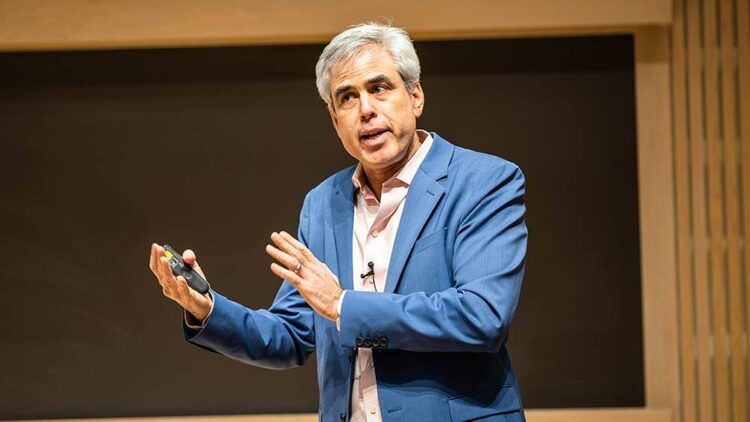
In a move that could signal a significant shift in the UK’s approach to children’s digital safety, Health Secretary Wes Streeting has invited prominent US social psychologist Jonathan Haidt to address government officials, charities and lawmakers on the case for banning social media use by under-16s.
The invitation comes amid intensifying political debate over online harms and growing cross-party interest in stricter regulations on young people’s access to social platforms.

AD: Capeesh Restaurant
Haidt, author of Anxious Generation, has been an outspoken commentator on social media’s impact on youth, arguing that addictive interfaces and algorithm-driven feeds can contribute to anxiety, depression and social dysfunction among adolescents.
Jonathan Haidt is best known for his work on moral psychology and cultural dynamics, and more recently for asserting that smartphone culture has reshaped adolescence in ways that may be harming young people.

AD: Oysterian Sea Food Restaurant And Bar
His research and commentary have influenced debates in the United States and internationally about digital wellbeing, school policies and age-based restrictions for social media platforms.
By inviting Haidt to brief ministers, civil servants, MPs and external stakeholders, Streeting appears to be elevating the voices supporting a more interventionist policy potentially mirroring the approach taken in Australia, where a legal ban on under-16s using mainstream social media has already taken effect.
Senior government sources say ministers are considering evidence from other jurisdictions, including Australia’s newly implemented under-16s social-media ban, as they deliberate how best to address concerns about the role these platforms play in children’s lives.
Health Secretary Wes Streeting and Prime Minister Sir Keir Starmer have both publicly signalled that “all options are on the table” and that the UK government is “looking at Australia” as part of that review.
The UK debate over social media use by minors has intensified in recent months. Prime Minister Sir Keir Starmer has signalled a willingness to consider a range of options to limit young people’s exposure to harmful online content, including lessons from Australia’s model though he has stopped short of endorsing a full ban himself.
Teaching unions such as NASUWT have lent their weight to the argument for stricter regulation, highlighting survey data suggesting that a significant majority of teachers see social media as a disruptive influence in schools and support a legal ban for this age group.
In addition, polling from regions such as south east London indicates that many parents and community members back stronger age limits on social media access, comparing the UK’s situation with international examples where similar rules are being pursued.
Despite rising calls for action, there is no consensus that an outright ban on social media for under-16s is a practical solution. Critics point out that similar proposals such as Australia’s age-based prohibition have raised concerns that youth could be driven toward unregulated corners of the web, such as the dark web or lesser-known apps, and that enforcing blanket age-based bans is complex and fraught with unintended consequences
Some ministers, including Education Secretary Bridget Phillipson and Culture Secretary Lisa Nandy, have expressed scepticism about the feasibility and effectiveness of a ban, maintaining that well-designed protections and industry accountability could better serve children’s interests than sweeping restrictions.
Technology sector representatives also warn that age-verification systems could raise privacy concerns or become barriers to participation for vulnerable youth who rely on online spaces for social connection, peer support and creative expression.
The debate places the UK at a policy crossroads as other nations grapple with similar questions. Australia’s pioneering law, which legally bars under-16s from signing up for leading social networks, is already being closely studied.
Under that system, platforms face significant penalties if they fail to enforce age restrictions, and the policy has ignited discussions globally about the balance between protection and freedom online.
For proponents, the Australian example demonstrates that bold regulation is possible and necessary to shield children from addictive algorithms, toxic content and predatory behaviour. Opponents point to early evidence that teenagers have sought to circumvent restrictions by shifting to less mainstream services, highlighting potential unintended consequences of a legal ban.
Experts like Haidt have emphasised the broader cultural dimensions of the discussion, suggesting that social media’s influence extends beyond screen time to shape identity formation, peer dynamics and social norms.
His forthcoming engagement with UK officials is expected to explore these themes in depth, offering data, anecdotal evidence and comparative analysis from international research.
Haidt has emphasised that the harms of social media are not isolated phenomena but are deeply embedded in device and platform design, requiring more than individual responses they demand systemic change in how societies structure digital life for children.
Supporters of a ban argue that governments must take decisive action where scientific and anecdotal evidence suggests systemic harm especially when safeguarding children’s mental health is at stake. Detractors argue that digital literacy, parental engagement and platform accountability should be prioritised over prohibitionist approaches.
Cross-party support appears to be coalescing around stronger protections for children online, even if disagreements remain about the precise measures. With public concern rising and international examples now in play, the UK’s approach to social media regulation for minors is poised to become a defining issue for the next phase of digital policy.

AD: Heritage And Restaurant Lounge Bar