
Deadly Assault Rocks Kyiv and Kharkiv Amid Escalation
By Ben Kerrigan-
Ukraine faced one of the most intense waves of Russian attacks in recent weeks after Moscow launched a major assault on the country’s two largest cities, killing at least four civilians.

AD: Capeesh Restaurant
The barrage, which involved a combination of missiles and unmanned aerial vehicles striking urban areas and critical infrastructure, marked a sharp escalation in the nearly four‑year war and drew widespread international concern.
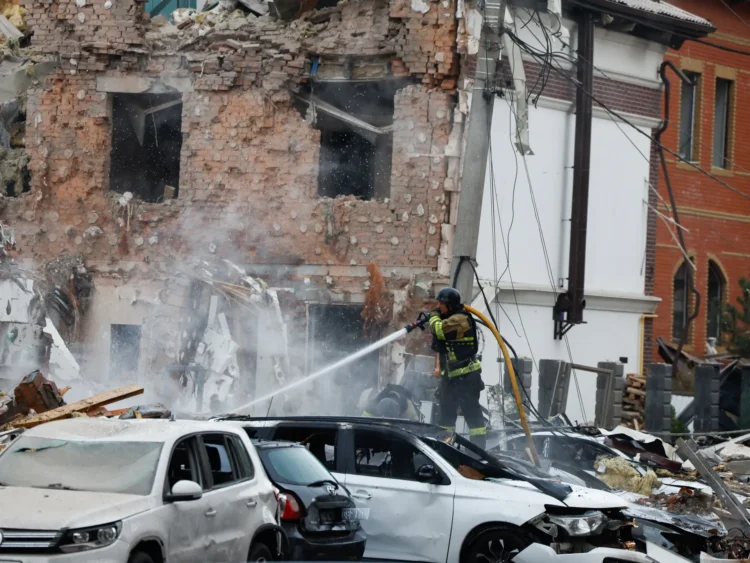
The attacks unfolded overnight, with Ukrainian air defence units engaging hundreds of incoming aerial threats. Officials in Kyiv reported that multiple residential districts were struck, causing significant damage to buildings, power lines, and essential services.
Among the fatalities was a civilian killed when a missile hit a postal depot in the Kharkiv region, officials said. Several others were injured and dozens of homes were damaged, compounding hardship in freezing winter conditions.

AD: Oysterian Sea Food Restaurant And Bar
In Kyiv, emergency services responded to fires sparked after missiles and drones impacted residential blocks. Water and electricity supplies were disrupted in several districts, prompting urgent appeals from local officials to secure safe shelter.
The scale of the assault came just hours after Russia faced strong diplomatic criticism at the United Nations security council, where an emergency debate was held over recent escalatory actions, including deployment of new long‑range weapons.
Critics condemned the attacks as disproportionate and dangerous, while Moscow defended its operations as targeting military objectives.
President Volodymyr Zelenskyy rushed to reassure Ukrainians, condemning the strikes and declaring that Russia’s relentless campaign will not break the country’s resolve.
In televised remarks, he said that “these attacks strike at the heart of our cities, yet we will endure.” Ukrainian leaders reiterated appeals to international partners, urging increased support for air defence systems to protect civilians and infrastructure from future onslaughts.
Across the capital, streets that earlier bustled with morning traffic were quiet in the wake of the bombardment, with air raid sirens becoming an unfortunate ritual. Hospitals reported receiving injured civilians, with emergency personnel working through the night to tend to victims amid damaged buildings and debris.
Impact on Civilians and Broader Conflict Dynamics
Analysts described the attack as part of a continuing Russian campaign to degrade Ukrainian military infrastructure and erode public morale, particularly during the harsh winter months when energy supply becomes more critical.
The strikes came amid heightened use of missile and drone barrages that have repeatedly targeted Ukraine’s energy grid, contributing to widespread power outages and making everyday life more precarious for millions of civilians.
Ukraine’s state grid operators have warned that repeated hits to energy installations place additional strain on an already fragile system. Restoration crews have worked round the clock to bring power back to affected communities, while local authorities scrambled to set up warming centres for residents left in the cold.
Humanitarian groups expressed alarm at the rising toll on civilians. International monitors have documented an increase in non‑combatant casualties throughout the conflict, with infrastructure attacks often leading to deaths, injuries, and displacement.
A United Nations monitoring mission reported that 2025 was the deadliest year yet for civilians in Ukraine, with thousands killed and injured in attacks that also damaged homes, hospitals, and schools.
The repeated targeting of urban centres has raised alarm among Western capitals, many of which have expressed strong support for Ukraine’s right to self‑defence and condemned attacks that harm civilian populations. Diplomatic officials in Europe and North America have signalled that Russia risks further isolation and sanctions if assaults on civilian areas continue unabated.
Russian authorities, while denying intentional targeting of civilians, have defended the strikes as part of broader military pressure aimed at degrading Ukraine’s defence capacity. Moscow’s ministries have characterised Ukrainian resistance and foreign military aid as factors that prolong and intensify the conflict, framing their operations as necessary responses.
International reaction has been swift. Leaders across the European Union reiterated their condemnation and condemned violence against civilians, emphasising that efforts to support peace and de‑escalation must not falter amid renewed hostilities.
Several nations reiterated commitments to provide Ukraine with defensive systems, including advanced anti‑aircraft equipment, saying that increased capability is essential to protect urban populations. Diplomatic statements highlighted both humanitarian concern and strategic considerations as the situation evolves.
Back home, Ukrainians spoke of exhaustion and resilience in equal measure. Residents interviewed in the aftermath described scenes of families sheltering in basements, neighbours helping each other clear rubble, and volunteers organising food and medical supplies.
One Kyiv resident said that despite the devastation, daily life must go on, adding that “we have learned to adapt, but our hope remains that peace will come.”
Emergency workers reported that the coordination of rescue operations faced obstacles due to ongoing air raid alerts and damaged communications infrastructure. In some outlying districts, local government offices urged residents to check on elderly neighbours and share resources until essential services can be fully restored.
The psychological toll of repeated assaults has been profound. Mental health professionals working in frontline hospitals described sharp increases in anxiety and trauma among both adults and children exposed to the violence.
Counselling centres have reported rising demand for support to cope with stress, loss, and uncertainty that have become daily companions for many families.
International humanitarian agencies noted that delivering assistance has become more complex amid persistent security threats. Aid convoys moving vital supplies to communities impacted by the strikes have encountered logistical hurdles, and organisations have called for safe corridors that can operate even during periods of heightened military activity.
Meanwhile, discussions among global leaders continue about how best to navigate the broader conflict. With peace talks stalled and fighting intensifying, diplomatic efforts remain tentative.
Some envoys have argued that sustained pressure on Moscow through economic and political channels must accompany military support to Ukraine, while others advocate renewed negotiation initiatives aimed at achieving cessation of hostilities.
Despite the bleak backdrop of another deadly assault, there were glimmers of determination that underpinned Ukrainian society. National symbols flew at half‑mast alongside posters urging unity and resolve.
Throughout neighbourhoods impacted by the strikes, citizens documented devastation and reconstruction efforts on social media platforms, emphasising the human cost of the war and fostering solidarity among displaced and non‑displaced communities alike.

AD: Heritage And Restaurant Lounge Bar