
By Aaron Miller-
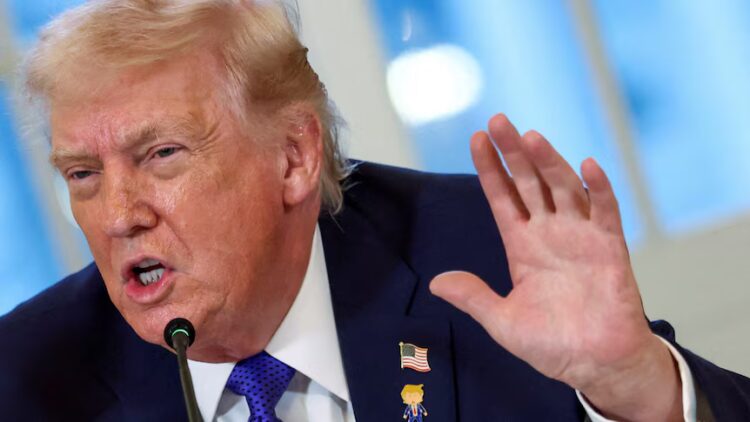
In a major announcement that has reverberated across diplomatic and economic circles worldwide, United States President Donald Trump declared that any country conducting business with Iran will face a 25 percent tariff on all trade with the United States.
The move, unveiled on January 12 and shared on the president’s Truth Social account, was described as effective immediately and final and conclusive, although the White House has yet to publish detailed legal documentation explaining how the tariff will be applied or under what authority it was issued.

AD: Capeesh Restaurant
Trump’s statement arrives amid one of the most intense periods of unrest in Iran seen in decades. Widespread anti-government protests have spread across the country, and rights groups indicate that hundreds of people have been killed as security forces crack down on demonstrators.
Tehran has faced renewed pressure from Washington not only on trade but on human rights, national security, and regional influence.
The tariff threat is part of a broader escalation in U.S. policy toward Iran and its global partners. Although Iran has long been subject to U.S. sanctions, this tariff takes aim not just at Tehran but at countries that maintain economic ties with the Islamic Republic. China, India, Turkey, Brazil, Russia, and the United Arab Emirates are among nations that will feel particularly exposed if ties with Tehran trigger punitive tariffs in U.S. markets.

AD: Oysterian Sea Food Restaurant And Bar
Analysts note that without clear rules of engagement or implementation procedures, businesses may struggle to know whether goods at sea or contracts already in place will be subject to the new duties.
China, Iran’s largest trading partner, expressed strong diplomatic opposition to the tariffs almost immediately. Beijing warned that such unilateral measures violate international trade norms and indicated it would take necessary steps to protect its economic interests if they were implemented.
Other governments including Japan, South Korea, and members of the European Union have adopted a more cautious posture, monitoring developments closely as they seek clarity on potential impacts.
Beyond broad geopolitical implications, the tariff announcement has tangible economic significance. Major commodities such as oil, agricultural goods, and industrial inputs that flow between Iran and its partners could now be caught in a crossfire of trade restrictions.
The potential effect on prices, supply chains, and export markets has sparked concern in capitals around the globe. Experts warn that nations heavily integrated into global trade may need to reassess market strategies to avoid steep penalties on U.S. commerce.
Governments in Asia and the Middle East have responded with a mix of caution and protest. China, India, Turkey, and other major partners with trading links to Tehran are monitoring the tariff threat closely and consulting internal economic advisers on ways to mitigate possible disruptions.
India, in particular, faces complex choices as it balances longstanding energy and agricultural exports against the prospect of increased tariffs on its goods entering U.S. markets.
In India’s case, the announcement has sparked debate among exporters and policymakers. Iran has been an important destination for commodities such as rice, tea, sugar, chemicals, and machinery.
If New Delhi chooses to maintain those ties, the new tariff regime could increase costs on Indian goods entering the United States, which is itself a major market for Indian exports. Some exporters worry that higher duties could erode competitiveness and shift trade flows.
In East Asia, China’s and Japan’s responses have underscored the uncertainty modern trade systems face when confronted with unilateral policy shifts. China has denounced the tariffs as coercive and outside the scope of regular trade agreements, hinting at retaliatory safeguards if U.S. measures proceed.
Japan and South Korea have adopted a measured approach, acknowledging the political context driving Washington’s decision but expressing concerns about economic stability and legal precedent.
European governments have been less publicly vocal, yet many are closely tracking the situation given their own complex relationships with Iran, particularly through energy markets and diplomatic engagements.
Several European capitals have stressed the importance of upholding rules of international trade and expressed unease at a tariff regime that could ripple across existing agreements without clear legal grounding.
International observers point out that Trump’s tariff announcement may also be controversial within the United States. Legal challenges are already pending over other tariff policies enacted during his second term, and critics argue that the president exceeded his executive authority by issuing sweeping trade measures without legislative approval.
Estimates suggest that any reversal in courts could create economic “messiness” for countries and businesses that may have already altered their trading behaviour in response.
Trade economists warn that if the tariff regime is upheld, it could have far-reaching consequences for global commerce. Markets that once relied on seamless trade with the United States and Iran’s partners might see supply chains rerouted, prices rise, and goods delayed until legal or diplomatic resolutions are brokered. Investment flows could also shift as uncertainty puts pressure on long-term contracts and agreements.
Adding to the complexity is the context of protests within Iran itself. While this demonstrations swell against the Iranian government, and the death toll from clashes with security forces mounts, Trump’s tariff announcement signals an attempt to exert financial pressure alongside other foreign policy tools.
Tehran has responded by framing the unrest as internal resistance to external interference, while maintaining open communication with multiple global actors amid deepening tensions.
In geopolitical capitals around the world, leaders are weighing options. Some may recalibrate their trade strategies with Iran to maintain favourable access to U.S. markets, while others might interpret Trump’s posture as part of a wider geopolitical strategy rather than a binding tariff regime. Predicting outcomes remains challenging due to the evolving economic and diplomatic landscape.
Analysts emphasise that while tariffs are a traditional tool of economic leverage, their use in this context bridges trade policy and foreign relations in a potent way. The immediate announcement without formal documentation, coupled with ongoing protests inside Iran and heightened regional instability, means that the full impact of Trump’s move could take months to unfold.
Governments and corporations alike may shift strategies as they seek clarity on trade terms, risk exposure, and diplomatic engagement.
Ultimately, the tariff looming over countries tied to Iran’s economy marks a significant escalation in U.S. global economic policy. The world will watch closely as governments react, markets adjust, and diplomatic channels seek to navigate a path through these heightened tensions.
Whether the tariff regime takes full effect, faces legal hurdles, or prompts negotiation, it has already reshaped the conversation around trade, sovereignty, and international relations in a turbulent moment on the global stage.

AD: Heritage And Restaurant Lounge Bar