
By Aaron Miller-
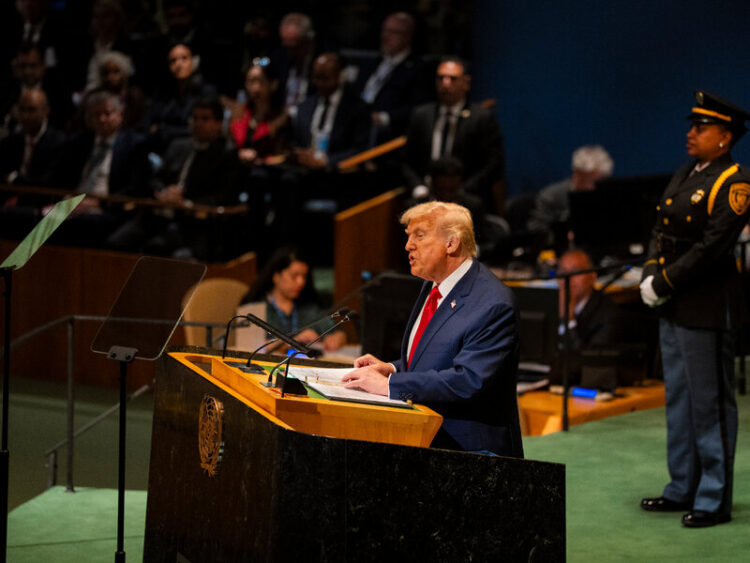
The United States has launched one of its most sweeping departures from global institutions in decades, announcing that it will withdraw from dozens of United Nations agencies and international organisations regarded as incompatible with its national priorities.
The move, signed into effect by President Donald Trump, marks a dramatic shift in American foreign policy and reshapes Washington’s engagement in global cooperation on issues ranging from climate change and human rights to development and trade.

AD: Capeesh Restaurant
On Wednesday, Trump signed a presidential memorandum directing the United States to end participation in and funding for 66 international bodies, including 31 entities affiliated with the United Nations and 35 non‑UN organisations, according to a White House fact sheet.
Federal departments and agencies have been ordered to take steps to implement the withdrawals as soon as legally possible, reflecting an approach that prioritises U.S. sovereignty and national interests over multilateral engagement.
The list of organisations from which the United States will withdraw includes a broad range of bodies focused on climate negotiations, gender equality, population programmes, culture, and trade.

AD: Oysterian Sea Food Restaurant And Bar
Among the most high‑profile is the United Nations Framework Convention on Climate Change (UNFCCC), the foundational treaty underpinning international climate cooperation and the Paris Agreement. Other affected bodies include the United Nations Population Fund and various advisory committees that guide international development initiatives.
The Trump administration has defended the move as a reorientation of foreign policy. Officials argue that many of the organisations promote agendas that conflict with U.S. sovereignty, waste taxpayer resources, or pursue policies Washington views as ineffective or contrary to national priorities.
Climate scientists and environmental advocates warn that abandoning the UNFCCC could hinder efforts to reduce greenhouse gas emissions and adapt to a changing climate. Many of these treaties and institutions were built on decades of negotiation and consensus among nations, and U.S. leadership has been seen as essential to their effectiveness.
Human rights groups and development organisations have also expressed alarm. They argue that U.S. participation in agencies focused on human dignity, health, education, and women’s empowerment has historically helped to bolster programmes that improve lives around the world.
Pulling out of institutions such as the UN Population Fund and cultural agencies removes U.S. oversight and funding from initiatives that partner with countries across Africa, Asia, Latin America, and beyond.
Supporters of the president’s policy maintain that international institutions can be overly bureaucratic and unaccountable, and that U.S. taxpayers should not subsidise programmes that lack tangible benefits to national security or economic prosperity.
This “America First” ethos has been central to Trump’s foreign policy rhetoric throughout his administration, and the latest action underscores a consistent scepticism toward multilateral frameworks viewed as undermining U.S. autonomy.
International responses have been mixed. Leaders in Europe and Asia have expressed concern about the implications for multilateral cooperation, particularly on climate and trade issues that require consensus and shared commitment.
Some nations have called for renewed dialogue with Washington to clarify how global challenges will be addressed without traditional U.S. involvement in these forums. Others are scrutinising the long‑term impact on alliances and diplomatic partnerships.
The memorandum ordering the withdrawals reflects a broader review first initiated last year. A presidential directive required departments to assess all organisations, conventions, and treaties where the United States provides support.
After evaluating that review, Trump determined that continuing membership in the specified bodies was “contrary to U.S. national interests, security, economic prosperity, or sovereignty,” prompting the sweeping action.
This shift is consistent with other high‑profile exits the U.S. has already undertaken in recent years. Among past withdrawals are the World Health Organization, the UN Human Rights Council, and the UN Educational, Scientific and Cultural Organization, all of which were criticised by Republican officials over funding priorities, ideological positions, or perceived policy agendas misaligned with U.S. positions.
While the memorandum directs agencies to begin withdrawal procedures, the process is legally and diplomatically complex. For conventions and treaties, withdrawal often requires notice periods or legislative oversight, and in some cases, continuation of obligations persists until formal exit requirements are fulfilled.
Organisations that receive funding or technical support may see immediate changes in U.S. engagement once appropriations are adjusted or participation is formally suspended.
The question now turning to diplomats and policy makers is how the absence of U.S. leadership will affect global problem‑solving efforts.
Climate change experts, for example, emphasise that without active U.S. participation in the UNFCCC, other major emitters may reduce their own commitments, potentially slowing international progress on emissions reductions. Others argue that alternative coalitions may emerge, reshaping the landscape of global collaboration.
Trade and development forums may also pivot. Some nations are signalling plans to consolidate existing partnerships outside traditional U.N. structures, while others may seek to build new mechanisms that include or exclude the U.S. depending on shared priorities.
At home, the moves have sparked debate among lawmakers, academics, business leaders, and civil society groups. Some argue that national interests have been rightfully prioritised, while others see the decision as short sighted, potentially narrowing the United States’ ability to shape economic, environmental, and security outcomes on the world stage.
Whether the United States can maintain its global influence outside long established multilateral bodies is now an open question one that hinges on diplomatic agility, policy coherence, and the willingness of other nations to uphold collaborative frameworks absent traditional American leadership.

AD: Heritage And Restaurant Lounge Bar