
By Ben Kerrigan-
In a dramatic escalation in the ongoing global struggle over maritime security and oil shipping lanes, the United Kingdom military has provided support for a United States-led operation aimed at seizing a tanker in the Atlantic. The operation, which took place in late 2025, has raised significant concerns on both the geopolitical stage and in international shipping sectors. The Ministry of Defence (MoD) of the United Kingdom confirmed its involvement, marking a notable point in the military and diplomatic relationship between the two nations.
The involvement of both the UK and US military forces in this operation raises important questions about the future of naval operations, international law, and the balance of power in global shipping lanes.

AD: Capeesh Restaurant
The incident occurred in the context of heightened tensions in the international shipping industry, particularly around the critical sea lanes of the Atlantic Ocean. The tanker at the center of the operation was reportedly involved in an illicit cargo operation, which included the transportation of crude oil under suspicious circumstances. It was believed to be linked to a network of entities violating international sanctions, particularly those imposed on certain countries and entities by the US and European Union.
In recent years, the issue of sanctions violations and the illegal transportation of resources such as oil, often referred to as “sanctions busting,” has become a significant concern for Western powers. The US and UK, both major players in global sanctions enforcement, have been increasingly vigilant in policing maritime trade routes. The involvement of the UK military in this specific operation, however, marks a significant shift, given that the operation itself took place far from British shores.
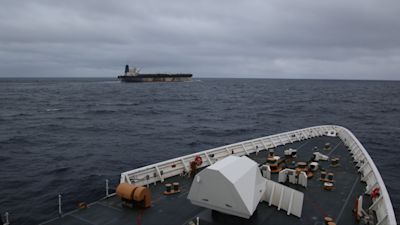
According to the Ministry of Defence’s statement, which confirmed ”enabling support” to the US Navy initiated the operation after intercepting communication and intelligence reports about a ship, the Sahra Explorer, which was suspected of carrying illicit oil in violation of international sanctions. The tanker had been flagged by several intelligence agencies, including US and UK counterparts, after departing from a port that was under heavy scrutiny for its connections to rogue states.

AD: Oysterian Sea Food Restaurant And Bar
The MOD statement said:
“UK Armed Forces provided pre-planned operational support, including basing, to U.S. military assets interdicting the Bella 1 in the UK-Iceland-Greenland gap following a U.S. request for assistance. RFA Tideforce provided support for U.S. forces pursuing and interdicting the Bella 1, while the RAF provided surveillance support from the air.
The UK and U.S. defence and security relationship is the deepest in the world and the UK provided enabling support in full compliance with international law.”
UK defence secretary John Healey hailed the UK armed force’s “skill and professionalism,” while describing the action as “part of global efforts to crack down on sanctions busting.”
“This ship, with a nefarious history, is part of a Russian-Iranian axis of sanctions evasion which is fuelling terrorism, conflict, and misery from the Middle East to Ukraine.
The UK will continue to step up our action against shadow fleet activity to protect our national security, our economy, and global stability – making Britain secure at home and strong abroad.
The U.S. is the UK’s closest defence and security partner. The depth of our defence relationship with the U.S. is an essential part of our security, and today’s seamlessly executed operation shows just how well this works in practice.”
The UK MoD added that the ship was “initially flying a false flag,” and then “turned off its transponders while at sea and sought to reflag while being pursued, indicating its nefarious links to global sanctions evasion.”
“Recent assessments show that the Bella 1 has been involved in illegal activity, linked to international terrorism and crime including Hezbollah, and part of the web of rising shadow activity that fuels and finances nefarious activity across the globe,” it said.
“The Russian flagging of the vessel shows their role in this interconnected shadow activity we are seeing across the world, which threatens our national security, harms our economy and undermines global security.”
The operation took place in international waters, approximately 300 miles off the coast of West Africa, in a region known for its strategic importance to global shipping and oil transport. The ship was initially intercepted by US naval assets, but UK naval forces provided logistical and operational support during the seizure. The MoD’s involvement was particularly critical in providing personnel for boarding operations and ensuring the safety and security of the mission, especially considering the volatile geopolitical climate in the region.
The Sahra Explorer was boarded by a joint team of US and UK naval commandos, and after a tense standoff, the vessel was diverted to a secure port in the United Kingdom for further investigation and legal action. The tanker’s crew was detained, and the ship’s cargo, which included thousands of barrels of crude oil, was offloaded for inspection.
The Atlantic Ocean serves as one of the most important maritime corridors for global trade. The region is home to several key shipping lanes, which facilitate the transportation of goods, including oil, between Europe, North America, and other parts of the world. In particular, the shipping lanes off the coast of West Africa are crucial for the transportation of oil from the African continent to global markets, including the United States and Europe.
Due to the high volume of traffic in these waters, the Atlantic has become a focal point for international efforts to combat piracy, illegal trade, and sanctions violations. The involvement of both the UK and US militaries in policing these waters reflects a broader effort to maintain control over critical maritime routes, particularly in the face of increasing geopolitical instability in regions such as the Middle East and North Africa.
The Atlantic’s strategic significance cannot be overstated, especially considering the rising influence of China in global shipping and trade. With Beijing’s increasing presence in Africa and its push for greater access to key shipping lanes, the US and UK’s military cooperation signals a continued effort to ensure that Western powers maintain a dominant position in controlling key maritime routes.
Context of US-UK Military Cooperation
The United States and the United Kingdom share a long history of military cooperation, particularly in the realm of naval operations. The two countries are both members of NATO, and their military forces routinely collaborate on joint operations around the world. The decision to involve the UK military in this specific operation underscores the deepening security ties between the two nations, as well as the growing complexity of modern naval operations.
This particular operation is not an isolated event. In recent years, there have been numerous instances of US-led operations where the UK military has provided support, particularly in the Middle East and North Africa. The operations often focus on countering terrorism, maintaining maritime security, and enforcing international sanctions, but the Sahra Explorer incident marks one of the first times that the UK has been directly involved in an operation of this nature in the Atlantic.
Moreover, the operation reflects the evolving role of the UK’s Royal Navy in global maritime security. The UK has been increasingly proactive in its military engagements, especially in regions critical to its economic and security interests. With the rise of new maritime threats, such as piracy, and the complex challenges of enforcing international sanctions, the UK’s military is expected to continue expanding its role in multinational operations with the US and other NATO allies.
While the operation has been lauded by some as a successful example of international cooperation, it raises several significant concerns that merit further discussion. These include issues related to the legality of such operations in international waters, potential diplomatic fallout with countries sympathetic to the tanker’s crew or cargo, and the broader implications for global shipping.
Legal Concerns
One of the primary concerns surrounding the seizure of the Sahra Explorer is the legality of the operation under international law. While the US and UK argue that their actions were justified by the enforcement of sanctions and international law, the operation raises questions about the extent to which nations are permitted to conduct military operations in international waters.
Under international law, ships in international waters are typically afforded freedom of navigation, and military intervention in such zones is generally restricted to instances where there is a clear threat to peace and security. While sanctions enforcement is a legitimate goal, some critics argue that the operation could set a dangerous precedent for the use of military force in international shipping lanes, potentially leading to greater instability in global trade.
Another concern is the potential diplomatic fallout from the operation. Although the US and UK have expressed confidence that their actions were justified, the operation could provoke backlash from countries with interests in the region or those sympathetic to the sanctioned entities. The tanker’s destination port was located in a country that has long been at odds with Western powers, and its government has already issued a statement condemning the operation as an infringement on its sovereignty.
In addition, there are concerns that such military actions could escalate tensions in other regions where shipping lanes are contested, such as the South China Sea. As countries like China and Russia expand their naval presence and assert their claims over key maritime routes, the precedent set by the Sahra Explorer operation could lead to more frequent military interventions in international waters.
Finally, the operation raises concerns about its broader impact on global shipping. If similar operations become more common, shipping companies could face increased risks when operating in sensitive regions. This could lead to higher insurance premiums, increased operational costs, and potentially slower shipping times due to heightened security measures. In the worst case, the growing militarization of shipping lanes could deter investment in certain regions, which could have long-term economic consequences for global trade.
Furthermore, the threat of military intervention could push shipping companies to seek alternative routes or ports that are perceived as safer, which could alter established trade patterns and disrupt the flow of goods, particularly oil, between key regions.
The UK’s support of the US operation to seize the Sahra Explorer in the Atlantic reflects the increasingly complex nature of global maritime security and the strategic importance of maintaining control over key shipping lanes. While the operation has been framed as a necessary measure to enforce international sanctions and combat illicit trade, it raises important questions about the legality of such interventions, the potential for diplomatic fallout, and the broader implications for global shipping.
As international tensions continue to rise, especially with the growing influence of countries like China and Russia in global maritime affairs, operations like this could become more common. However, the risks involved — both legal and diplomatic — will likely prompt ongoing debate about the future of military operations in international waters and the role of major powers in enforcing global trade norms.
The Sahra Explorer incident shows the stakes in global maritime security are higher than ever, and that the decisions made today will shape the future of international shipping and the balance of power on the world stage.

AD: Heritage And Restaurant Lounge Bar