
By Theodore Brown-
Venezuelan President Nicolás Maduro faced a U.S. court today, following his capture by U.S forces on Saturday, pleading not guilty to the charges levied against him. He insisted he remains the president of Venezuala.
His appearance, as contentious as it was historic, raised more questions than answers, leading observers to speculate on the future of U.S.-Venezuelan relations, the potential fallout for Maduro’s government, and the broader implications for Latin American geopolitics.

AD: Capeesh Restaurant
Interim Venezuelan President Delcy Rodriguez called for a “balanced and respectful” relationship with Washington during the transition of power, as President Donald Trump insists the US is in control of Venezuela
The charges levied against President Nicolás Maduro are as serious as they are far-reaching. The U.S. Department of Justice has long accused the Venezuelan leader of involvement in a range of illicit activities, including drug trafficking, money laundering, and corruption.
Moduro’s lawyers are expected to contest the legality of his arrest, arguing that he is immune from prosecution as a sovereign head of a foreign state- a position currently unrecognised by the U.S administration; and yet to be seen if it stands in court.

AD: Oysterian Sea Food Restaurant And Bar
Venezuelan President Nicolás Maduro and his wife, Cilia Flores, are currently being held in the Metropolitan Detention Center (MDC) in Brooklyn, New York, described the prison as “hell on earth” – with overcrowding and understaffing leading to frequent acts of violence.
Trump’s administration has been seeking Moduro’s scalp for years, going as far doubling an existing offer of $25 to $50m in 2023.
The U.S. government had originally offered a reward of up to $15 million in August 2020 for information leading to the president’s capture. It was eventually raised to $25m under Obama’s administration, equating the amount put on Osami Bin Laden’s head.
The charges stem from allegations that Maduro and other senior Venezuelan officials were complicit in running a “narco-terrorism” operation that facilitated the trafficking of cocaine from Venezuela to the United States.. Maduro is also accused of orchestrating the collapse of democratic institutions in Venezuela, allegedly using corrupt practices to maintain his grip on power in the country.
The now defunct president’s critics point to his consolidation of power, the erosion of Venezuela’s once-vibrant democratic processes, and the systematic crackdown on political opposition. Under his leadership, Venezuela has descended into what many describe as a failed state, with hyperinflation, a collapsing economy, and widespread human rights abuses.
These charges, however, represent only the tip of the iceberg. At the heart of the U.S. prosecution is the claim that Maduro and his inner circle are directly responsible for Venezuela’s transformation into a hub of organized crime, operating with the assistance of powerful drug cartels.
According to the U.S. indictment, these figures “conspired to flood the U.S. with cocaine” while undermining stability in the region.
In response, Maduro has steadfastly denied these charges, calling them part of a larger campaign of political aggression and “imperialism” led by Washington. To him, the U.S. accusations are not just criminal charges—they are part of a broader, systematic effort to destabilize Venezuela and topple his government.
When President Maduro was brought before the U.S. court, his demeanor was nothing short of defiant. Flanked by his legal team, Maduro, known for his fiery rhetoric and his long-standing confrontations with Washington, t vehemently rejected the accusations against him.
“This is not just a trial against me,” Maduro declared to the courtroom, “It is a trial against the people of Venezuela, who have endured years of sanctions, sabotage, and unfounded accusations by the United States.” His words echoed a familiar theme—one he has repeated countless times in speeches across the globe: that the U.S. is trying to impose its will on Venezuela, using both economic and political warfare.
His stance was a calculated message not only to the court but also to his domestic audience in Venezuela and the broader international community.
In his address, Maduro also questioned the integrity of the U.S. justice system, casting doubt on the fairness of his trial. “What is this so-called justice?” he asked, emphasizing that Venezuela’s courts were not subject to foreign interference. His criticism of U.S. actions was not limited to the courtroom but extended to a broader condemnation of U.S. foreign policy in Latin America.
His comments were quickly picked up by global media outlets and amplified by his supporters, both within Venezuela and across the region.
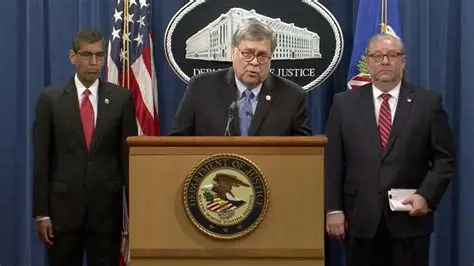
According to U.S. officials, Maduro’s arrest was the culmination of a years-long investigation into his government’s alleged involvement in drug trafficking and money laundering. The operation to apprehend him was carried out by a joint task force, composed of U.S. Marshals and agents from the
Drug Enforcement Administration (DEA). Maduro, who had long been considered one of the most elusive and untouchable leaders in Latin America, was reportedly arrested in a high-security location under heavy guard. The timing of Maduro’s arrest, according to many experts, is no coincidence.
The U.S. government has ramped up its efforts to weaken Maduro’s regime in recent years, using a combination of sanctions, diplomatic isolation, and covert operations. The Venezuelan leader’s continued control over the country, despite the crippling economic sanctions and international condemnation, has been a point of frustration for Washington.
Bringing Maduro to trial for the US administration was seen as a key step in sending a message that even the most powerful authoritarian figures would not be immune from prosecution.
Maduro’s arrest, however, was met with a mixed response internationally.
Trump’s administration has also threatened Columbia and Cuba. While the U.S. hailed it as a victory for justice, the Venezuelan government and its allies condemned the action as politically motivated. Maduro’s supporters saw his detention as a direct assault on Venezuelan sovereignty and an example of U.S. overreach in the region.
The arrest sparked protests in several Latin American countries, where leaders denounced the U.S. intervention and expressed solidarity with Maduro’s government.
In Venezuela, the arrest further entrenched the divide between Maduro’s supporters and opponents. While government loyalists rallied behind their leader, denouncing the charges as fabricated, critics of the Maduro regime viewed the arrest as a moment of accountability for years of corruption and mismanagement.
Political Landscape
The future of Maduro’s presidency and Venezuela’s political landscape is surely in tartars. His defiant stance in court is unlikely to alter the perception that his government is deeply mired in corruption and criminal activity, but it may help to solidify his position domestically.
Secretary of Defense Pete Hegseth suggested on Monday that nearly 200 Americans participated in the raid on Caracas on Saturday morning that led to the successful arrest of Maduro.
Speaking to a crowd of sailors and shipbuilders in Newport News, Virginia, Hegseth said that “nearly 200 of our greatest Americans went downtown in Caracas” and they “grabbed an indicted individual wanted by American justice in support of law enforcement without a single American killed.”
.

AD: Heritage And Restaurant Lounge Bar