
By Sammy Jones-
When a baby is born, the expectation for most families is joy, celebration and the start of a long life together. But for some parents, that hopeful beginning turns into heartbreak within moments.
One mother who experienced this unimaginable loss has spoken about how an unlikely platform, TikTok, became a source of connection and support during her darkest days. Her story reflects a growing movement on social media where people share the raw reality of grief and find community in shared experiences of loss.

AD: Capeesh Restaurant
In September 2023, Maddie Biggs was an ordinary content creator on TikTok, sharing clips about everyday life, baking and upcycling furniture. Her world changed irrevocably when her son, Teddy, was born prematurely with a severe medical condition known as congenital diaphragmatic hernia (CDH), which prevented his lungs from developing normally.
Empty Arms, Heavy Heart

AD: Oysterian Sea Food Restaurant And Bar
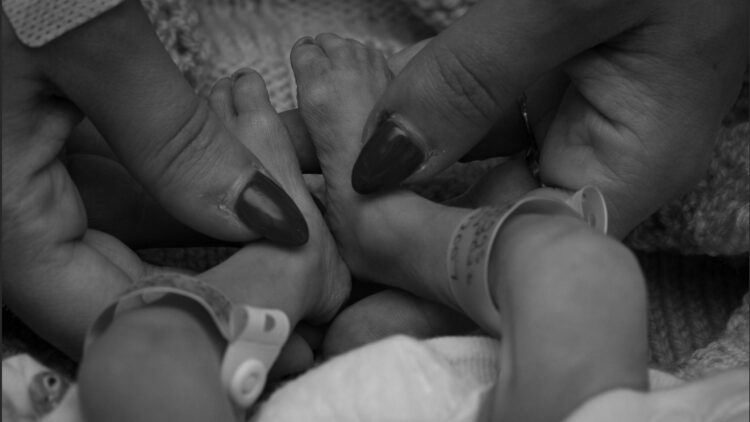
The hours and days immediately after Teddy’s death were a blur of overwhelming emotion. In the hospital’s bereavement suite, specialist midwives guided Biggs and her husband through creating small keepsakes casts of Teddy’s tiny hands and feet, photos and videos they hoped would become precious memories.
Navigating these early stages of grief was incredibly difficult, yet the compassionate care they received offered a lifeline in a time of deep sorrow.
Returning home without their baby was a jarring experience. Baby clothes and nursery items remained unpacked while the reality of their loss settled in.
Biggs felt alone; she did not know anyone personally who had endured the death of a newborn, and traditional grief seemed like a solitary path.Seeking connection, she turned to TikTok not initially with an intention to broadcast her pain, but simply to express it.
Her first videos were laden with grief, showing moments in the hospital’s bereavement garden and quiet reflections with Teddy wrapped in his blanket. Those videos served as a personal diary of grief, a way for her to make sense of her emotions in real time.
But they also began to resonate with others. As she shared more, people reached out with messages of empathy, understanding and shared sorrow. The sense of community that blossomed through those interactions was something she had not anticipated.
Biggs soon discovered that her experience was part of a larger pattern on TikTok. Hashtags such as #grief, #grieftok and #infantloss have become hubs for people navigating bereavement, collectively amassing billions of views.
Creators under these tags share memories, coping strategies and daily reflections about life after loss, creating a supportive environment in an unexpected corner of social media.
The phenomenon, sometimes referred to as “GriefTok,” illustrates how online platforms have expanded beyond entertainment to become spaces where vulnerability and authenticity find an audience. People who once felt isolated in grief find that their pain is witnessed and understood by others who have walked similar paths.
For many, seeing posts from people who have survived their own heartache provides a form of comfort and reassurance that they are not alone.
For Biggs, sharing Teddy’s story on TikTok was a way to make space for her son in the world. “I wanted everyone to know that Teddy was here and he exists,” she explained. Her honest account validated not only her own experience but also helped others processing similar losses.
Some followers reached out to say they felt less alone, while others shared how her openness encouraged them to talk about their own grief no longer feeling confined to private sorrow.
This digital mourning has challenged traditional notions of how grief should be expressed. Society often expects mourning to be quiet, private and linear, yet grief is unpredictable and deeply personal. Platforms like TikTok allow bereaved parents to share moments of vulnerability, remembrance and even joy alongside sorrow.
Biggs’ journey into parenthood again welcoming Teddy’s sister Emilia has opened space to explore how joy and grief can coexist, a message that has resonated widely.
From Loss to Legacy
One of the most powerful aspects of sharing her story has been the ability to keep Teddy’s memory alive. Biggs insists that talking about her son does not equate to clinging to pain but rather honours his brief existence.
She and her husband have turned significant dates into moments of remembrance, and each year they make a pilgrimage to the hospital’s baby loss garden on occasions such as birthdays or holidays. These rituals, shared openly online, have inspired others to create their own ways of remembering loved ones.
Grief specialists emphasise the importance of community and expression in healing. Bereavement support groups, such as The Compassionate Friends in the UK, have long provided peer support for parents who have lost children, offering resources, helplines and local meetings. These formal support structures complement the informal communities that have arisen online, bridging the personal and collective aspects of grief.
Critics of social media’s role in grief note that public platforms can sometimes intensify pain, exposing vulnerable individuals to unwanted commentary or negative interactions.
Yet many bereaved parents find that supportive messages and shared experiences outweigh the risks, offering solace through recognition and connection. It is a form of communal storytelling that transforms private grief into shared humanity.
Biggs’ experience highlights this nuanced role of social media. TikTok, in her case, became more than an app for sharing snippets of life; it evolved into a space where memories of a lost child could live on and where grief could be voiced without judgment.
Her videos have fostered empathy and understanding among viewers who might never have encountered such raw honesty elsewhere.
Today, as Biggs prepares to spend Christmas with her family, she describes the season as “bittersweet.” The holiday season marks the first Christmas when Teddy would have been old enough to experience it, blending joy and grief in a tapestry of remembrance that is deeply emotional.
Yet she faces this time with a community of support both online and offline. Encouraging friends and family to send Teddy Christmas cards and making donations to the bereavement suite that supported them, she weaves his memory into the present in meaningful ways.
What her story underscores is that grief is not a path walked alone. The digital tapestry of shared stories, hashtags and heartfelt videos has given bereaved parents a platform where their children are remembered, their pain acknowledged and their resilience witnessed.
Though no online community can erase the pain of loss, many find that shared vulnerability builds bridges of understanding, reminding people that in the vast landscape of grief, others walk alongside them even when the road seems bleak.
After losing an infant, the recovery process is neither quick nor predictable, and the journey is heartbreaking. However, experiences like Biggs’ show that healing may be fostered by recollection, connection, and the guts to talk honestly about life after grief. Platforms like TikTok are changing how we grieve, remember, and find hope in the midst of pain in a society that is frequently reluctant to face grief.

AD: Heritage And Restaurant Lounge Bar