
By Sanny Jones-
A family’s festive plans have been shattered this Christmas after weeks of frustration and fear over hazardous mould invading their home following a government-backed insulation upgrade.
The condition of the property has become so severe that their son, who has asthma, has been unable to return home for months, leaving loved ones to spend the holiday together in someone else’s living room while their house remains uninhabitable.

AD: Capeesh Restaurant
Across Britain, energy efficiency programmes are championed as a way to cut carbon emissions and reduce heating costs, with grants available to homeowners willing to have insulation installed at little or no upfront cost.
However, a growing number of reports allege that poorly installed materials have instead created a dangerous environment in which mould thrives. In one stark example, a family’s ambitions for a warmer, healthier home have been replaced by frustration, displacement and anxiety over ongoing health risks associated with the fungal growth.
This ordeal highlights wider concerns about insulation work carried out under schemes such as the government’s Energy Company Obligation (ECO4), with hundreds of households telling the BBC they are now dealing with the fallout from incorrectly fitted materials.

AD: Oysterian Sea Food Restaurant And Bar
The National Audit Office has criticised oversight of the programme, noting that nearly a third of internal wall insulation installations had serious defects that required corrective action.
The family at the centre of this Christmas controversy hoped the project would ease the burden of winter for their asthmatic son. Instead, they watched mould spread behind insulation panels throughout several rooms, breathing life into a public health and housing scandal at a moment that should have been defined by celebration.
A Home Made Dangerous
The couple who applied for government support to insulate their home because they believed a warmer space would help manage their child’s respiratory condition were stunned to find black mould growing behind the insulation months after the upgrade was completed.
Initially, installers removed the affected insulation and replaced it with a new system. But damp problems quickly reappeared, forcing further removal of the boards and the plaster beneath them.
The infestation has rendered the property unfit for their son, who now stays with his grandmother whenever he returns from university. The family say he has not set foot inside the house since April, and that his health and well-being prevented him from coming home for Christmas this year.
In response, they made the painful decision to spend the holiday together at a relative’s home, attempting to salvage some sense of festive spirit despite the situation.
Mould and damp do more than damage property; they pose real risks to human health. Black mould in particular can exacerbate respiratory conditions such as asthma and bronchitis, and long-term exposure is linked to a range of symptoms including coughing, wheezing, and allergic reactions.
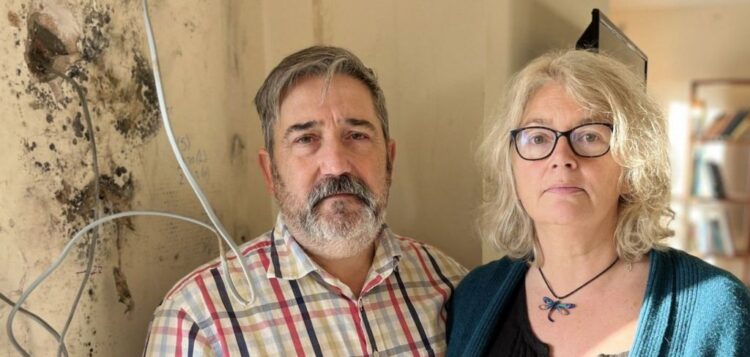
The affected rooms now bear the marks of the mould invasion: walls scarred by dark patches, plaster lost to damp, and exposed electrical sockets left hanging a situation the family says has persisted for months. Their complaints have been directed to the installer and to government authorities, yet resolution has remained elusive.
The company that carried out the work maintains it followed the technical specifications dictated by the ECO4 programme and claims it has no record of immediate safety hazards being reported.
Independent building surveyors consulted on the case have suggested the insulation was not appropriately fitted for the type of property a mistake that can trap moisture and create conditions ripe for mould growth.
Broader Problems with Insulation Programmes
The struggle faced by this family is not isolated. Thousands of households across the UK have reported damp and mould issues linked to insulation work, according to watchdog findings.
A recent government spending review uncovered pervasive problems in installations carried out under public schemes designed to improve energy efficiency, with poor workmanship and insufficient quality control contributing to widespread defects.
Critics argue that the rush to retrofit older homes with insulation has sometimes overlooked the complexity of Britain’s diverse housing stock.
Older properties, in particular, can harbour existing moisture issues or lack structural features such as damp-proof courses, meaning poorly designed installation can inadvertently trap water within walls instead of allowing it to escape. Without proper ventilation and moisture management, such installations can create the perfect environment for mould to flourish.
The controversy has prompted calls for systemic reform. Consumer rights advocates and housing experts stress the need for stringent oversight of contractors, clearer accountability channels, and swift remedies when work goes wrong.
Proposed reforms to insulation programmes seek to guarantee clearer lines of responsibility and faster resolutions for homeowners left in limbo while battling structural defects.
Adding to the urgency of these concerns is the wider public health context. Recent legislative responses to previous tragedies, such as the introduction of “Awaab’s Law” named after a toddler who died due to mould exposure in his Rochdale home underscore the lethal potential of unchecked damp and mould in residential spaces.
This law, which came into force in late 2025, mandates strict timeframes for housing providers to address reports of mould and damp, aiming to prevent future harm.
Despite these legal advances, gaps remain in how retrofit programmes and housing standards intersect with daily life for homeowners and tenants. Many families navigate a complex web of contractors, warranty providers and government bodies when attempting to secure repairs or compensation, often with mixed results.
This complexity can leave vulnerable households in prolonged limbo, unable to return to safe and healthy living conditions.
For this family, Christmas has become a poignant symbol of what has been lost. They had looked forward to the festive season as a rare opportunity to reunite under one roof. Instead, they find themselves displaced by a problem that was meant to improve their quality of life, wrestling with the emotional and financial implications of a project gone wrong.
There is a sense among many affected homeowners that more must be done to reassure the public that energy efficiency programmes are beneficial and safe.
While the intentions behind government-funded insulation schemes remain focused on reducing energy bills and cutting emissions, the lived experience of families like this one highlights the unintended consequences that can arise when implementation falls short of best practice.
In the face of mounting complaints, authorities have responded with promises of reform and stronger oversight, yet the road to rebuilding trust could be long. With hundreds of homes reportedly impacted and more coming forward with similar stories, the debate over how to reconcile public policy goals with healthy, habitable housing continues to intensify.
This holiday season underscores an uncomfortable reality: a place that should be a sanctuary for family and rest can become unsuitable and unsafe, compelling loved ones to seek solace elsewhere.
While Christmas offers moments of joy and togetherness, it also highlights unresolved battles with the very spaces meant to provide comfort. The hope is that lessons learned this winter will help ensure others do not spend future holidays away from home because of preventable mould and damp.

AD: Heritage And Restaurant Lounge Bar