
By Ben Kerrigan-
After more than a day of intense negotiations and strategic recalibrations, leaders of the European Union struck a deal early Friday to extend a €90 billion financial lifeline to Ukraine, delivering crucial support for Kyiv’s defence and budget needs over the next two years.
The agreement emerged from a Brussels summit that underscored both the unity and divisions within the bloc over how to fund Ukraine’s ongoing resistance to Russia’s invasion.

AD: Capeesh Restaurant
While the package promises to help prevent economic collapse in Ukraine, it stops short of fulfilling Kyiv’s longstanding calls to tap frozen Russian state assets directly a sore point that animated much of the debate at the summit.
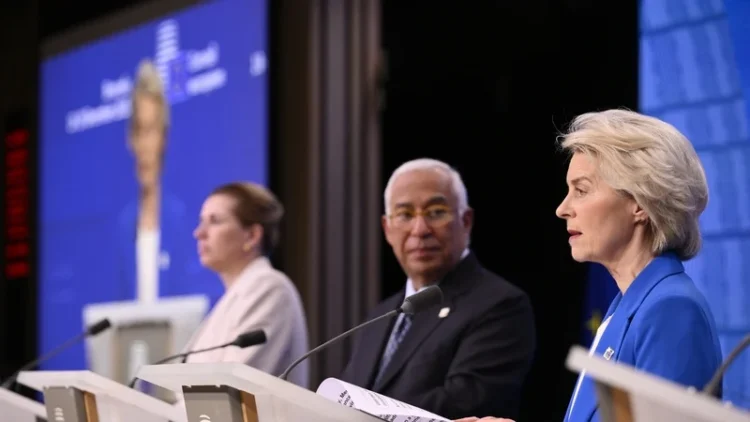
European Council President António Costa declared the deal a major achievement, announcing on social media that “We have a deal. Decision to provide €90 billion of support to Ukraine for 2026-27 approved.
We committed, we delivered.” The financing will be provided as an interest-free loan backed by the EU budget, and it is designed to cover Ukraine’s mounting budget shortfalls and military requirements through market borrowing rather than by liquidating the approximately €210 billion in Russian central bank assets immobilised in the EU since 2022.

AD: Oysterian Sea Food Restaurant And Bar
Ukrainian President Volodymyr Zelenskyy welcomed the decision, describing it as a significant boost to Kyiv’s resilience, but the outcome will likely be judged both in terms of its immediate impact on Ukraine’s finances and the broader message it sends about Europe’s strategic commitment to the country’s sovereignty.
Budget Guarantees Over Frozen Assets
European leaders approached the summit with two competing visions for financing Kyiv’s needs.
One camp, led by figures such as German Chancellor Friedrich Merz, championed a plan to use the substantial frozen Russian assets held mostly in Belgium as collateral or direct funding for Ukraine’s war effort, arguing that such a move would symbolically and practically hold Russia accountable for its aggression.
The other camp, including Belgian Prime Minister Bart De Wever, resisted the idea on the grounds of legal risk and potential financial liability, particularly given that Belgium holds roughly 88 percent of the immobilised funds.
The collapse of the Russian-asset plan came after marathon discussions lasting more than 15 hours and centered on whether the legal frameworks and risk protections could be constructed in a way that satisfied all member states.
Despite efforts to reassure hesitant capitals, the complexities associated with using sovereign assets already subject to sanctions were too great to bridge fundamental differences.
Supporters of the asset approach argued it was both fair and legal, emphasising that Ukraine should not have to borrow funds that could instead be funded by the very assets seized in response to Moscow’s invasion. Zelenskyy himself had pressed the case, calling on EU leaders to tap those funds to defend against Russian aggression and to rebuild what had been destroyed.
Ultimately, EU leaders backed a compromise centred on joint borrowing through capital markets, with the collective budget of the Union serving as the primary guarantee for the €90 billion package. Under this model, Ukraine is expected to begin repaying the loan only after it receives war reparations from Russia.
In statements after the summit, Merz noted that if Moscow fails to compensate Ukraine, the frozen Russian assets could be used to reimburse EU lenders a provision that keeps the long-term option of tapping those assets alive without directly including them in the initial financing.
Several nations that had been lukewarm or opposed to direct financial guarantees also agreed not to block the deal, so long as they would not bear financial liability for the borrowing.
Hungary, Slovakia, and the Czech Republic, each of which had signalled reservations about contributing to backstopping a joint EU budget loan, agreed to allow the package to proceed under those terms.
The financing arrangement is designed to help Kyiv weather a looming cash crunch, with the International Monetary Fund estimating that Ukraine will need roughly €137 billion in external support through the end of 2027 to cover both military expenditures and essential government functions.
With U.S. funding for Ukraine under pressure in Washington, the EU’s move assumes heightened significance for Kyiv’s financial outlook.
Unity Under Strain
The summit’s outcome reflects the tension between political solidarity and legal-financial caution within the EU. Using frozen Russian assets to back or directly fund Ukraine’s needs was seen by many Eastern European leaders and analysts as a morally compelling approach one that places the cost of the war squarely on Russia.
It would have also marked an unprecedented use of sovereign assets seized under sanctions for the direct benefit of the victim of that sanction regime. But concern over legal challenges, the risk of retaliation, and the precedent it might set for sovereign asset seizure proved decisive factors in moving the bloc toward an alternative financing route.
Belgium’s firm stance against the Russian-asset plan was rooted in fears that open questions about liability could expose it and other countries to lawsuits or financial losses if Moscow pursued legal action over the release or reallocation of those funds an outcome Belgian officials warned could destabilise financial markets and undermine international law protections.
The decision to borrow on financial markets effectively shifts the cost onto all 27 EU member states collectively, underpinned by the Union’s credibility as a credit issuer. Critics of the compromise argue that it dilutes the punitive dimension of sanctions and misses an opportunity to directly link Russian responsibility to the cost of rebuilding and defending Ukraine.
Supporters counter that it ensures rapid delivery of funds without plunging the EU into protracted legal and institutional uncertainty.
French President Emmanuel Macron described the agreement as a practical way to mobilise resources quickly while underscoring European determination. He argued that committing to market borrowing was the most realistic and implementable path to secure Ukraine’s support package in the face of legal and political obstacles.
Beyond the immediate financing question, the outcome is likely to influence broader EU policy debates over how to balance collective security commitments with respect for international law and the protection of sovereign assets. The compromise may be seen as a model for future decisions where deep divisions arise over contentious financial strategies.
For Kyiv, the deal provides a much-needed financial runway and a symbolic reaffirmation of European support. Yet it also highlights the complex geopolitics of sustaining that support amid differing national priorities and interpretations of legal risk.
Zelenskyy’s praise for the loan reflected Kyiv’s relief at securing funding but underscored the broader strategic aim: to keep Ukraine’s institutions functioning and defence apparatus equipped as the war approaches its fourth year.
Russia, predictably, criticised the decision and framed it as illegitimate, with representatives dismissing European measures as unlawful and threatening retaliatory actions. Moscow’s position remains that the immobilised assets are sovereign property that should remain untouched, and the Kremlin has previously signalled its intention to pursue damages and counter-measures through international legal channels.
As EU moves to implement the loan programme through 2026 and 2027, officials stressed that the bloc retains the option to revisit frozen Russian assets as part of long-term reparations discussions.
This underscores the continuing diplomatic chess game surrounding the financing of Ukraine’s defence and reconstruction, and the persistent tension between strategy and law in managing the fallout from Russia’s war.
Analysts say the loan decision will reverberate well beyond Ukraine’s borders, influencing how the EU navigates future crises where economic support must be balanced with legal frameworks and the political will of member states. The €90 billion agreement ultimately embodies Europe’s readiness to take decisive action, even as it confronts internal disagreements and external pressures.
With markets responding and implementation underway, everyone will be watching Brussels and Kyiv to see how quickly the funds are deployed. They’ll also be gauging whether the legal and political issues surrounding frozen Russian assets will re-emerge in the coming months.

AD: Heritage And Restaurant Lounge Bar