
By Theodore Brown-
A 24-year-old man has been formally charged with 15 counts of murder and a suite of related offences in connection with a mass shooting that claimed the lives of 15 people at a Jewish Hanukkah celebration on Bondi Beach, officials confirmed on Wednesday.
The devastating attack has shaken Australia, prompting national grief, debate over extremism, and renewed calls for tightened gun laws.

AD: Capeesh Restaurant
The suspect, identified by New South Wales (NSW) Police as Naveed Akram, was charged with 59 criminal offences including 15 counts of murder, one count of committing a terrorist act, and 40 counts of wounding with intent to murder following the attack late Sunday evening in the popular Sydney tourist precinct. Authorities allege that the violence was motivated by extremist ideology and intended to cause widespread fear and harm.
Akram appeared before the NSW Local Court via video link from his hospital bed while still recovering from injuries sustained during a police shootout at the scene. Bail was not sought, and his next scheduled court hearing has been set for April 8, 2026.
The attack is the deadliest mass shooting in modern Australian history and has left the city reeling. Fifteen people were killed among crowds gathered to celebrate the first night of Hanukkah, and more than 40 others were wounded, including two police officers. The victims ranged from young children to elderly community members, intensifying the national impact of the tragedy.

AD: Oysterian Sea Food Restaurant And Bar
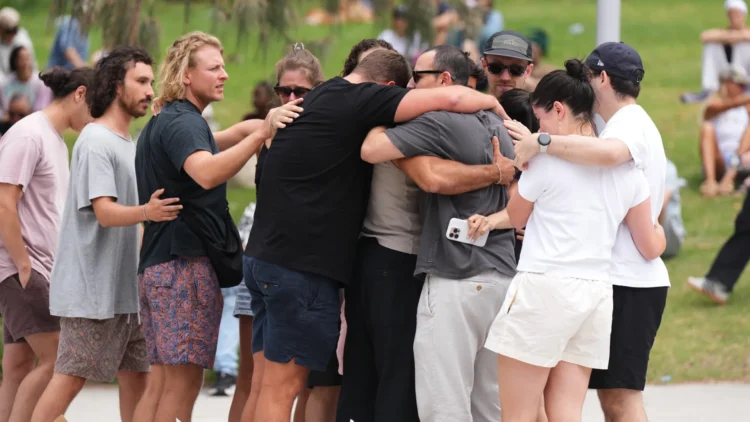
Victims’ loved ones began funerals this week amid heavy security, with mourners gathering at synagogues and public spaces to honour those killed. Among those remembered was a British-born rabbi and an innocent 10-year-old girl whose deaths have deeply affected both local and international communities.
Police described the attack as extraordinarily violent and sustained, unfolding over 10 to 20 minutes before law enforcement neutralised one of the assailants and wounded the other. The elder of the two suspects, 50-year-old Sajid Akram, was killed by police at the scene.
Investigation, Charges and Community Response
Investigators have disclosed that the two suspected gunmen opened fire on crowds attending the Festival of Lights event at Archer Park, a public space adjacent to the famous Bondi Beach promenade. The gathering had attracted more than 1,000 people when the attack began shortly before 7 p.m. local time.
Authorities allege that the shooters used a collection of legally held firearms and improvised explosive devices that were recovered from their vehicle. Items linked to the Islamic State group were reportedly found in the car, and senior Australian officials said early indicators pointed to an ideologically driven assault inspired by extremist thought.
Prime Minister Anthony Albanese has characterised the violence as a “terrorist attack” and stressed that early signs suggest the perpetrators acted alone rather than as part of a broader network, even as evidence of ideological influence surfaces. He noted that flags and symbols associated with Islamic State were discovered at the site and in connection with the suspects’ possessions.
NSW Police Commissioner Mal Lanyon said officers had been awaiting the younger suspect’s stabilization in hospital before formally filing charges to ensure he could understand proceedings and participate in the legal process.
In total, the charges against Akram encompass not only the 15 murder counts, but an array of offences reportedly intended to represent the breadth of alleged criminal intent, including firearm offences, display of a terrorist symbol, and placing explosives in or near a building with intent to harm.
The investigation has also extended beyond the immediate scene as authorities piece together the circumstances that led to the violence. A raid on a home in Campsie, Sydney’s south-west, turned up additional weapons and evidence under review by law enforcement.
The imposition of terrorism charges underlines the gravity with which Australian officials are treating the incident. Under domestic law, such charges reflect actions intended to advance a religious, political, or ideological cause through violence and inflicting fear in the wider community.
Members of the Jewish community and other faith leaders have voiced sorrow and defiance. At memorials and vigils around the city, mourners honoured the dead and called for solidarity in the face of hate. Many emphasised that celebrations of faith and identity would continue despite efforts to intimidate and divide.
The country’s Jewish umbrella body issued statements underscoring the profound grief over the loss of life, while also thanking emergency responders, health workers, and bystanders who attempted to save lives during the chaos.
Public reaction has been intense, with vigils drawing hundreds of attendees in Sydney and other cities. Australians from diverse backgrounds have expressed outrage and sadness, with messages of unity and support flooding social media and editorial pages.
The attack has also triggered reflection on Australia’s approach to extremism and gun policy. Although the nation already enforces strict firearms regulations, political leaders have acknowledged gaps that the tragedy exposed.
Prime Minister Albanese indicated that revisions to licensing and enforcement protocols will be considered, including a potential national firearms register that could better track ownership and reduce future risks.
Anecdotes of bravery amid the brutality have emerged as part of the unfolding narrative. Videos and eyewitness accounts describe bystanders attempting to intervene, some at great personal risk, and officers engaging the attackers under heavy fire to limit further casualties.
In the wake of the attack, misinformation surrounding the identities of the suspects proliferated online, prompting police and media organisations to issue clarifications. One unrelated individual sharing the same name as the suspect spoke publicly after being wrongly identified on social platforms, illustrating the wider social impact of the tragedy beyond the immediate circle of victims and responders.
Despite political differences, leaders across the spectrum pledged to honour the memory of those killed and to ensure that the criminal justice process proceeds without interference. Human rights advocates emphasised the importance of balancing security with the rule of law, cautioning against rushed policy changes that could infringe civil liberties.
As the community continues to recover from the shock, the legal proceedings against the accused promise to be long and complex. Prosecutors have indicated their intent to pursue justice vigorously, while defence lawyers will likely examine the mental state and motivations behind the actions.
For families of the victims, the coming months will be marked by mourning and remembrance. Funeral services are expected to continue into the holiday season as close friends and family gather to pay tribute to lost loved ones. Each charge of murder represents a life taken too soon and a community left to grapple with the echoes of violence that unfolded on what should have been an evening of celebration.
In court filings, prosecutors have underscored that the 15 murder counts correspond to each victim killed in the massacre, reflecting the severity of the charges and the intent to hold the accused accountable for every life lost.
The Bondi Beach shooting has reignited national debate on how to prevent similar attacks in the future, with advocates urging enhanced cooperation between intelligence agencies, community leaders, and law enforcement to detect and deter radicalisation.

AD: Heritage And Restaurant Lounge Bar