
By Aaron Miller-
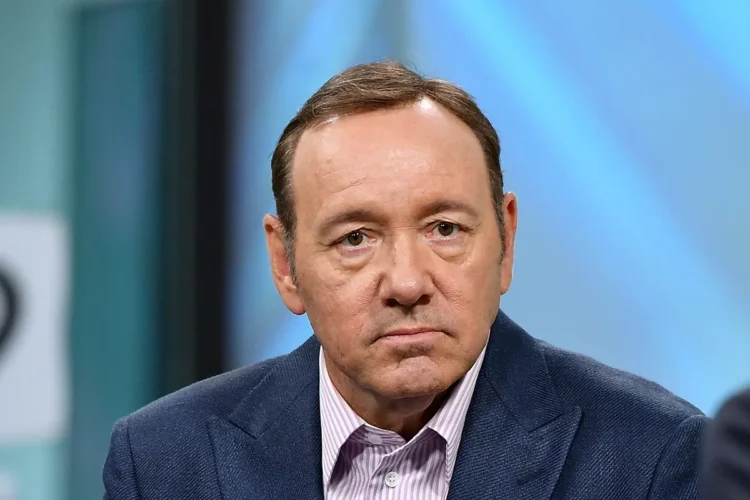
Hollywood actor Kevin Spacey, 66, is due to face civil sex-assault claims at the High Court in London next October — more than three years after he was acquitted of criminal charges. The latest legal challenge comprises three separate lawsuits brought by men who accuse him of sexual assaults during his tenure as artistic director at the The Old Vic Theatre.
At a preliminary hearing this week, a judge provisionally scheduled the civil trials for a three-week window beginning 12 October 2026. In court documents, the alleged incidents are said to have occurred between 2000 and 2015, involving younger men whom Spacey knew through the theatre — two of them described as actors at the time.

AD: Capeesh Restaurant
Spacey has formally denied two of the claims and is yet to file a defence for the third. His legal team argues the cases should be heard separately, while the claimants’ lawyers have requested a consolidated trial — citing concerns over repeated testimony and efficiency if trials are held individually.
For many observers, the renewed litigation raises crucial questions about justice, accountability and the lingering impact of allegations long after criminal courts have spoken. The upcoming civil hearings will offer a public forum for scrutiny at a time when public interest — and Spacey’s reputation — remains intensely contested.
The civil claims reopen painful allegations from Spacey’s Old Vic years and test the limits of legal accountability beyond criminal verdicts

AD: Oysterian Sea Food Restaurant And Bar
The new lawsuits mark one of the most significant civil proceedings against Spacey since his 2023 acquittal on nine criminal charges relating to sexual assault. That verdict came after a highly public trial involving four complainants, but with a jury deciding there was insufficient evidence.
Among those now suing is actor Ruari Cannon — the only claimant to have waived anonymity. The other two plaintiffs remain anonymous, referred to under pseudonyms in the court papers. The allegations include repeated unwanted contact and claims of psychiatric damage and financial loss. One man, known as “LNP,” alleges that Spacey assaulted him on approximately 12 occasions between 2000 and 2005; the other, “GHI,” claims an assault in 2008 after meeting Spacey at an Old Vic workshop.
In a 2025 hearing, a judge declined to grant a default judgment in one of the earlier civil suits filed against Spacey, after his lawyers missed the defence-filing deadline. The court accepted the legal team’s argument that a procedural error should not lead to judgment against the defendant — instead ordering the case be allowed to proceed.
“The interests of justice require that allegations of this nature be examined on their merits,” the judge declared when lifting the default judgment. That ruling paved the way for the fresh scheduling of the upcoming trial.
Supporters of the claimants, including legal experts and survivor advocacy groups, argue civil court represents an essential avenue for accountability — particularly in cases where criminal proceedings result in acquittal but survivors still seek recognition or compensation.
“Criminal trials demand a high standard of proof,” says legal analyst Dr. Elaine Foster. “But civil courts require a lower threshold, which acknowledges that even where doubt remains, wrongdoing may still have caused real harm.”
Defence lawyers, however, warn that the time elapsed and the varying contexts of each alleged incident pose fair trial challenges. They pointed out that the claims cover a broad fifteen-year span, with differing circumstances and limited contemporaneous documentation. As noted in court filings, the only common factor among the three claims is the individual being sued: Spacey.
As far as London’s theatre community and those familiar with Spacey’s tenure at the Old Vic are concerned, the upcoming trial has stirred a mix of hope, apprehension, and a sense of reopening old wounds. Some former colleagues have reportedly expressed concern that renewed public attention could further fracture trust and complicate efforts to move on. Others argue that transparency is overdue — both for the claimants seeking justice and for the industry’s reputation.
With the October 2026 trial approaches, several key issues will shape public and legal interest:
- Whether the three claims will be combined into a single trial — a move that could focus public scrutiny on systemic allegations rather than isolated incidents. Advocates argue consolidation would spare repeated testimony and present the full context; the defence claims the differences in time, location and alleged behaviour justify separate trials.
- How the courts handle old evidence and faded memories — many of the claims date back more than a decade, meaning proof may rely heavily on personal recollection and circumstantial testimony.
- The potential for reputational and financial consequences — even if the civil suits do not result in significant damages, the trials will inevitably reopen the debate over Spacey’s legacy in theatre and film.
- The broader message for survivors of assault — civil cases can serve as important signals that allegations will not be dismissed simply because criminal courts failed to convict.
In a written statement, Spacey’s legal team said they remained “confident of vindication” and vowed to mount a robust defence. They described the upcoming trial date as “unfortunate but procedurally routine, given the volume of cases filed.” Representatives for the claimants expressed cautious optimism. “This is an opportunity for truth and accountability — not just for the individuals involved, but for anyone silenced by power,” said the claimant’s lawyer, Elizabeth‑Anne Gumbel KC.
In the meantime, the Old Vic theatre — once at the centre of this scandal — remains publicly uninvolved in the upcoming trial, though one of the lawsuits does name the institution alongside Spacey. Whether the theatre will face renewed legal or reputational consequences remains uncertain.
The 2026 civil hearings signal a pivotal moment in a prolonged saga that began nearly a decade ago and resurfaced with global scrutiny in 2017. For survivors, legal advocates, and the public, the case raises fundamental questions: about the limits of criminal justice, the role of civil courts in delivering closure, and whether high-profile figures remain accountable even when they avoid conviction.
As one observer put it: “Justice delayed is not the same as justice denied — but it must still be justice pursued.”

AD: Heritage And Restaurant Lounge Bar