
By Ben Kerrigan-
The UK economy is expected to grow at a slower rate than previously expected from next year, the government’s official forecaster has said.
The Office for Budget Responsibility (OBR), which outlines the performance trajectory based on the government’s tax and spending policies, increased its growth expectations for this year, but downgraded its forecast for the subsequent four.

AD: Capeesh Restaurant
It said lower productivity growth – a measure of output of the economy per hour worked – was behind the weaker growth forecast.
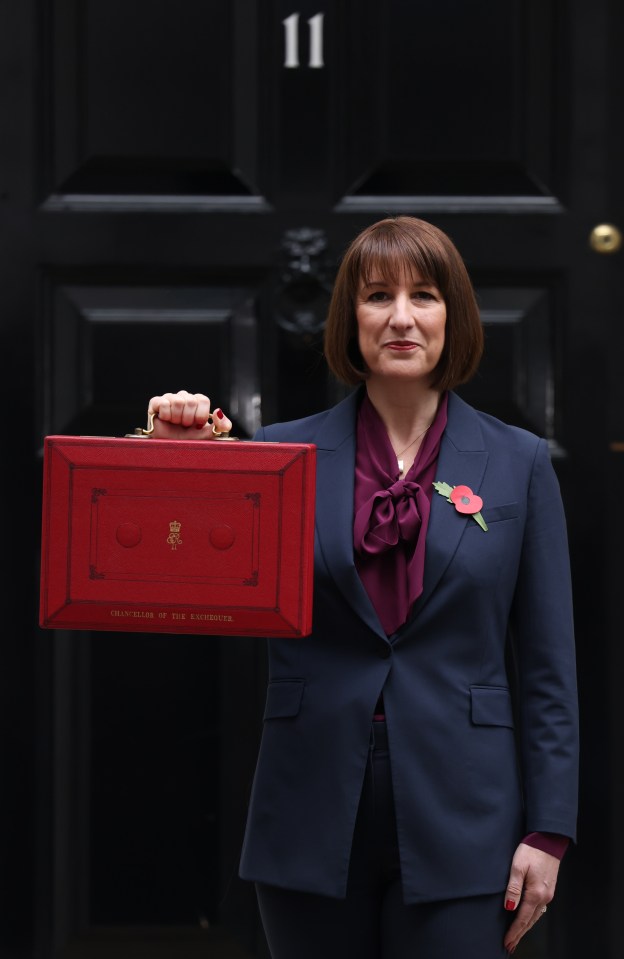
The OBR apologised for what it called a “technical error” of the Chancellor’s budget forecast and said an investigation was under way into how the error occurred, with Reeves describing the mistake was “deeply disappointing”. In its forecast, the OBR predicted the economy would grow by 1.5% this year, higher than its previous estimate of 1%.
It said growth would be lower at 1.4% in 2026 and 1.5% in the following four years – all of which are downgrades from its forecast made in March.

AD: Oysterian Sea Food Restaurant And Bar
“We expect quarterly growth to pick up only gradually in the near term as geopolitical uncertainty persists and domestic business and consumer confidence remains subdued, including in anticipation of further tax rises,” the OBR said.
Previously growth had been expected to hit 1.9% next year, 1.8% in 2027, 1.7% in 2028 and 1.8% in 2029.
In her Budget speech, the chancellor said the government had “beat” the growth forecast this year and “we will beat them again”.
The government has made growing the economy its number one pledge an effort to boost living standards across the UK.
The downgrade in growth was a result of the OBR lowering its expectations for the UK’s productivity by 0.3 percentage points.
An annual tax on homes worth more than £2m was expected to raise £0.4 billion in 2029/30.
UK public spending was due to grow every year as a result of the measures in the budget – reaching an extra £11 billion in 2029/30 – primarily to pay for a government U-turn in July on welfare cuts and lift a two-child welfare limit for families.
The employer NICs rate is increasing from 13.8% to 15% from April 2025, and the secondary threshold (where employers start paying) is reducing to £5,000.: A new annual surcharge for properties worth over £2 million will start in April 2028, ranging from £2,500 to £7,500.
Unspent pension pots will be subject to IHT from April 2027, and reliefs for agricultural and business property will be capped at a combined £1 million from April 2026.
A “pay-per-mile” road tax for electric vehicles (EVs) will be introduced from April 2028 (3p/mile for EVs, 1.5p/mile for hybrids), while fuel duty remains frozen until August 2026.
The main rate remains capped at 25% for profits over £250,000, with a small profits rate of 19% for those with profits under £50,000.
Business Rates: Permanently lower rates were introduced for retail, hospitality, and leisure businesses, funded by higher rates for large properties like online retailer warehouses.
VAT: The VAT exemption for private school fees will be removed from January 2025, making them subject to the standard 20% rate.
Gambling Duty: Remote gaming duty will significantly increase from 21% to 40% from April 2026.
Journalistic Analysis: Good or Bad?
The government argues its approach is a “responsible choice” to get borrowing down, increase fiscal buffers, and support the Bank of England in tackling inflation. The OBR forecasts the UK will consolidate more than any other G7 country from 2025 to 2030.
The tax rises are specifically earmarked to fund key public services, with significant increases for the NHS and education, and the abolition of the two-child benefit cap to tackle child poverty.
The Chancellor emphasized fairness by targeting wealth, dividend, and property income, arguing that asset income should contribute more equitably compared to income from work, which attracts NICs. Critics, including the opposition, have labelled the extended threshold freeze a “stealth tax” that disproportionately impacts working people and middle-income earners as they are dragged into higher tax brackets.
The rise in employer National Insurance contributions from April 2025 has been criticized for potentially discouraging hiring and new investment, with some industry bodies warning of a hit to business confidence. While some measures like the fuel duty freeze and state pension triple lock offer relief, the combination of higher inflation forecasts (initially expected to be 3.5% in 2025) and ongoing fiscal drag mean many households’ real incomes remain under pressure.
Ultimately, the comprehensive tax regime implemented through the 2024 and 2025 fiscal events is a calculated and substantial push to increase state revenue. Its success will be judged on whether it achieves long-term economic stability and improves public services without unduly stifling growth or penalizing the everyday taxpayer.

AD: Heritage And Restaurant Lounge Bar